A Bone Out of Place: When the Desert Reveals Something Older Than the Tombs

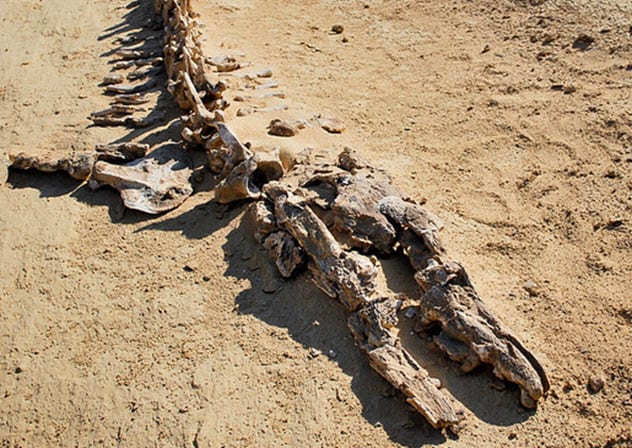
After twenty years working around pharaonic necropolises, I’ve learned that the most alarming finds are often the ones taken out of context by first impressions. What lies in the foreground of this image is not a “giant human jaw,” despite how easily the eye is drawn to that conclusion. The size, curvature, and tooth sockets clearly indicate a large animal mandible—most likely from a prehistoric marine mammal or large terrestrial fauna—exposed by erosion or construction near the burial zone. Egypt’s deserts were once coastlines, floodplains, and wetlands long before they became lands of kings.
Archaeologically, this kind of discovery is not unusual near necropolises, but it is frequently misunderstood. Royal cemeteries were often built atop older landscapes, sometimes unknowingly incorporating fossil-rich layers into sacred ground. The bone’s mineralization and surface weathering suggest great age—far older than dynastic Egypt. It was not placed here as part of ritual activity, nor does it imply forgotten “giants.” It implies geology intersecting with archaeology, a collision of timelines rather than cultures.
What makes this unsettling for the public is scale. Large bones disrupt our sense of proportion and history. But as archaeologists, we are trained to resist spectacle and follow evidence. This jawbone does not rewrite human history—but it does remind us that beneath every civilization lies a deeper world, one shaped by oceans, animals, and time long before humans carved their first tombs.
✓ Team
After twenty years working around pharaonic necropolises, I’ve learned that the most alarming finds are often the ones taken out of context by first impressions. What lies…