A Painted Marble Shrine from Pompeii: Archaeological Analysis of a Domestic Cult Structure
This structure is identified as a domestic shrine, commonly referred to as a lararium, discovered in the Roman city of Pompeii, southern Italy. Pompeii was buried suddenly by the eruption of Mount Vesuvius in 79 CE, providing a fixed chronological horizon for the structure. The shrine was found inside a private residence, embedded within an interior wall, indicating its function as a household religious installation rather than a public cult monument. Archaeological context places this lararium firmly within the Early Imperial Roman period, reflecting domestic religious practices common between the 1st century BCE and the 1st century CE.

The shrine is constructed primarily of marble and stucco, with extensive use of painted plaster. Two fluted columns with Ionic capitals frame the structure, supporting an entablature decorated with vegetal and geometric motifs. The back panel features a wall painting depicting a ritual or mythological scene involving human figures and animals, possibly horses, executed in fresco technique. Traces of red, black, ochre, and white pigments remain visible, consistent with Roman wall-painting traditions classified as Fourth Style Pompeian painting. The altar surface shows signs of burning, ash accumulation, and discoloration, indicating repeated exposure to fire.

From a technical perspective, the shrine demonstrates advanced craftsmanship. The marble elements were carefully carved and fitted, while the plaster surfaces were layered and polished before painting. The fresco was applied to wet lime plaster, allowing pigments to chemically bind to the wall as it dried. Decorative reliefs along the altar legs and base show mythological creatures and vegetal forms, likely carved separately and attached. The careful symmetry and proportional balance suggest skilled artisans, possibly operating under standardized architectural norms used throughout Roman Italy.
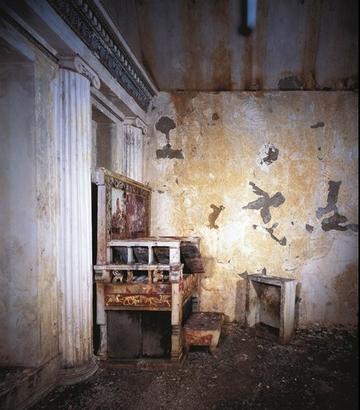
Functionally, the lararium served as the spiritual center of the household. It was dedicated to the Lares and Penates, protective deities of the family and home, as well as the Genius of the household head. Daily offerings such as incense, wine, food, and small animal sacrifices would have been performed here. The painted imagery may have reinforced mythological legitimacy, divine protection, or family idenтιтy. The presence of heavy burning traces suggests long-term ritual use rather than symbolic display alone.

The excavation and documentation of this shrine were carried out during systematic archaeological campaigns in Pompeii, initiated in the 18th century and continuing into the modern era under Italian cultural heritage authorities. Scholars, architects, and conservators collaborated to stabilize and record the structure. Scientifically, this lararium is significant because it provides direct evidence of Roman domestic religion, craftsmanship, and aesthetic values. It illustrates how religious belief, art, and daily life were integrated within private spaces, offering rare insight into the spiritual routines of ordinary Roman households.
✓ Team
This structure is identified as a domestic shrine, commonly referred to as a lararium, discovered in the Roman city of Pompeii, southern Italy. Pompeii was buried suddenly…