Archaeological Analysis of the Abydos Reliefs: Decoding Ancient Egyptian Iconography and Alternative Interpretations
The temple complex of Abydos, situated in Upper Egypt, stands as one of the most profound archaeological sites for understanding ancient Egyptian religion, kingship, and monumental art. Among its many architectural marvels, the Seti I temple houses specific low-relief carvings that have become a focal point of both mainstream academic study and alternative historical debates. These reliefs, particularly the well-known hieroglyphic anomalies often referred to as the “helicopter hieroglyphs” and the adjacent mythological scenes, showcase the sophisticated masonry and artistic techniques characteristic of the New Kingdom. Analyzing these stone panels requires a delicate balance between examining physical execution and confronting the diverse interpretations that separate rigorous archaeology from modern pop-culture mythology.
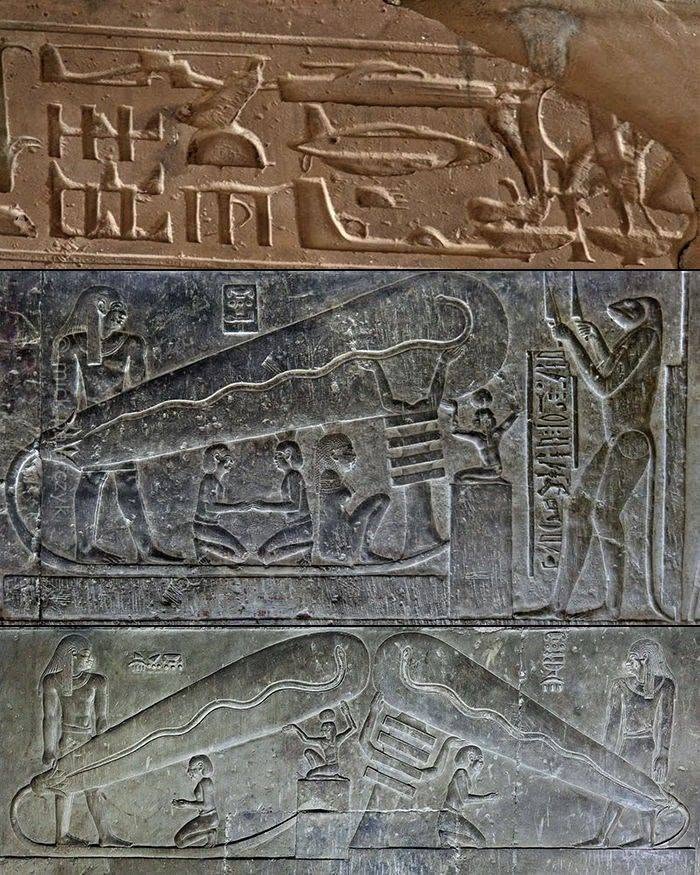
The physical context and material composition of these artifacts reflect the high standards of New Kingdom stonemasonry during the 19th Dynasty, specifically originating around the 13th century BCE under the reigns of Pharaoh Seti I and his son Ramesses II. Carved directly into fine-grained limestone blocks that form the structural walls of the temple corridors, the reliefs were executed using sunken relief techniques. Artisans first smoothed the wall surfaces, applied a grid system to maintain strict proportional canons, and then meticulously chiseled out the surrounding background to make the hieroglyphs and figurative imagery stand out. The precision of the tool marks and the sharp internal angles of the carvings demonstrate an advanced mastery of copper or early bronze chisels alongside stone-working mallets.

The primary archaeological documentation and discovery of the Seti I temple at Abydos as a systematic site unfolded through multiple phases of modern exploration, most notably mapped and recorded by pioneering Egyptologists like Auguste Mariette in the mid-19th century. Subsequent epigraphic surveys by organizations such as the Egypt Exploration Fund (now the Egypt Exploration Society) painstakingly copied every wall inscription to preserve the fragile limestone surfaces from environmental decay. Unlike portable artifacts unearthed through stratigraphic excavation, these reliefs remain in situ, meaning their primary context is architectural and religious rather than domestic or funerary, anchoring them firmly within the sacred geography of the Abydos necropolis.
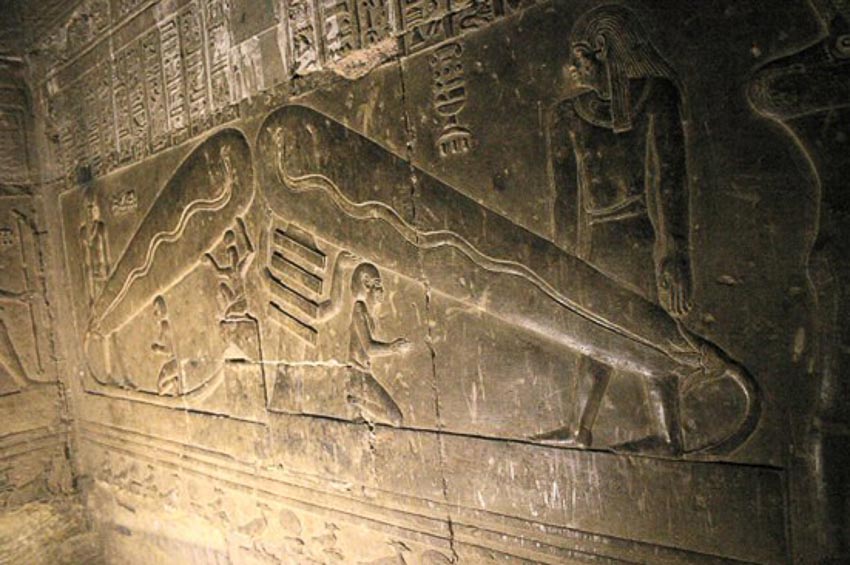
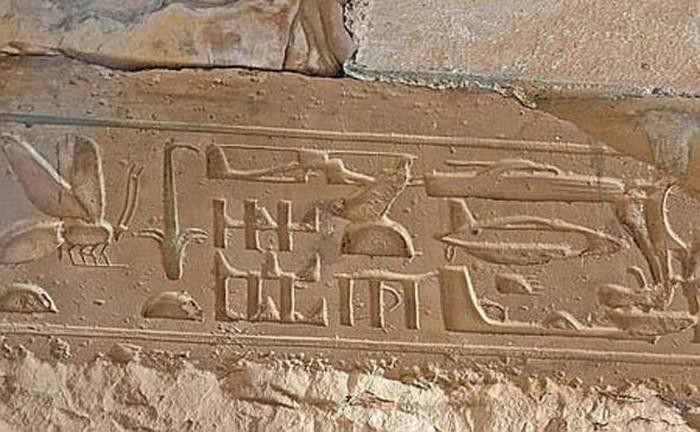
The primary purpose and meaning of these carvings within ancient Egyptian culture are entirely religious and royal rather than technological. The top panel, famous for allegedly depicting modern vehicles like helicopters, submarines, and jet fighters, is actually the result of a historical accident known as a palimpsest or overlapping inscriptions. Specifically, the original тιтulary carved under Seti I was plastered over and re-carved with the тιтulary of his successor, Ramesses II; when the ancient plaster eroded over centuries, the overlapping layers of hieroglyphic signs accidentally blended into ambiguous shapes that modern observers misinterpret. Similarly, the lower panels featuring bulbous shapes enclosing serpentine figures—popularly misconstrued as ancient electric light bulbs—are standard mythological representations of the primeval mound, the lotus flower, and solar rebirth deities such as Harsomtus.
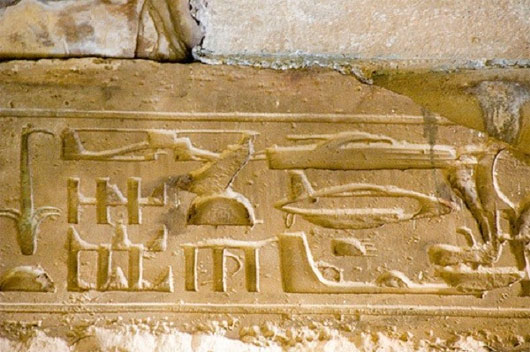
Ultimately, the dicH๏τomy between mainstream archaeological consensus and fringe theories surrounding the Abydos reliefs highlights the challenges of interpreting ancient art without complete contextual awareness. While alternative historians view the imagery as evidence of lost high technology or ancient astronaut intervention, Egyptologists ground their analysis in the extensive grammar, religious texts, and artistic evolution of the New Kingdom. Through careful epigraphic recording, historical comparison of overlapping тιтle changes, and material science, modern scholarship demonstrates that these stone reliefs are monuments to ancient theology, royal legitimation, and master craftsmanship rather than blueprints for futuristic machinery.
✓ hoangduc
The temple complex of Abydos, situated in Upper Egypt, stands as one of the most profound archaeological sites for understanding ancient Egyptian religion, kingship, and monumental art….