Archaeological Analysis of the “Cave Canem” Mosaic from the House of the Tragic Poet in Pompeii
The rigorous scientific investigation of ancient Roman floor mosaic monuments provides profound insights into daily life, craft techniques, and the cultural symbol systems of ancient Roman urban centers. The chronology of this famous mosaic is attributed to the 1st century BC to the 1st century AD (approximately 79 AD before the volcanic disaster buried it). The location of this artifact’s discovery is situated right at the entrance (fauces) of the House of the Tragic Poet in the ancient city of Pompeii, within the Campania region of Italy. Through systematic archaeological excavations at this site preserved by the volcanic ash of Mount Vesuvius, this floor mosaic artwork provides critical empirical data regarding residential architecture and interior decoration arts of the Roman upper class.
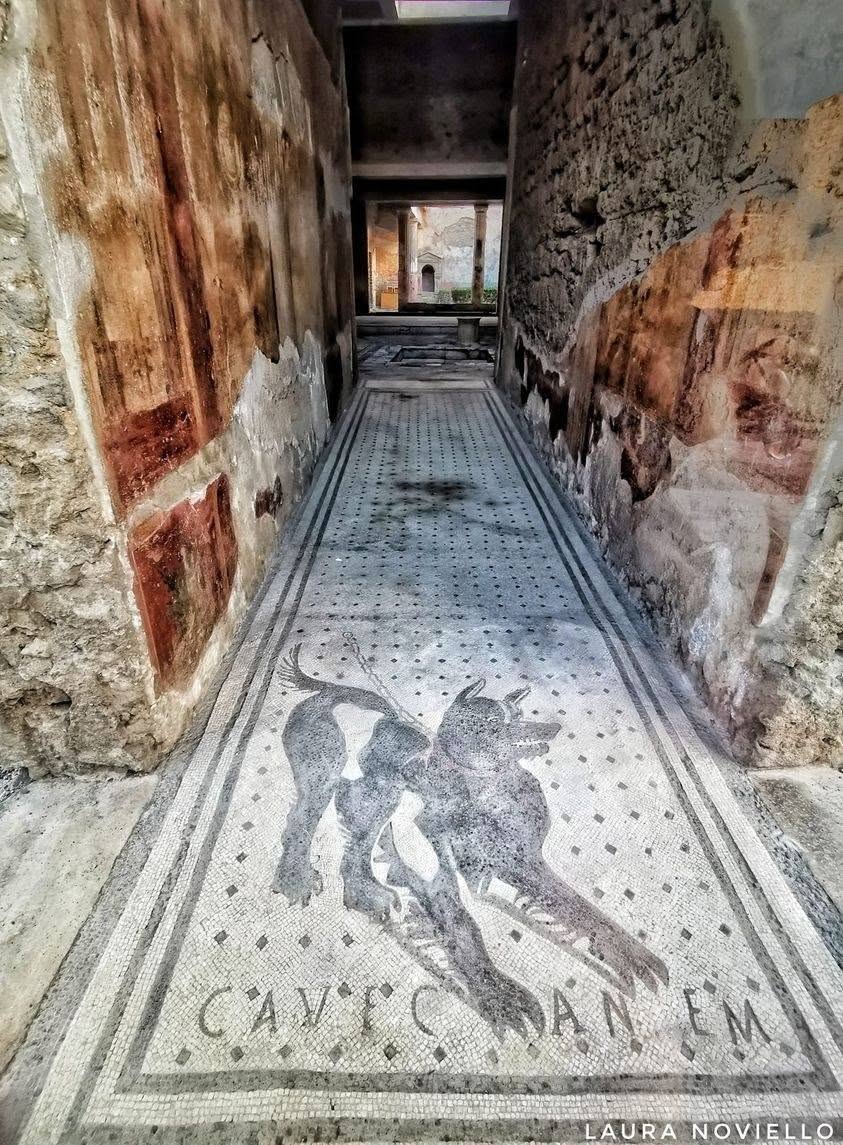
The physical material comprising the mosaic consists of thousands of finely cut small stone cubes (known as tesserae) featuring two primary tones of black and white, combined with characteristic reddish accent details. The fabrication details reveal that Roman mosaic artisans utilized the opus tessellatum technique to arrange and bond individual colored stones onto a solid foundational mortar layer along the entrance corridor of the house. The mosaic vividly depicts a ferocious guard dog growling, bristling its fur, wearing a studded collar, and restrained by a secure metal chain. Below the animal’s image is the classic Latin inscription “CAVE CANEM,” which directly warns pᴀssersby and visiting guests of the presence of guard surveillance.
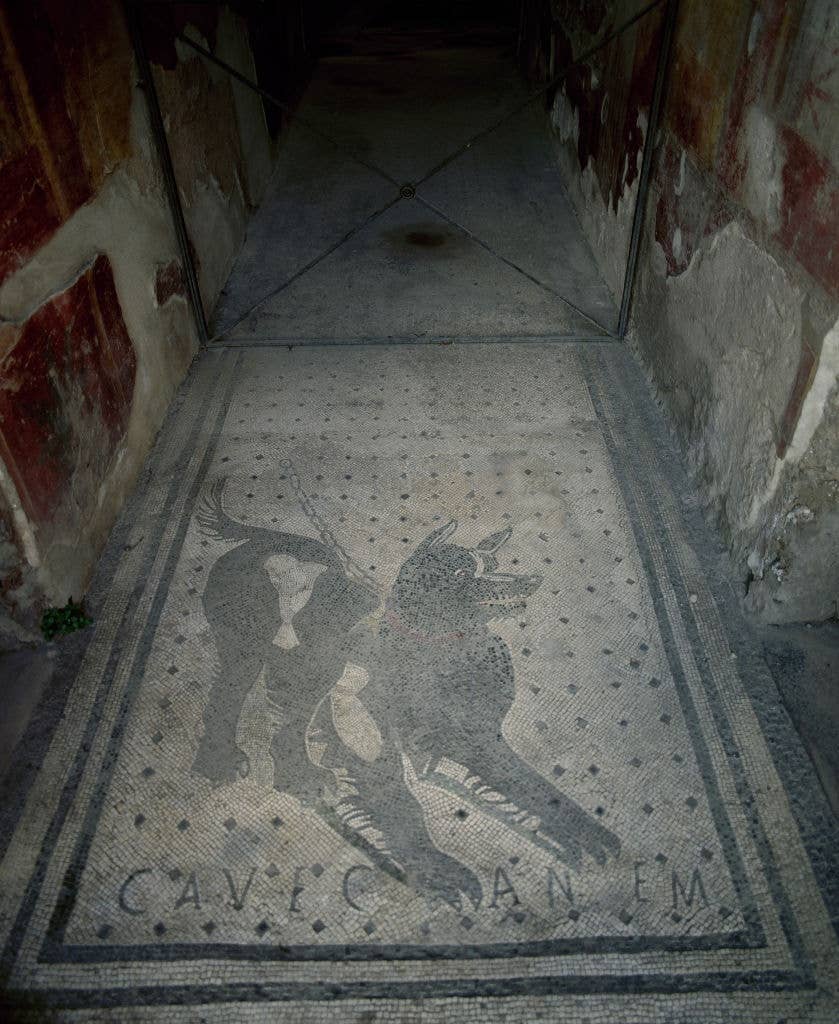
From a functional and interpretive perspective, the “Cave Canem” mosaic served both as a practical warning sign and a spiritual protective symbol (an amulet against evil spirits) for the residence. Archaeologists and Roman culture researchers suggest that although the house might not always have housed a genuinely fierce dog, this warning image helped create a psychological deterrent against intrusive intruders. The scale and placement of the image right at the threshold reflect the owner’s desire to ᴀssert social status, wealth, and security. Furthermore, this refined artistic style demonstrates the peak development of interior decorative arts and crafts in the ancient Roman world.
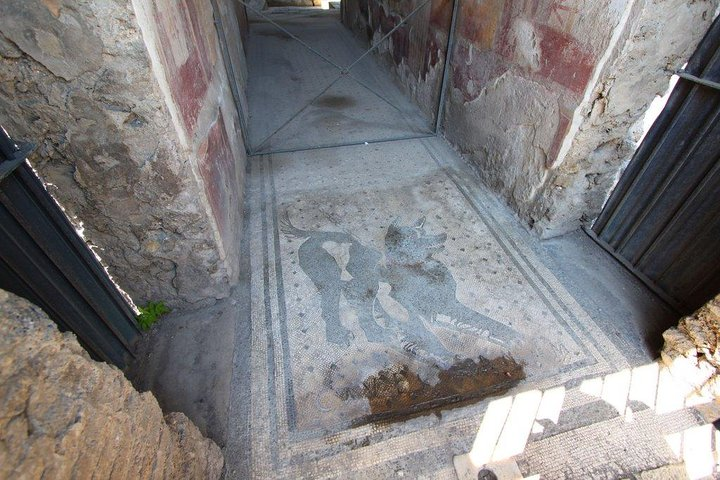
The discovery, excavation, and preservation of the House of the Tragic Poet along with this famous mosaic are linked to archaeological campaigns at Pompeii from the 18th to the 19th centuries, subsequently continued by modern heritage management agencies. Pioneering explorers and archaeologists under the patronage of the Kingdom of Naples authorities stripped, documented cultural strata, and transported many valuable artifacts to the National Archaeological Museum of Naples for preservation. Modern excavations surrounding the corridor and residential structures continue to apply digital pH๏τogrammetric imaging methods, helping analyze detailed tessera arrangement techniques without damaging the original structure. Through systematic preservation efforts, scientists are protecting one of the most famous visual heritage pieces of the ancient world.
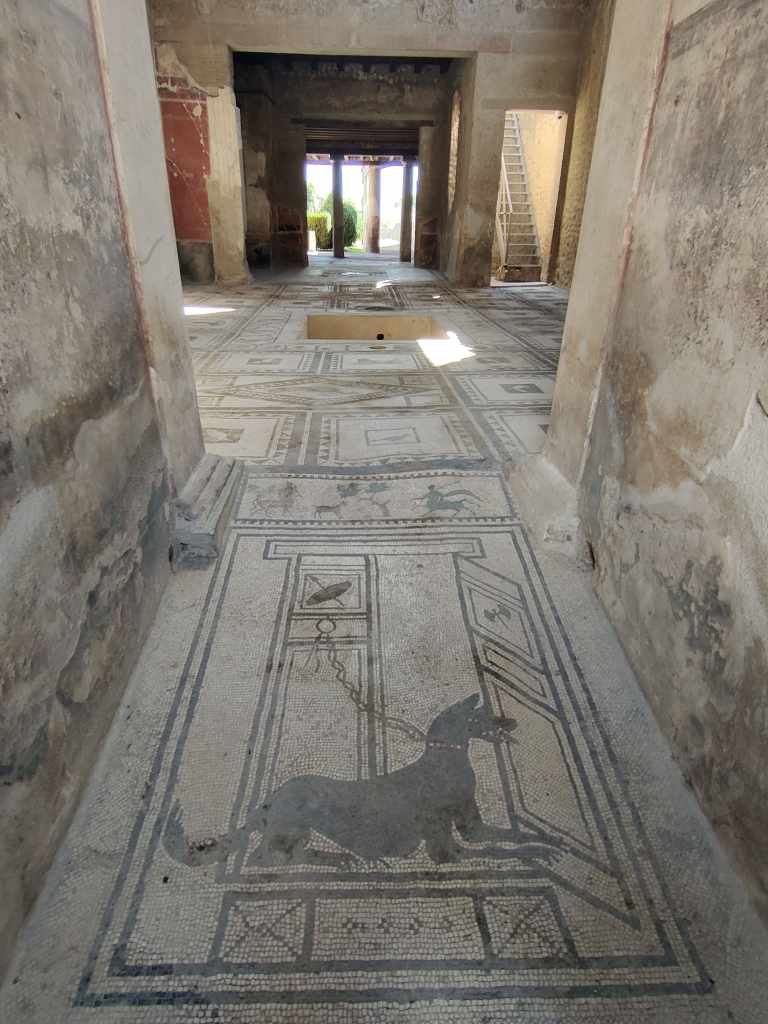
Ultimately, the “Cave Canem” mosaic at Pompeii stands as a timeless testament to the artistic creation, daily life, and living space protection mindset of the ancient Romans. By combining meticulous hand-made stone mosaic techniques with a powerful visual warning message, ancient artisans left behind a cultural heritage of profound symbolic value to humanity. As archaeological studies continue to clarify the context of Roman urban architecture, this artifact remains an invaluable archaeological treasure. It endures as a powerful bridge connecting the modern world with the brilliant Mediterranean civilization before it was buried by a natural disaster two millennia ago.
✓ Ryan Mitchell
The rigorous scientific investigation of ancient Roman floor mosaic monuments provides profound insights into daily life, craft techniques, and the cultural symbol systems of ancient Roman urban…