Archaeological Analysis of the Nohoch Mul Pyramid at Coba
The rigorous scientific investigation of ancient Maya monumental architecture provides profound insights into the engineering strategies, religious practices, and urban planning of pre-Columbian lowland civilizations. Dating back to the Late Classic and Postclassic periods of the Maya civilization (circa 600–900 AD with subsequent ceremonial phases extending to 1200 AD), this remarkable pyramid structure represents a pinnacle of regional masonry and ceremonial construction. The location of this major archaeological discovery is situated deep within the tropical rainforest ruins of Coba, located in the state of Quintana Roo on the Yucatán Peninsula of Mexico. Through decades of systematic archaeological survey, clearing, and architectural recording, this towering complex—known as Nohoch Mul, meaning “Great Mound” in the Maya language—offers critical empirical data regarding the political reach and architectural evolution of ancient Mesoamerican city-states.
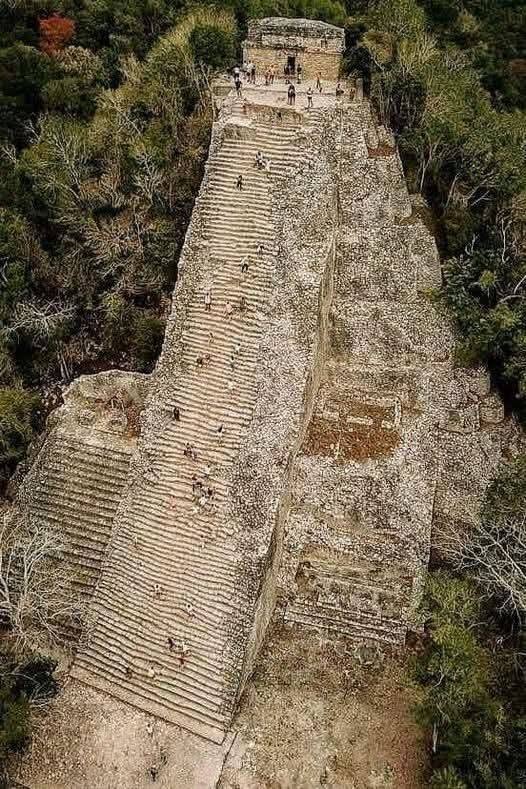
The physical material comprising this monumental pyramid consists of locally quarried limestone blocks and rubble cores bound with traditional lime plaster and mortar. The fabrication details reveal an impressive multi-tiered construction method where ancient builders stacked seven broad structural bodies over a natural bedrock elevation, connected by a steep, monumental central stairway comprising approximately 120 stone steps. Masons utilized stone-cutting tools and abrasive techniques to shape the exterior limestone blocks, which were originally coated with smooth stucco and brightly painted to enhance their visual impact. Crowning the uppermost terrace is a well-preserved Postclassic temple featuring traditional architectural elements characteristic of the region’s sacred sanctuaries.

From a functional and interpretive perspective, this towering pyramid served vital religious, political, and astronomical purposes within the expansive urban network of Coba. Archaeologists suggest that Nohoch Mul functioned primarily as a sacred ceremonial platform and a symbolic mountain linking the mortal realm with the celestial deities and underworld spirits. The soaring height of the structure—reaching approximately 42 meters, making it the tallest pyramid in the northern Yucatán Peninsula—allowed it to visually anchor an intricate network of white stone roads, known as sacbeob, which radiated outward to connect Coba with other subject settlements. Additionally, the summit temple served as an exclusive ritual space where elite priests conducted ceremonies to legitimize the authority of regional rulers.

The discovery, mapping, and academic documentation of the Coba ruins and the Nohoch Mul pyramid are attributed to a succession of early explorers and insтιтutional research organizations. Following initial accounts by travelers such as John Lloyd Stephens and Frederick Catherwood in the 19th century, professional archaeological mapping was significantly advanced by insтιтutions like the Carnegie Insтιтution of Washington and modern Mexican archaeological bodies such as the Insтιтuto Nacional de Antropología e Historia (INAH). Pioneering researchers conducted exhaustive architectural analyses, stratigraphic excavations, and epigraphic surveys of surrounding stelae to decode the chronology of the site. Through these rigorous scientific efforts, scholars have preserved an invaluable cultural landscape that illuminates the complexity of ancient Maya civilization.
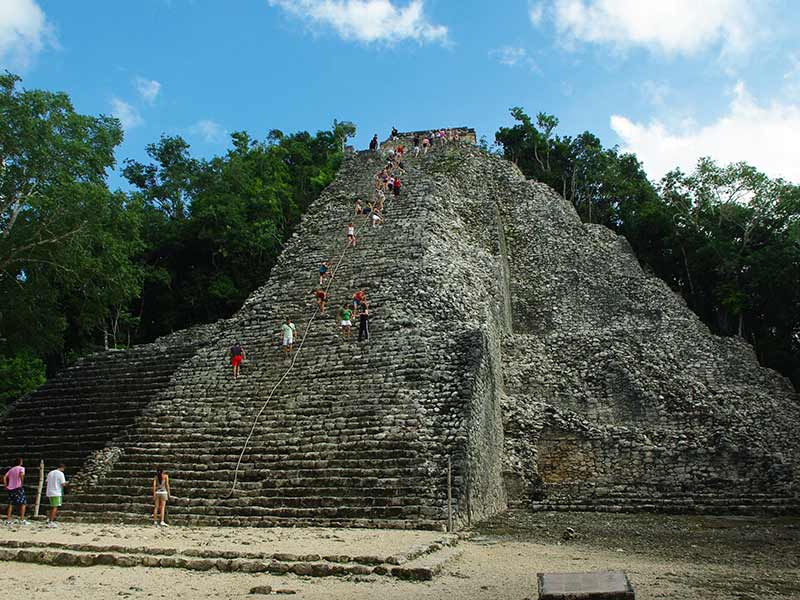
Ultimately, this monumental limestone pyramid stands as an enduring testament to the structural ambition, engineering capability, and spiritual worldview of the ancient Maya. By merging monumental geometry with the natural topography of the jungle terrain, Coba’s builders created an awe-inspiring architectural landmark that commanded the surrounding landscape. As ongoing archaeological studies continue to utilize advanced mapping and excavation techniques to clarify site chronologies, Nohoch Mul remains a premier cultural treasure. It endures as a powerful physical link to a brilliant pre-Columbian civilization that permanently inscribed its heritage into the stone and soil of the Yucatán.
✓ Ryan Mitchell
The rigorous scientific investigation of ancient Maya monumental architecture provides profound insights into the engineering strategies, religious practices, and urban planning of pre-Columbian lowland civilizations. Dating back…