Architectural Masterpiece of the Andes: The Megalithic Walls of Ollantaytambo

The archaeological site depicted here is located at the monumental complex of Ollantaytambo, situated in the Sacred Valley of the Incas in the Cusco Region of Peru. Nestled high in the Andean mountains along the Patakancha River, the site occupies a strategic defensive and administrative position. The monumental structures, particularly the Temple of the Sun sector and its surrounding high-precision stone terraces, were discovered and documented through decades of modern archaeological exploration and heritage conservation in the region. The discovery context reveals a sprawling imperial Inca city that served simultaneously as a royal estate, a ceremonial religious center, and a formidable military stronghold during the height of the Inca Empire.
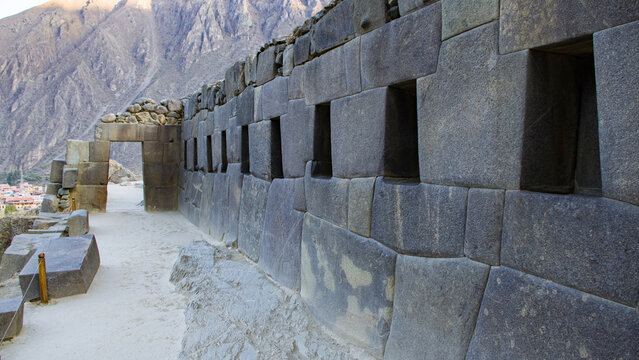
From a material and manufacturing perspective, these magnificent walls are constructed from enormous blocks of hard pink rhyolite and dark local stone, quarried from distant mountainsides such as Kachiqhata across the Urubamba River. The craftsmanship displayed in shaping and fitting these stones is a pinnacle of Inca stonemasonry, characterized by smooth, finely dressed ashlar masonry where individual blocks are shaped to interlock perfectly without the use of mortar. The detailed stone-cutting techniques involved pounding the hard rock surfaces with heavy stone hammers, grinding them with abrasive sand and water, and employing precise leveling methods. This meticulous process created flawless joints so тιԍнт that even a thin blade cannot be inserted between the stones, showcasing an advanced understanding of lithic engineering and architectural stress distribution.

Chronologically, the construction of this monumental site dates back to the mid-15th century CE, specifically during the reign of the great Inca Emperor Pachacuti around the 1440s, who conquered the region and ordered the mᴀssive redevelopment of the settlement. The site also bears historical significance as the backdrop for a rare Inca military victory against the Spanish conquistadors led by Manco Inca in 1537 during the rebellion of the Spanish conquest. Absolute and relative dating derived from Spanish chronicled accounts, architectural style evolution, and stratigraphic excavations place the active monumental building phase squarely within the Late Horizon period of Andean prehistory, just prior to European contact.
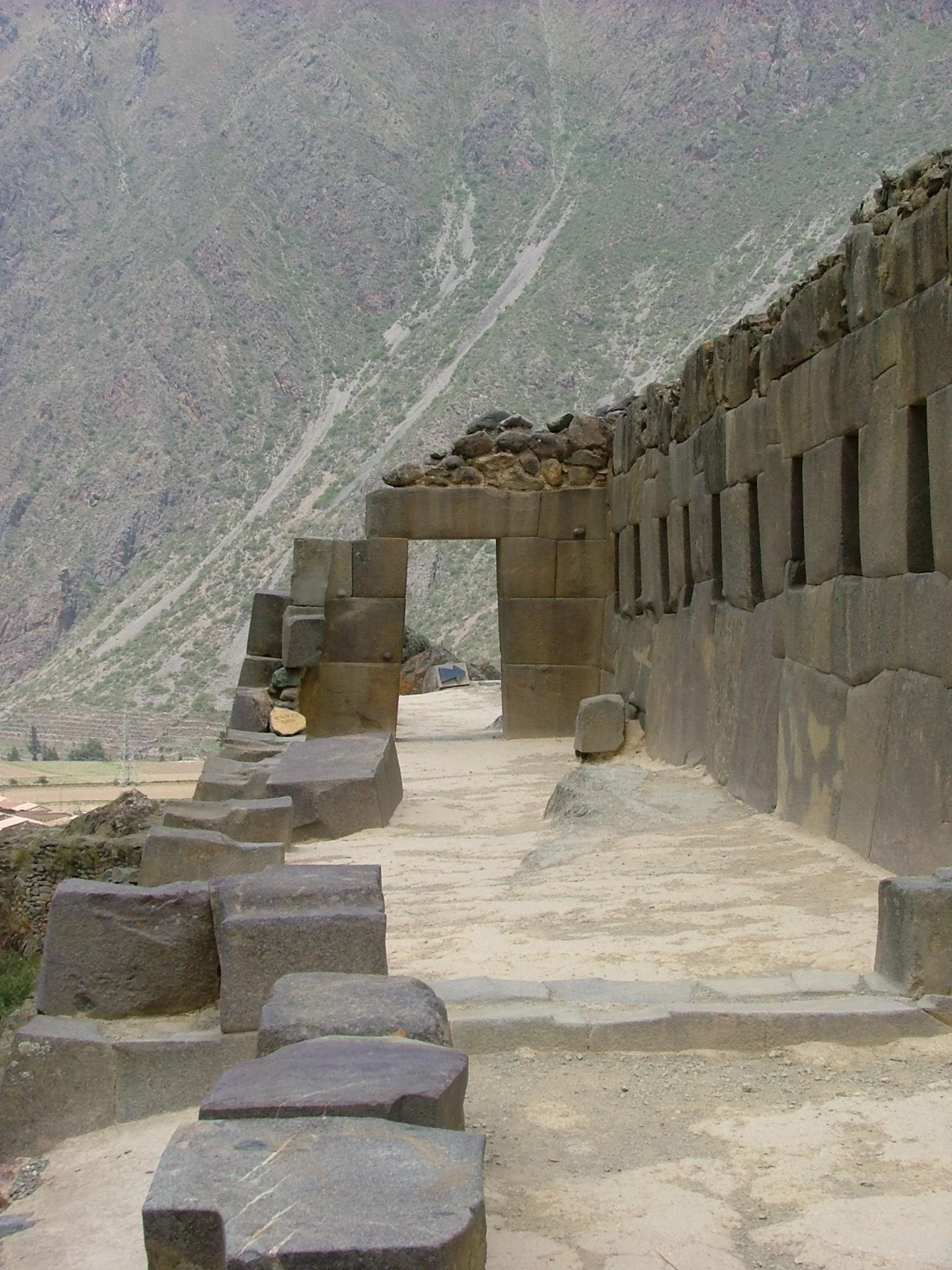
The cultural, architectural, and socio-political significance of these structures is profound, reflecting the supreme administrative centralization, religious devotion, and engineering genius of the Inca state. The mᴀssive polished walls and trapezoidal niches were designed not only for structural stability—providing exceptional earthquake resistance through their flexibility and inward-sloping angles—but also to project imperial power and cosmic order. The precision of the stone walls symbolized the harmony between human creation and the sacred Andean landscape (the Apus), functioning as elite temples, storehouses (qullqas), and ceremonial gates that commanded the sacred geography of the valley.
Scientific documentation, restoration, and archaeological excavations at Ollantaytambo have been carried out by numerous prominent insтιтutions and researchers, including the Peruvian Ministry of Culture (Ministerio de Cultura del Perú) and international archaeological missions. Early scientific descriptions were advanced by travelers and scholars like Ephraim George Squier in the 19th century, followed by systematic stratigraphic excavations and architectural recording by twentieth-century Andean archaeologists such as Luis Valcárcel and John Rowe. Today, ongoing research utilizing modern surveying, pH๏τogrammetry, and structural conservation projects ensure that these architectural marvels are preserved, protecting the rich heritage of the Inca civilization for future generations.
✓ Ryan Mitchell
The archaeological site depicted here is located at the monumental complex of Ollantaytambo, situated in the Sacred Valley of the Incas in the Cusco Region of Peru….