🚨 BREAKING: Life-Threatening Flood Emergency Along the Guadalupe River—Residents Urged to Seek Higher Ground Immediately
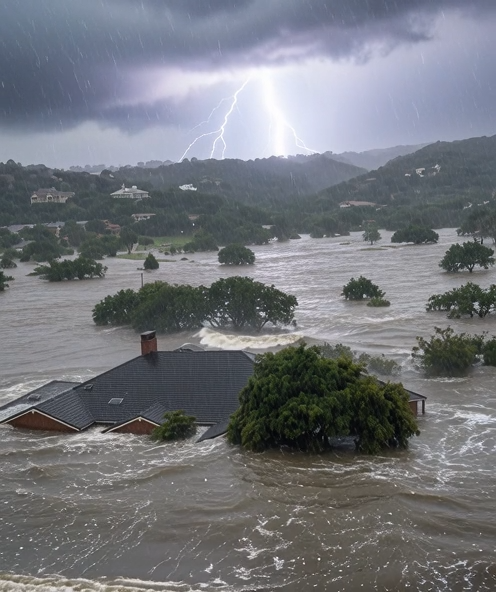
🚨 LIFE-THREATENING FLOOD EMERGENCY IN TEXAS: Residents Along the Guadalupe River Urged to Seek Higher Ground Immediately as Dangerous Floodwaters Continue to Rise
A life-threatening flood emergency is unfolding across portions of the Texas Hill Country as rapidly rising water along the Guadalupe River and its tributaries continues to threaten homes, businesses, roads, and entire communities. Emergency officials are issuing urgent warnings for residents living near the river to move to higher ground immediately, emphasizing that conditions are changing rapidly and that delaying evacuation could place lives in extreme danger.
Following days of relentless rainfall, rivers and streams throughout the region have risen to dangerous levels, transforming normally peaceful waterways into powerful currents capable of sweeping away vehicles, damaging infrastructure, and isolating neighborhoods in only a matter of minutes. Meteorologists warn that this is not a routine flooding event. Instead, it is a rapidly evolving emergency with the potential to become even more severe as additional runoff continues flowing downstream.
Among the communities facing the greatest concern are those surrounding Boerne, Comfort, Kerrville, Hunt, and other towns located along the Guadalupe River watershed. These areas have experienced repeated rounds of intense thunderstorms that delivered extraordinary amounts of rainfall over a relatively short period. The saturated ground can no longer absorb additional water, forcing nearly every inch of rainfall into creeks, streams, and rivers that are already overflowing.
The result has been a dramatic and dangerous rise in water levels.
Residents described waking to roads disappearing beneath muddy floodwaters, neighborhoods becoming isolated, and familiar riverbanks transforming into fast-moving torrents. Areas that were completely dry only hours earlier became submerged as water surged through low-lying communities with astonishing speed.
One of the most alarming aspects of the emergency has been the rapid rise of the Guadalupe River, which has reached exceptionally dangerous levels in several locations. Hydrologists monitoring river gauges report that water levels increased at an extraordinary pace, leaving very little time for preparation in flood-prone neighborhoods.
Emergency management officials have repeatedly stressed that people living near the Guadalupe River or any of its tributaries should not wait until floodwaters reach their property before taking action.
Flash flooding can develop with incredible speed.
Water moving downstream from heavy rainfall upstream may continue arriving long after local rainfall has ended, meaning communities experiencing only light rain can still face life-threatening flooding as runoff travels through the river system.
Officials continue urging residents to monitor emergency alerts, weather warnings, and evacuation notices closely.
Those living near creeks, rivers, low-water crossings, and flood-prone areas are encouraged to relocate to higher ground immediately if instructed by local authorities. Emergency managers emphasize that evacuation decisions should never be delayed once water begins approaching homes or roadways.
Throughout the affected region, emergency responders have been working continuously to protect lives.
Fire departments, sheriff’s offices, emergency medical services, Texas game wardens, and specialized swift-water rescue teams remain deployed across numerous communities. Rescue crews have responded to reports of stranded motorists, flooded homes, and residents trapped by rapidly rising water.
Using rescue boats, high-water vehicles, helicopters, ropes, and specialized flotation equipment, responders have carried out numerous evacuations while navigating dangerous currents and poor weather conditions.
Every rescue presents significant challenges.
Floodwaters often conceal submerged vehicles, damaged pavement, fencing, fallen trees, utility lines, and countless other hazards beneath the surface. Strong currents can shift unexpectedly, requiring rescuers to carefully balance speed with safety during every operation.
Despite these dangers, first responders continue working around the clock, demonstrating extraordinary professionalism and courage as they ᴀssist communities facing one of the region’s most significant flood emergencies in recent memory.
Transportation throughout the area has been severely disrupted.
Numerous highways, county roads, bridges, and low-water crossings have been closed after becoming submerged beneath fast-moving water. Officials strongly advise motorists to avoid all flooded roadways, even if the water appears shallow.
Floodwater is often much deeper than it looks.
Road surfaces may have been washed away beneath the water, leaving dangerous sinkholes or structural damage hidden from view. Even a relatively small amount of moving water can cause drivers to lose control, while stronger currents can sweep away large pickup trucks and sport utility vehicles.
Authorities continue emphasizing one simple but lifesaving message:
Turn Around, Don’t Drown.
This warning has become one of the most important flood safety campaigns because so many flood-related fatalities occur when drivers attempt to cross flooded roads rather than finding alternate routes.
No destination is worth risking a life.
Meteorologists explain that the current emergency developed after multiple rounds of slow-moving thunderstorms repeatedly pᴀssed over the Texas Hill Country. Instead of moving quickly through the region, storms continued producing heavy rainfall over many of the same watersheds.
This phenomenon dramatically increased runoff into rivers and streams, causing water levels to rise far more rapidly than normal.
The geography of the Hill Country further intensifies flood risks.
Steep terrain, rocky landscapes, narrow valleys, and fast-draining watersheds allow rainfall to move quickly into rivers, producing sudden and sometimes catastrophic rises in water levels. Because of these natural characteristics, the region has long been recognized as one of the most flash-flood-prone areas in the United States.
Even after rainfall decreases, dangers remain.
Large volumes of water continue traveling downstream for hours or even days, causing rivers to remain elevated and, in some cases, continue rising despite improving weather.
Public health officials are also warning residents about the hidden dangers ᴀssociated with floodwater.
Floodwaters frequently contain sewage, fuel, chemicals, agricultural runoff, sharp debris, and harmful bacteria capable of causing serious illness or injury. Residents returning to flooded properties are urged to wear protective equipment, avoid direct contact with standing water whenever possible, and follow official guidance before reentering damaged buildings.
Power outages have affected portions of the region as floodwaters and severe weather disrupted electrical infrastructure. Utility companies continue ᴀssessing damage and restoring service where safe access is possible, although ongoing flooding may delay repair efforts in the hardest-hit communities.
Local shelters have opened to ᴀssist displaced families forced to evacuate from vulnerable neighborhoods. Volunteers and community organizations are distributing food, bottled water, blankets, clothing, and emergency supplies while providing temporary shelter for those unable to return home safely.
Neighbors throughout the Hill Country have also come together to help one another.
Residents have ᴀssisted elderly neighbors with evacuations, moved livestock to higher ground, helped secure homes, and supported first responders by sharing local information about flooded roads and isolated communities.
These acts of compᴀssion have become powerful reminders of the resilience that often emerges during times of crisis.
Weather experts continue closely monitoring developing conditions.
Although rainfall intensity may fluctuate, additional thunderstorms remain possible, raising concerns that already swollen rivers could experience renewed rises if further heavy precipitation develops over the watershed.
Emergency managers stress that residents should remain prepared for rapidly changing conditions.
Flash Flood Emergencies and evacuation notices should always be taken seriously, even if flooding has not yet reached a particular neighborhood.
Floodwaters can travel quickly, and waiting until conditions visibly worsen may leave too little time for a safe escape.
The ongoing emergency along the Guadalupe River serves as another powerful reminder of the immense force of nature and the importance of preparedness during severe weather. Peaceful rivers can become destructive torrents within hours, transforming familiar landscapes into dangerous flood zones and placing countless lives at risk.
As rescue operations continue and river levels remain dangerously high, officials are urging everyone in vulnerable areas to remain vigilant, monitor trusted weather information, and follow all emergency instructions without hesitation. Moving to higher ground early, avoiding flooded roads, and respecting evacuation orders remain the most effective ways to stay safe during this life-threatening flood emergency.
For the communities along the Guadalupe River, the priority remains clear: protect lives first, allow emergency crews to do their work, and remain prepared until floodwaters fully recede and authorities declare the danger has pᴀssed.
✓ Team
🚨 LIFE-THREATENING FLOOD EMERGENCY IN TEXAS: Residents Along the Guadalupe River Urged to Seek Higher Ground Immediately as Dangerous Floodwaters Continue to Rise A life-threatening flood emergency…