Chronicles in Marble: An Archaeological Examination of the Column of Marcus Aurelius
Standing proudly in the heart of Rome’s Piazza Colonna, the Column of Marcus Aurelius is a monumental masterpiece of imperial Roman art and public architecture. Erected between approximately 180 and 193 CE—following the death of the emperor and completed during the reign of his son Commodus—this soaring Doric column celebrates the military victories of Marcus Aurelius over the Germanic Marcomanni, Quadi, and Sarmatian tribes along the Danubian frontier. Rising to an original height of nearly 30 meters for the shaft alone (and over 40 meters including its pedestal), the column serves as an enduring historical narrative carved in stone. Inspired directly by the earlier Column of Trajan, it provides contemporary archaeologists and historians with an invaluable visual archive of Roman military tactics, logistics, weaponry, and imperial ideology.
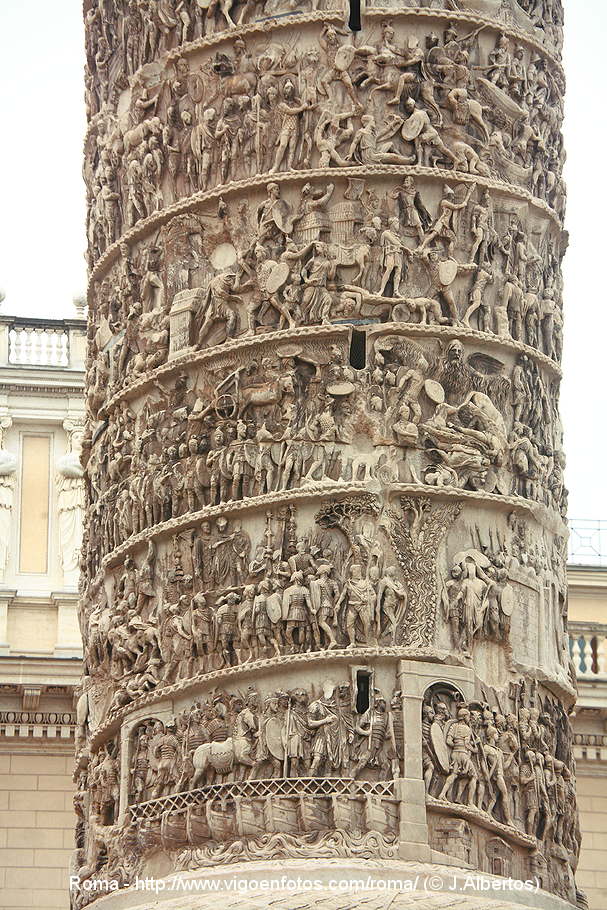
Unlike buried artifacts recovered through excavation, the Column of Marcus Aurelius has remained an above-ground fixture of Rome’s urban landscape since antiquity, situated originally within the northern part of the Campus Martius. Its archaeological provenance is deeply intertwined with the civic evolution of Rome, having served continuously as a landmark despite the collapse of the surrounding imperial complexes. Historical records indicate that during the late 2nd century CE, a dedicated imperial caretaker or procurator—such as a freedman named Adrastus—managed the monument and maintained a small hut nearby. Over subsequent centuries, the column survived medieval shifts in the city’s topography, though its original base reliefs were largely altered or lost during a major architectural restoration commissioned by Pope Sixtus V in the late 16th century, when the architect Domenico Fontana repaired the structure and crowned it with a bronze statue of Saint Paul.

The structural integrity and artistic brilliance of the column rely heavily on its choice of material: fine-grained white Carrara marble (known in antiquity as luna marble). The shaft is ingeniously constructed from approximately 28 mᴀssive cylindrical marble blocks stacked horizontally, each meticulously hollowed out on the interior to house a continuous helical staircase of 190 steps leading to an upper viewing platform. Encircling the exterior of the shaft is a continuous spiral relief band measuring roughly 100 Roman feet in length when unrolled, featuring over 115 distinct narrative scenes carved in high-to-low relief. Master sculptors utilized precision chisels and drills to execute the intricate friezes, portraying detailed armor, facial expressions, and landscape elements across 21 distinct spiral turns.
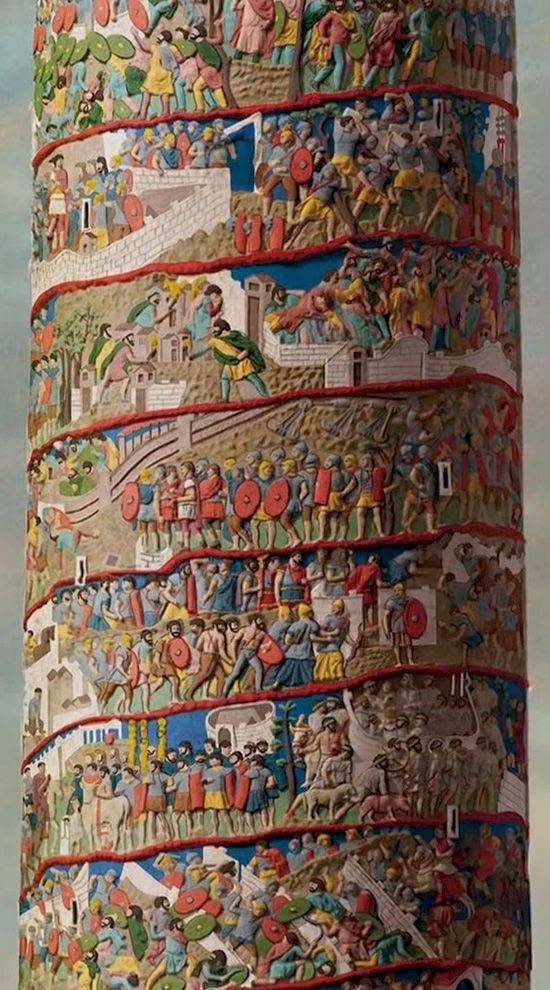
Functionally, the column served both as a grandiose royal tomb marker or memorial and as a political propaganda tool demonstrating the might and divine favor of the Roman state. The spiral frieze acts as a visual history book, beginning at the base with Roman troops crossing the Danube River on a pontoon bridge and progressing upward through military campaigns, battles, enemy submissions, and miraculous interventions—such as the famous “Rain Miracle” that saved the Roman army. Unlike the triumphant conquest themes of Trajan’s column, the reliefs on this monument emphasize intense struggle, endurance, and punitive retaliation against northern tribes, reflecting the harsher political and military realities of the late Antonine period.

Because the monument has never been lost to history, its modern study relies on architectural documentation, epigraphic analysis, and structural conservation rather than initial discovery excavations. Pioneers of classical archaeology and topography, such as Italian archaeologist Rodolfo Lanciani and subsequent scholars specializing in Antonine art, have meticulously documented its reliefs and structural phases. In modern times, insтιтutions like the Archaeological Superintendency of Rome oversee its continuous preservation. Through advanced pH๏τogrammetry, laser scanning, and conservation initiatives, contemporary researchers continue to protect this fragile marble masterpiece from urban pollution and environmental decay, ensuring its legacy endures for future archaeological inquiry.
✓ Ryan Mitchell
Standing proudly in the heart of Rome’s Piazza Colonna, the Column of Marcus Aurelius is a monumental masterpiece of imperial Roman art and public architecture. Erected between…