Convergence of Stone: Architectural Parallelism Between Rapa Nui and the Andes
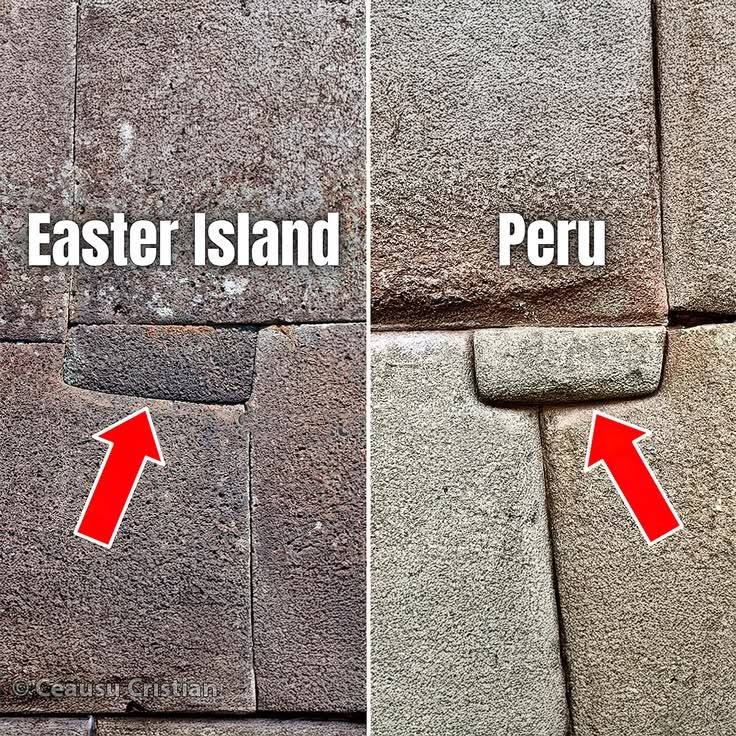
The compelling visual comparison between the megalithic dry-stone masonry of Ahu Vinapu on Easter Island (Rapa Nui) and the imperial Inca structures of Cusco and Ollantaytambo in Peru represents one of the most fascinating topics in Pacific and South American archaeology. Located thousands of kilometers apart across the vast expanse of the Pacific Ocean, both sites feature extraordinarily precise ashlar walls constructed with interlocking, multi-polygonal stone blocks. A striking detail highlighted in these structures is the insertion of small, custom-shaped key stones or filler blocks designed to seamlessly lock larger megaliths into place without any mortar. This extraordinary architectural phenomenon continues to intrigue archaeologists studying trans-oceanic contact theories and independent technological convergence in ancient societies.
From a chronological perspective, these sophisticated stone walls belong to the late pre-Columbian era, with construction phases spanning between the 13th and 16th centuries AD. In the Andean region, the pinnacle of Inca dry-stone masonry developed under the reign of Sapa Inca Pachacuti Yupanqui around 1438–1471 AD, transforming sites like Ollantaytambo and Sacsayhuamán into imperial strongholds. Conversely, radio-carbon dating of ceremonial platforms (ahu) on Rapa Nui places the construction of Ahu Vinapu between 1200 and 1500 AD. The close temporal overlap between these two distinct cultural spheres has fueled ongoing debates regarding potential maritime voyages between Polynesia and the South American continent prior to European contact.
In terms of materials and manufacturing techniques, both civilizations utilized local volcanic rocks, yet executed identical stone-dressing principles. In Peru, Inca stonemasons worked primarily with dense pink granite, andesite, and diorite, while Rapa Nui sculptors shaped local basalt and basaltic tuff. The fabrication process involved laborious pounding and abrading using hard stone hammers (diorite or basalt hammerstones) to hammer out perfectly тιԍнт, mortarless joints. Master craftsmen carefully carved recessed notches and inserted perfectly fitted keystones—such as the rectangular locking stone shown in the image—to stabilize minor shifts in the wall geometry and eliminate gaps between multi-ton boulders.
Functionally and structurally, these interlocking stones were engineered to provide maximum stability, structural resilience, and symbolic prestige. In seismic-prone regions like the Andes, mortarless polygonal walls with interlocking keystones act as dynamic anti-seismic barriers; during an earthquake, individual blocks can flex and settle back into place without causing catastrophic collapse. On Rapa Nui, Ahu Vinapu served as a sacred ceremonial platform dedicated to ancestor veneration, where the precise, smooth-faced stone facades reflected elite political authority and spiritual power (mana), directly mirroring how the Inca used grandiose masonry to project imperial divinity.
Modern scientific investigation and documentation of these architectural marvels have been led by prominent archaeologists, anthropology insтιтutes, and heritage authorities. Thor Heyerdahl’s famous 1955–1956 Norwegian Archaeological Expedition first brought global attention to the architectural similarities at Ahu Vinapu, proposing direct contact between South America and Polynesia. Subsequent scientific research by insтιтutions such as the Consejo de Monumentos Nacionales de Chile and the Ministerio de Cultura del Perú—alongside architectural scholars like Jean-Pierre Protzen—has thoroughly analyzed these masonry techniques, suggesting that while the technical principles represent a brilliant response to working with volcanic stone, they remain a monument to the independent genius of ancient human engineering.
✓ Ryan Mitchell
The compelling visual comparison between the megalithic dry-stone masonry of Ahu Vinapu on Easter Island (Rapa Nui) and the imperial Inca structures of Cusco and Ollantaytambo in…