🚨 Flash Flood Chaos in Texas: Dramatic Rescues as Drivers Become Trapped in Rising Waters
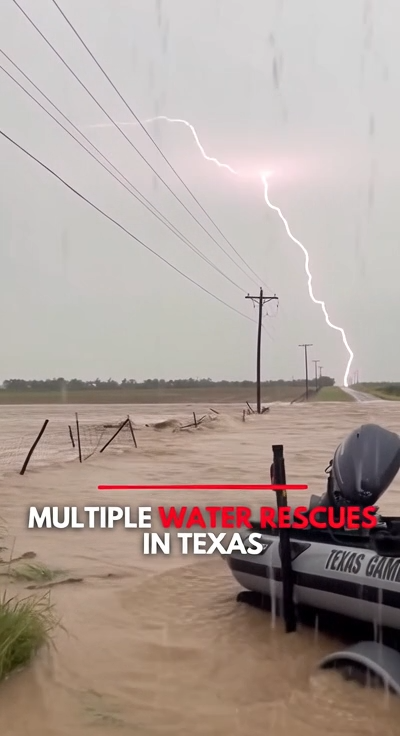
🚨 TURN AROUND: Dangerous Flooding Sweeps Across Uvalde County as Swiftwater Rescuers Race Against Time to Save Stranded Drivers
A frightening series of flood rescues unfolded across Uvalde County, Texas, after relentless rainfall transformed highways, rural roads, and low-water crossings into fast-moving rivers, trapping multiple motorists inside their vehicles and forcing emergency responders to launch swiftwater rescue operations under extremely hazardous conditions. As floodwaters continued to rise across parts of central and south-central Texas, officials warned that the danger was far from over, urging residents to avoid unnecessary travel as a prolonged flood threat remains in place through much of the week.
The emergency developed after repeated rounds of heavy thunderstorms moved across the region, dropping significant amounts of rain over areas that were already saturated from previous storms. With the ground unable to absorb additional moisture, rainfall quickly flowed into creeks, rivers, and drainage channels, causing waterways to rise at an alarming rate. Small streams rapidly overflowed their banks, while normally dry washes and roadside ditches became powerful torrents capable of sweeping away vehicles within seconds.
In Uvalde County, conditions deteriorated rapidly during the height of the storm.
Drivers traveling on highways and rural roads suddenly encountered water covering the pavement. What appeared to be shallow flooding often concealed swift currents and washed-out sections of roadway beneath the surface. Several motorists found themselves trapped as rising water surrounded their vehicles, leaving them unable to move forward or safely turn around.
Emergency dispatch centers began receiving urgent calls from stranded drivers reporting that floodwaters were rising around them. Some occupants climbed onto the roofs of their vehicles to escape the incoming water, while others remained inside hoping rescue teams could reach them before conditions became even more dangerous.
Local fire departments, sheriff’s deputies, emergency medical services, and specialized swiftwater rescue teams immediately mobilized.
Rescue crews deployed inflatable rescue boats, high-water vehicles, ropes, flotation equipment, and other specialized gear designed for operations in fast-moving water. Working in difficult weather and poor visibility, responders carefully navigated flooded roadways while constantly monitoring changing water levels and current speeds.
Every rescue required careful planning.
Swiftwater rescue is one of the most technically demanding forms of emergency response. Floodwaters often conceal fences, vehicles, tree branches, utility poles, and other submerged hazards that cannot be seen from the surface. Strong currents can shift unexpectedly, making every approach to a stranded vehicle potentially dangerous for both rescuers and victims.
Emergency personnel worked methodically, ensuring that each rescue could be completed without placing additional lives at risk.
Witnesses described dramatic scenes as emergency crews reached stranded motorists one by one, helping them safely board rescue boats before transporting them to higher ground. In several locations, floodwaters continued rising throughout the rescue operations, emphasizing just how quickly flash flooding can become life-threatening.
Officials praised the professionalism and courage displayed by first responders throughout the emergency.
Behind every successful rescue stood years of specialized training, extensive preparation, and the willingness of emergency personnel to enter hazardous conditions in order to protect complete strangers.
Meteorologists explained that the flooding was the result of a slow-moving weather pattern that allowed thunderstorms to repeatedly develop over the same areas. This phenomenon, sometimes referred to as “training” thunderstorms, occurs when successive storms move across nearly identical paths, dramatically increasing rainfall totals within a relatively short period.
As each new storm pᴀssed over the region, runoff accumulated faster than rivers and drainage systems could carry it away.
The result was widespread flash flooding that spread across highways, neighborhoods, farmland, and low-lying communities.
Weather experts warned that the situation remained highly unstable.
Forecast models indicated that additional rounds of thunderstorms were possible over the coming days, raising concerns that already swollen rivers and creeks could continue rising or that new flash flooding could develop with little warning.
Officials emphasized that flooding is often most dangerous after rainfall has stopped.
Water from upstream areas continues flowing downstream, causing rivers to rise hours after storms have moved away. Communities that experience little rainfall locally may still face severe flooding because of runoff arriving from neighboring watersheds.
Transportation officials reported numerous road closures throughout affected portions of Texas as floodwaters made travel increasingly hazardous.
Low-water crossings, common throughout many parts of the state, became particularly dangerous. These crossings are designed to allow water to flow over roadways during periods of heavy rain, but they can quickly become ᴅᴇᴀᴅly when drivers underestimate the force or depth of moving water.
Authorities repeatedly reminded the public of one simple but lifesaving message:
Turn Around, Don’t Drown.
The slogan has become one of the most recognizable flood safety campaigns in the United States because it addresses one of the leading causes of flood-related fatalities.
Many people believe they can safely drive through floodwater if it appears shallow.
In reality, only a relatively small amount of moving water can cause a vehicle to lose traction, while deeper currents can carry away even large pickup trucks and sport utility vehicles.
Floodwater also hides numerous dangers beneath the surface.
Drivers cannot see whether pavement has been washed away, whether deep holes have formed beneath the roadway, or whether debris is blocking safe pᴀssage.
Emergency officials stressed that no destination is worth risking a life.
Beyond transportation hazards, the flooding has affected homes, ranches, agricultural land, and local businesses throughout the region.
Some residents have been forced to evacuate as water entered homes and surrounded neighborhoods. Property owners rushed to move livestock, equipment, and valuables to higher ground while monitoring rapidly changing weather conditions.
Floodwaters also pose significant public health concerns.
As water moves through communities, it often becomes contaminated with sewage, fuel, chemicals, agricultural runoff, and harmful bacteria. Health officials advise residents to avoid direct contact with floodwater whenever possible and to use caution when returning to flooded properties after waters begin receding.
Power outages have also been reported in some areas as strong winds and flooding affected electrical infrastructure.
Utility crews remain prepared to restore service where conditions safely permit, though restoration efforts may be delayed in locations where roads remain underwater or floodwaters continue rising.
Community organizations, churches, and volunteer groups have begun ᴀssisting families affected by the flooding by providing temporary shelter, food, bottled water, clothing, and emergency supplies.
Neighbors have also stepped forward to help one another, demonstrating the resilience and compᴀssion that often emerge during natural disasters.
Meteorologists continue closely monitoring the evolving weather pattern, warning that the flood threat is expected to persist throughout the week.
Additional thunderstorms could produce new flash flooding, particularly in locations where rivers remain elevated or soils are already saturated. Residents are encouraged to remain weather-aware, monitor official forecasts, and be prepared to act quickly if evacuation orders or flash flood warnings are issued.
For emergency responders, the work is far from finished.
Teams remain on standby around the clock, prepared to respond immediately if additional rescues become necessary. Equipment is being repositioned across vulnerable areas, while emergency management officials continue coordinating with local, state, and regional agencies to ensure resources are available wherever conditions worsen.
The events unfolding in Uvalde County serve as another powerful reminder of the destructive speed and unpredictability of flash flooding. Unlike many natural disasters that develop gradually, flash floods can transform familiar roads into raging rivers within minutes, leaving little time for escape once water begins rising.
Although rescue teams successfully reached multiple stranded motorists during this emergency, officials stress that the safest rescue is the one that never becomes necessary. By respecting road closures, avoiding flooded crossings, and following weather warnings, residents can dramatically reduce the risk of becoming trapped during severe weather.
As Texas continues to face days of unsettled weather, one message remains more important than ever: stay informed, stay prepared, and remember that when floodwaters cover the road ahead, the safest decision is always to turn around rather than take the risk.
✓ Team
🚨 TURN AROUND: Dangerous Flooding Sweeps Across Uvalde County as Swiftwater Rescuers Race Against Time to Save Stranded Drivers A frightening series of flood rescues unfolded across…