🏆 History Made: Kwanza Jones Poised to Become MLB’s First Black Woman Majority Owner
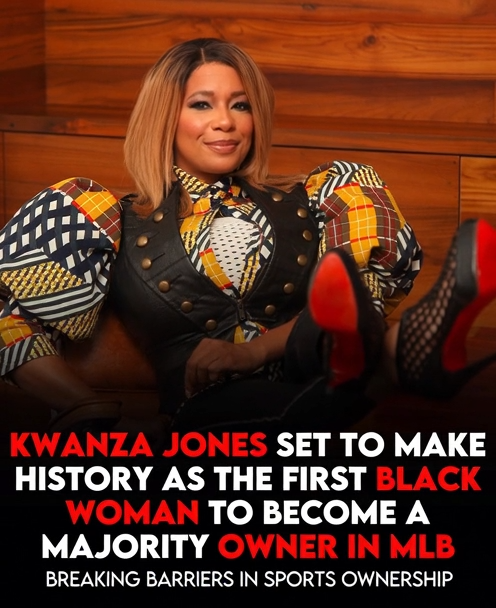
Kwanza Jones Poised to Make History with Landmark MLB Ownership Bid, Signaling a New Era for Diversity in Professional Sports
The world of professional sports may soon witness a historic milestone as entrepreneur, investor, and philanthropist Kwanza Jones moves closer to becoming the first Black woman to hold a majority ownership stake in a Major League Baseball (MLB) franchise. If finalized, the achievement would mark a transformative moment not only for baseball but also for the broader landscape of American professional sports, where diversity among team ownership has historically lagged far behind the diversity seen on the field.
While the ownership process remains subject to league approvals and the completion of any proposed transaction, Jones’ reported pursuit has already captured widespread attention from the business community, sports executives, investors, and advocates for greater representation in leadership positions. Many view the potential milestone as a powerful example of how the executive and ownership ranks of professional sports are gradually evolving after decades in which opportunities at the highest levels were available to only a select few.
For generations, Major League Baseball has celebrated groundbreaking achievements by players who broke racial and cultural barriers on the diamond. Yet ownership suites and corporate boardrooms have remained among the least diverse areas of professional athletics. The possibility of Jones becoming the first Black woman majority owner of an MLB team represents another important chapter in the sport’s long journey toward greater inclusion.
Beyond the historical significance, the story is also one of entrepreneurship, long-term vision, and strategic leadership.
Kwanza Jones has built a reputation through her work in business, investment, technology, and philanthropy. Rather than emerging from a traditional sports management background, she has spent years developing expertise in finance, innovation, and organizational leadership—skills increasingly recognized as essential for successfully operating modern professional sports franchises.
Today’s Major League Baseball organizations are no longer simply baseball teams.
They are global entertainment brands managing complex business operations that include media rights, digital content, merchandising, stadium development, community engagement, corporate partnerships, international marketing, and player development systems worth hundreds of millions—or even billions—of dollars.
As a result, modern ownership requires far more than a pᴀssion for sports.
It demands financial discipline, strategic planning, long-term investment, and the ability to guide organizations through rapidly changing economic and technological environments.
Supporters believe Jones’ professional background positions her well to contribute to that evolving model of sports ownership.
Her reported pursuit has also sparked renewed conversations about representation at the highest levels of professional athletics.
While leagues across North America have become increasingly diverse in terms of athletes, coaching staffs, and front-office executives, ownership remains one of the final frontiers where meaningful progress has been comparatively slow.
Many observers argue that ownership diversity matters because owners help shape the long-term direction of franchises.
They influence organizational culture.
They determine investment priorities.
They support community initiatives.
They hire executive leadership.
They often play a major role in stadium development, youth programs, charitable outreach, and economic partnerships within their cities.
A broader range of perspectives at the ownership level can therefore influence not only business decisions but also how teams connect with fans and the communities they represent.
Jones’ potential milestone has generated enthusiasm among entrepreneurs and business leaders who see her journey as evidence that leadership opportunities continue expanding across industries once considered inaccessible.
Her story resonates particularly strongly with women and people from historically underrepresented backgrounds who aspire to leadership positions in finance, technology, sports, and corporate America.
Many see her as an example of what becomes possible when business success, persistence, and long-term vision intersect with opportunities to create lasting insтιтutional change.
The conversation extends well beyond baseball itself.
Across professional sports, ownership groups have gradually become more diverse over the past decade, with increased participation from women, minority investors, technology entrepreneurs, private equity firms, and international business leaders.
Although these changes have not occurred overnight, they reflect broader shifts taking place throughout the global economy.
Today’s sports franchises increasingly value expertise in innovation, media strategy, analytics, global branding, and digital transformation alongside traditional business experience.
This changing landscape has opened doors for a wider range of investors capable of contributing fresh ideas and long-term strategic perspectives.
Business analysts note that successful franchise ownership now involves balancing compeтιтive success with sustainable financial growth.
Owners must invest in player development while maintaining organizational stability.
They oversee major infrastructure projects.
They navigate evolving broadcast and streaming markets.
They respond to changing fan expectations.
They support community programs and charitable initiatives that strengthen relationships between franchises and the cities they call home.
These responsibilities require collaborative leadership and careful long-term planning.
Jones has also earned recognition throughout her career for philanthropic work focused on expanding educational opportunities, entrepreneurship, and community development.
Supporters believe that background could further strengthen connections between a baseball organization and the communities it serves, reinforcing the growing expectation that professional sports franchises should contribute meaningfully beyond the playing field.
The potential milestone has generated significant discussion throughout social media, sports media, and business publications.
Fans have expressed excitement about the possibility of witnessing another historic breakthrough within Major League Baseball.
Many have emphasized that expanding representation at the ownership level helps demonstrate that leadership opportunities in professional sports continue becoming more inclusive.
Others point out that milestones like this carry symbolic importance because they inspire future generations.
Young entrepreneurs, investors, executives, and students often look to highly visible leaders as examples of what can be achieved through determination, education, innovation, and persistence.
Seeing individuals from diverse backgrounds reach positions once considered unattainable can encourage others to pursue similarly ambitious goals.
Industry experts also caution that becoming a majority owner of a professional sports franchise is an extraordinarily complex process.
Transactions typically involve extensive financial negotiations, legal reviews, league approval procedures, and detailed evaluations by existing ownership groups and league officials.
Until every required step has been completed, any proposed ownership change remains subject to formal approval and finalization.
Nevertheless, the attention surrounding Jones’ reported pursuit demonstrates the significance many observers attach to the possibility.
Even before any transaction is completed, the discussion itself reflects how expectations surrounding leadership in professional sports continue evolving.
Baseball has always celebrated historic firsts.
From groundbreaking players who transformed the game on the field to executives who expanded opportunities behind the scenes, each generation has witnessed milestones that gradually reshaped the sport.
If Kwanza Jones ultimately completes the process and becomes the first Black woman majority owner of a Major League Baseball franchise, it would represent another landmark moment in that ongoing history.
More importantly, it would symbolize progress extending far beyond one individual or one team.
It would highlight the growing recognition that talent, leadership, innovation, and vision are not limited by gender or background.
Whether viewed through the lens of business, sports, or social progress, Jones’ journey has already become an inspiring example of ambition meeting opportunity. As professional sports continue evolving into increasingly global and diverse enterprises, leaders like Kwanza Jones represent the expanding possibilities available to the next generation of entrepreneurs, investors, and executives who hope to shape the future of the games millions of fans love.
✓ Team
Kwanza Jones Poised to Make History with Landmark MLB Ownership Bid, Signaling a New Era for Diversity in Professional Sports The world of professional sports may soon…