🚨 Missouri Flood Disaster: 350 People Rescued, Including Over 200 Children, as Search Continues for Missing Woman
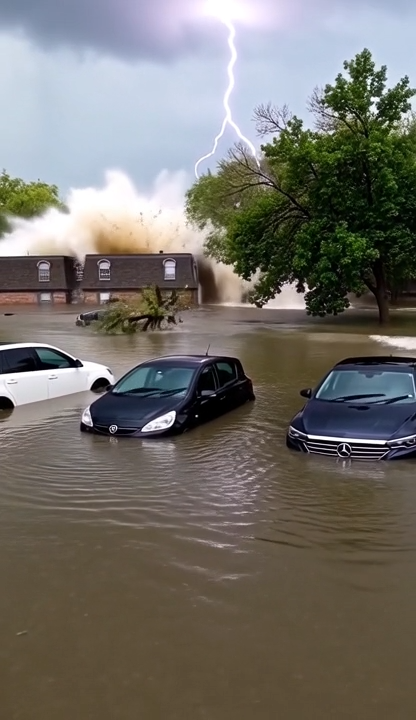
MISSOURI FLOOD DISASTER: Hundreds Rescued as Catastrophic Flash Floods Devastate Communities, Leave One Missing, and Trigger a State of Emergency
Missouri is facing one of its most severe flooding disasters in recent years after relentless storms unleashed historic rainfall across the southeastern part of the state, overwhelming rivers, destroying homes, washing out roads, and forcing hundreds of dramatic water rescues. Emergency crews have worked around the clock in dangerous conditions, risking their own lives to save families trapped by rapidly rising floodwaters as communities struggle to cope with the widespread devastation.
According to the latest official updates, approximately 350 people have been rescued from floodwaters in Reynolds County alone, making this one of the largest coordinated rescue operations the region has experienced in years. Among those rescued were more than 200 children attending Camp Taum Sauk, where counselors, emergency responders, and local officials worked together to safely evacuate campers before conditions became even more dangerous.
Officials confirmed that, despite the terrifying circumstances, all of the children rescued from Camp Taum Sauk escaped without reported injuries, a remarkable outcome considering the speed with which floodwaters engulfed the surrounding area. Emergency managers praised the quick response of camp staff, first responders, and rescue teams, whose coordinated actions helped prevent what could have become a far more tragic situation.
The rescue operation unfolded as relentless rainfall caused rivers and streams to rise at an alarming pace. Campgrounds that had appeared completely safe only hours earlier suddenly became surrounded by rushing water, cutting off roads and isolating campers from nearby communities. Rescue crews deployed specialized boats, high-water vehicles, and other emergency equipment to reach those stranded before water levels climbed even higher.
For many parents, the ordeal became an emotional nightmare.
As news spread that severe flooding had struck the region, families anxiously waited for updates, hoping their children had reached safety. Communication proved difficult in some areas because flooded roads, power disruptions, and overwhelmed emergency systems complicated efforts to provide timely information.
Fortunately, officials later confirmed that no campers or staff members were reported missing in Reynolds County, bringing enormous relief to hundreds of worried families.
While Reynolds County celebrated the successful rescue of every known camper, neighboring Crawford County faced a far more heartbreaking situation.
Authorities reported that at least one woman remains missing after her home was swept away by powerful floodwaters.
According to emergency officials, the woman’s residence was overwhelmed as rapidly rising water tore through the area, carrying away portions of the structure. Search-and-rescue teams immediately launched an extensive operation, but dangerous conditions have made their work extremely difficult.
Swift-moving floodwater remains one of the most hazardous environments emergency responders encounter.
Strong currents, floating debris, submerged vehicles, damaged buildings, and unstable terrain significantly increase the danger for both victims and rescue personnel. Every search operation must be carefully coordinated to balance urgency with responder safety.
The search for the missing woman continues as crews monitor changing water levels and expand their efforts wherever conditions allow.
Meteorologists say the disaster was fueled by an extraordinary 6 to more than 12 inches of rainfall falling across parts of southeastern Missouri within roughly twenty-four hours.
Some locations may have received even greater amounts.
This exceptional rainfall overwhelmed creeks, rivers, drainage systems, and flood-control infrastructure throughout the region. Once the ground became completely saturated, nearly every additional inch of rain flowed directly into waterways, causing water levels to rise with astonishing speed.
Streams that normally pose little concern transformed into violent torrents.
Roadside ditches became rivers.
Fields disappeared beneath muddy water.
Entire neighborhoods found themselves isolated as floodwaters surrounded homes and blocked evacuation routes.
Forecasters warn that the danger may not be over.
Additional rainfall remains possible, raising concerns that already swollen rivers could continue rising or that new flash flooding may develop in areas still struggling to recover from the initial storms.
Because of the unprecedented destruction, Governor Mike Kehoe has declared a State of Emergency, allowing Missouri to mobilize additional state resources, coordinate emergency response efforts more effectively, and accelerate ᴀssistance for affected communities.
The emergency declaration enables state agencies to work alongside local governments, emergency management officials, law enforcement, transportation departments, and public health organizations as recovery operations continue.
Officials describe the damage across portions of southeastern Missouri as catastrophic.
Entire roadways have been washed out or remain submerged beneath floodwaters.
Bridges are being inspected for structural damage.
Power outages have affected numerous communities.
Homes have sustained extensive flooding, with many families facing the difficult task of rebuilding after losing furniture, appliances, personal belongings, and treasured possessions.
Agricultural areas have also suffered significant impacts.
Floodwaters have spread across cropland, damaging fields during the growing season and creating uncertainty for farmers already coping with challenging weather conditions. Livestock owners have worked tirelessly to move animals to higher ground while ᴀssessing damage to barns, fences, and other agricultural infrastructure.
Public safety officials continue urging residents to remain extremely cautious.
Floodwaters often contain hidden hazards, including sharp debris, damaged pavement, downed power lines, fuel, sewage, and harmful bacteria. Even after visible water begins receding, weakened roads and compromised bridges may remain unsafe until engineers complete thorough inspections.
Authorities continue reminding drivers of one critical message:
Turn Around, Don’t Drown.
Many flood-related fatalities occur when motorists attempt to drive across flooded roads. Water covering pavement can conceal washed-out sections beneath the surface, while surprisingly shallow moving water can carry away vehicles with little warning.
Emergency managers stress that no destination is worth risking a life.
Throughout the crisis, first responders have demonstrated extraordinary courage.
Firefighters, sheriff’s deputies, emergency medical personnel, conservation officers, National Guard members, and specialized swift-water rescue teams have worked long hours under hazardous conditions, often entering fast-moving floodwaters to reach people trapped inside homes, vehicles, and campgrounds.
Many rescue personnel have faced exhaustion while continuing operations through day and night.
Their commitment has been widely praised by community leaders and residents alike.
Behind every successful rescue lies careful planning, specialized training, and a willingness to place personal safety at risk in order to save others.
Communities across Missouri have also responded with remarkable compᴀssion.
Emergency shelters have opened their doors to displaced families.
Volunteers are distributing food, clean drinking water, clothing, blankets, and hygiene supplies.
Local organizations are helping care for displaced pets and livestock.
Neighbors continue ᴀssisting one another by clearing debris, checking on elderly residents, and supporting those who have lost homes or belongings.
These acts of kindness have become a powerful symbol of resilience during an incredibly difficult time.
Although rescue operations remain the immediate priority, attention is gradually beginning to shift toward the long process of recovery.
Engineers will need to inspect damaged infrastructure.
Utility crews must restore essential services.
Insurance ᴀssessments will begin once floodwaters recede.
Families will face the emotional and financial challenge of cleaning mud-filled homes, replacing damaged possessions, and rebuilding their lives.
For many communities, recovery could take weeks, months, or even longer.
The Missouri flood disaster serves as another sobering reminder of how rapidly extreme weather can transform familiar landscapes into scenes of destruction. In only a matter of hours, peaceful campgrounds became emergency rescue zones, quiet neighborhoods were overwhelmed by rushing water, and hundreds of lives were placed in immediate danger.
Yet amid the devastation, stories of courage continue to emerge.
More than 350 people were safely rescued. Over 200 children were brought to safety without injury. Countless first responders answered every call for help, often under life-threatening conditions.
As search efforts continue for the missing woman in Crawford County, communities across Missouri remain united in hope, determination, and graтιтude for the emergency personnel whose tireless efforts have saved so many lives. Their bravery stands as a powerful reminder that even in the face of overwhelming natural disasters, compᴀssion, cooperation, and courage can make the difference between tragedy and survival.
✓ Team
MISSOURI FLOOD DISASTER: Hundreds Rescued as Catastrophic Flash Floods Devastate Communities, Leave One Missing, and Trigger a State of Emergency Missouri is facing one of its most…