Monument to the Gods: The Archaeological Legacy of the Great Ziggurat of Ur
The Great Ziggurat of Ur, located near modern Nasiriyah in the Dhi Qar Governorate of Iraq, stands as one of the most magnificent and well-preserved architectural marvels of ancient Mesopotamia. Situated within the vast archaeological remains of the ancient Sumerian city-state of Ur (known historically as Tell el-Muqayyar), this colossal stepped pyramid dominates the surrounding desert landscape. As the focal point of the city’s main temple complex, the ziggurat represents the pinnacle of early urban planning, religious architecture, and imperial centralization, offering modern researchers an unparalleled window into the monumental building capabilities of the ancient Near East.
Chronologically, the construction of the Great Ziggurat began during the Early Bronze Age in the 21st century BCE, specifically around 2100 BCE under the reign of King Ur-Nammu, the founder of the Third Dynasty of Ur (Ur III), and was later completed by his son, King Shulgi. Over the succeeding centuries, the structure suffered partial degradation and underwent significant restorations, most notably during the Neo-Babylonian period in the 6th century BCE by King Nabonidus, who rebuilt its upper tiers. This multi-phase chronology places the monument at the intersection of the Neo-Sumerian cultural zenith and later Mesopotamian revivals, preserving architectural modifications from distinct historical epochs.
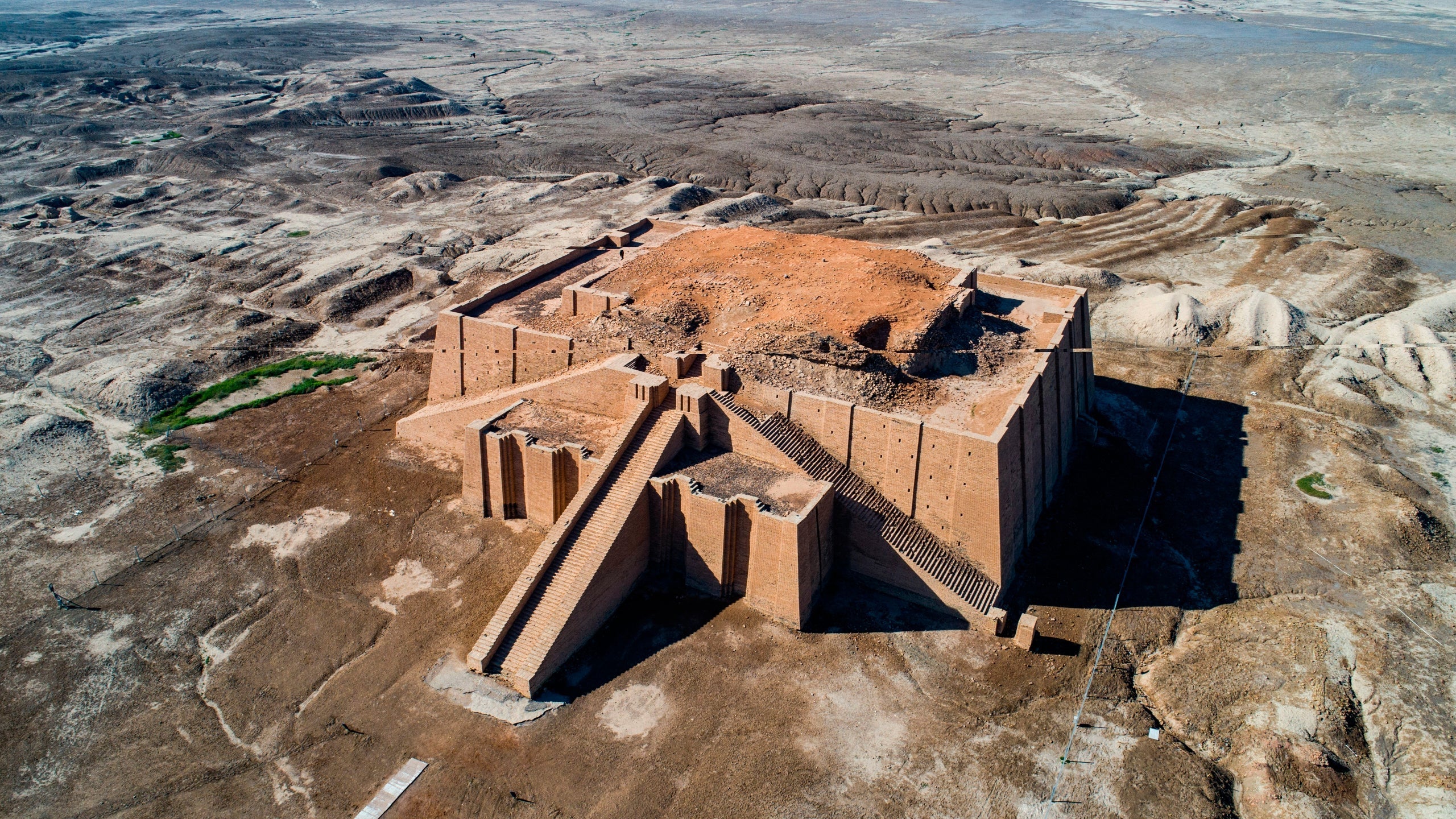
The engineering and material composition of the ziggurat demonstrate sophisticated adaptation to environmental constraints and resource availability in the alluvial plains of southern Iraq. The mᴀssive core of the structure was constructed using millions of sun-dried mud bricks, which provided structural mᴀss, while the exterior was heavily armored with a thick outer layer of kiln-baked bricks set in bitumen mortar to protect the vulnerable core from weathering and seasonal rains. Furthermore, builders incorporated intricate systems of weep holes and drainage channels through the baked brick exterior to reduce internal moisture and prevent structural fracturing. The lower terrace alone utilized an estimated 720,000 baked bricks, reflecting an immense mobilization of labor and material resources.

Functionally, the Great Ziggurat served as a sacred cosmic bridge—a monumental stepped platform designed to elevate a temple high above the mundane earth to bring mortals closer to the divine realm. The structure was dedicated to Nanna (also known as Sin), the patron moon god and principal deity of Ur, who held immense religious and political sway over the city-state. Beyond its primary religious function as a shrine and sanctuary, the surrounding temple complex acted as the administrative, economic, and redistribution heart of the kingdom, where citizens brought agricultural offerings, taxes, and trade goods managed by temple bureaucracy.
Modern archaeological exploration of this historic landmark was pioneered in the 1920s and 1930s by joint expeditions led by the renowned British archaeologist Sir Leonard Woolley, representing the British Museum and the University of Pennsylvania Museum. Woolley’s systematic excavations cleared away centuries of accumulated debris, mapped the complex layout, and uncovered the intricate relationship between the ziggurat and the surrounding royal cemeteries and administrative buildings. Later, in the late 20th century, partial restorations of the lower facade and monumental staircases were undertaken, ensuring that this priceless testament to human civilization continues to inspire archaeological inquiry and historical preservation today.
✓ Ryan Mitchell
The Great Ziggurat of Ur, located near modern Nasiriyah in the Dhi Qar Governorate of Iraq, stands as one of the most magnificent and well-preserved architectural marvels…