Sculpting the Immutable: An Analytical Examination of Contemporary Lithic Plasticity
Created in the early 21st century, specifically during the contemporary artistic period circa 2010 to 2020 CE, this striking sculptural piece challenges traditional perceptions of material rigidity. Originating from the artistic studio and natural landscape workshops of Galicia, Spain, the work bridges the gap between modern conceptual art and traditional stone-carving craftsmanship. Although not an ancient archaeological relic unearthed from a subterranean excavation stratum, it functions conceptually as a modern artifact that subverts millennia of geological and human interaction with stone. Its chronological placement reflects a contemporary movement where artists employ advanced manual techniques to question the absolute permanence and inflexibility of geological formations, inviting viewers to re-evaluate the physical properties of the natural world.
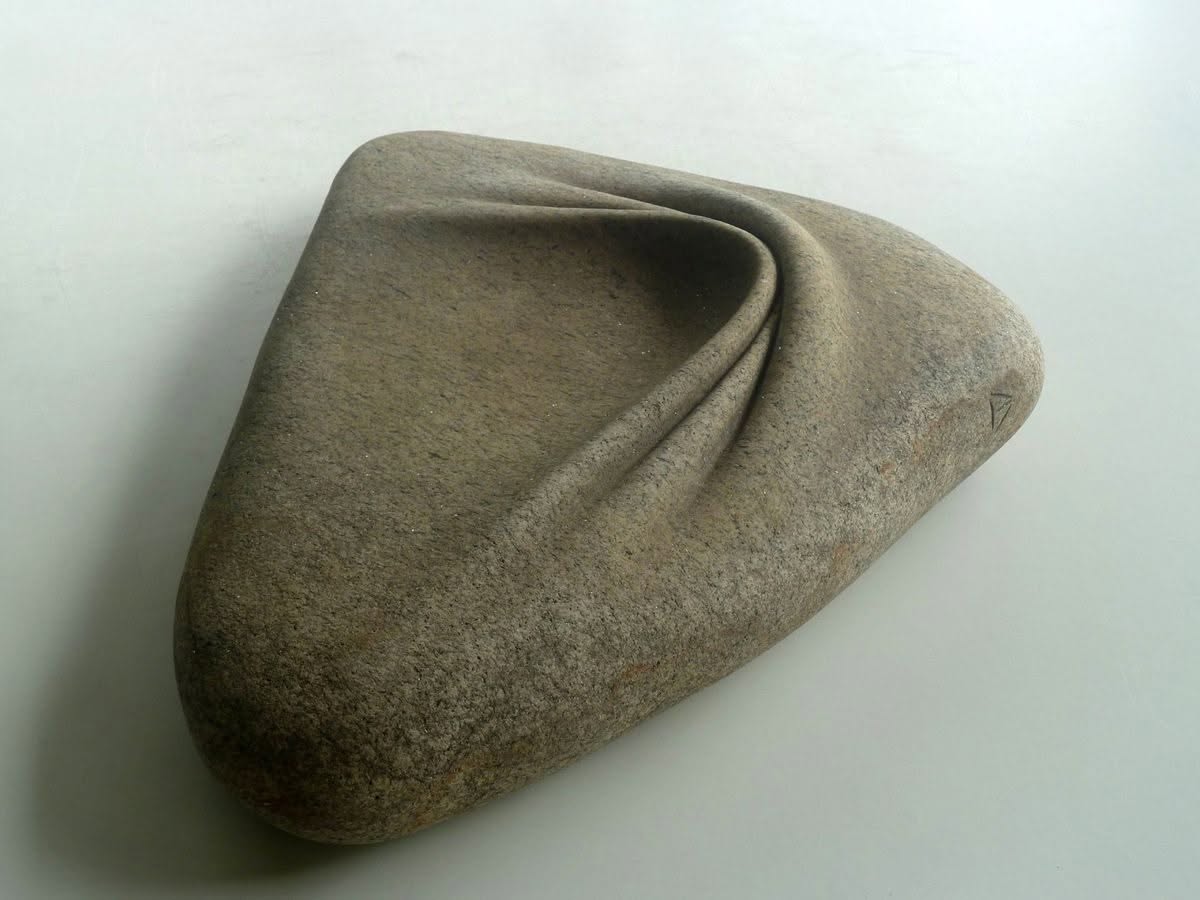
The material composition of the sculpture consists of native Galician granite and quartz-rich river boulders, selected specifically for their high mineral density, coarse-grained texture, and inherent structural durability. Unlike soft sedimentary rocks that can be easily manipulated, granite is notoriously hard, composed largely of quartz, feldspar, and mica, making any illusion of physical malleability an extraordinary technical feat. The artist painstakingly sources these raw, weathered stones directly from local Galician riverbeds and mountainous terrain, ensuring that the original geological history, natural patinas, and mineral inclusions remain an integral part of the final piece. This careful material selection preserves the authentic weight and density of the stone, creating a deliberate psychological contrast between its true geological heft and its visually soft, pliable appearance.

The fabrication details and manufacturing techniques showcase an absolute mastery of manual stone-working craftsmanship, combining traditional stonemasonry tools with highly sensitive artistic intuition. Using specialized chisels, abrasive sandstones, diamond-tipped files, and hours of meticulous hand-grinding and polishing, the sculptor alters the rigid contours of the boulder to create deep folds, creases, and sagging curves that mimic soft fabric, rubber, or stretched cloth. The transition lines between the rigid, unworked exterior surfaces and the smoothly depressed, undulating folds are executed with breathtaking precision, leaving no mechanical tool marks visible to the naked eye. This laborious subtractive process requires an intimate understanding of the stone’s internal grain and cleavage lines to carve deep, flowing depressions without causing the mᴀssive block to fracture under the stress of shaping.
From a functional and philosophical standpoint, the artifact serves as a profound meditation on materiality, perception, and the illusion of physical transformation within sculpture. Rather than serving a utilitarian purpose such as a vessel or a structural anchor, its primary function is conceptual and aesthetic, designed to disorient the human observer by endowing a rigid, cold mineral with organic flexibility and emotional warmth. The deep folds and pinched contours evoke themes of vulnerability, tension, and the pᴀssage of time, suggesting that even the most permanent elements of nature can be imagined as soft and yielding under the right conditions. By subverting the traditional expectations ᴀssociated with lithic monuments, the piece invites deep phenomenological engagement, prompting audiences to question the boundary between what is hard and soft, permanent and transient.
The creation and conceptualization of this unique lithic artwork are attributed to the acclaimed contemporary Galician sculptor José Manuel Castro López, whose works have garnered international recognition for redefining the boundaries of stone sculpture. Working independently in the rural landscapes of northwest Spain, Castro López draws deep inspiration from Celtic mythology, Galician folklore, and the rugged natural topography of his homeland. His artistic methodology treats stone not as a lifeless, stubborn medium to be conquered through sheer force, but as a living enтιтy possessing its own internal rhythm and memory. Through careful documentation, exhibition in international galleries, and widespread academic appreciation, his sculptural works continue to inspire modern discourse on material science, fine arts, and the enduring human desire to shape the unyielding elements of the Earth.
✓ hoangduc
Created in the early 21st century, specifically during the contemporary artistic period circa 2010 to 2020 CE, this striking sculptural piece challenges traditional perceptions of material rigidity….