The Alexander Sarcophagus: An Archaeological Inquiry into Classical Funerary Masterpieces

The discovery and historical documentation of magnificent classical sarcophagi, such as the renowned Alexander Sarcophagus, represent a pinnacle of archaeological research into ancient Hellenistic and Persian funerary art. Spanning a chronologically specific framework from the late 4th century BCE—dating to approximately 325–311 BCE—this striking monumental chest challenges modern researchers to investigate the complex intersection of political propaganda, classical aesthetics, and royal burial customs. Documented within the royal necropolis of Sidon in modern-day Lebanon, this marble sarcophagus displays an arresting architectural and sculptural symmetry that merges classical temple design with high-relief battle narratives. By examining its geographic provenance, material constraints, and elaborate crafting techniques, contemporary archaeological science seeks to decode the technological methods and historical intentions behind this masterpiece.
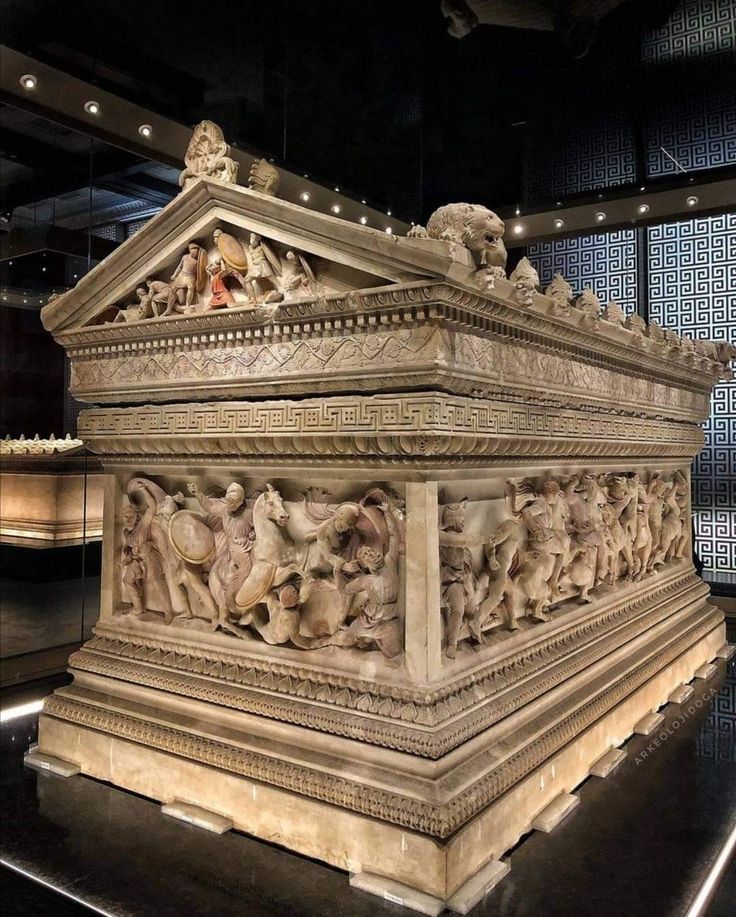
The primary location housing this complex funerary monument is the subterranean royal necropolis discovered near Sidon, situated within the coastal Levant region of the eastern Mediterranean. This prominent archaeological feature was brought to light through systematic excavation campaigns rather than surface collection, preserving its exact spatial relationship with underground burial chambers. Discovered in situ within a secure subterranean rock-cut tomb environment, the sarcophagus retained its extraordinary physical integrity and traces of original polychromy. This secure contextual placement confirms that the monument was commissioned as an elite royal receptacle, serving as a permanent tomb marker rather than a portable artifact relocated during later historical periods.

The materials utilized in constructing this monumental sarcophagus consist predominantly of high-grade, fine-grained Pentelic marble imported directly from the quarries of Mount Pentelicus near Athens. The manufacturing techniques visible under close archaeological inspection reveal that ancient master sculptors carved the multi-figured battle scenes and hunting motifs in deep high relief using precision chisels, drills, and abrasive polishing agents. The detailed iconography features dramatic scenes of Macedonians and Persians engaged in combat—including figures identifiable as Alexander the Great—alongside architectural friezes, sculptural pediments, and lion-head spouts. These physical production traits reflect an advanced degree of technical skill and collective workshop organization, allowing classical stone-carvers to etch dynamic narrative art onto solid blocks of marble.

The functional significance and ultimate utility of this monumental chest are deeply tied to elite royal commemoration, political legitimation, and the mortuary rituals of the Hellenized rulers of Phoenicia. In many instances, such magnificent sarcophagi served as the ultimate resting place for high-ranking monarchs, with the carved battle imagery symbolizing military triumph, heroism, and eternal glory. Furthermore, the striking iconography blending Persian hunting scenes with Macedonian military victory suggests complex conceptual meanings linked to cross-cultural diplomacy, political alliances, and the projection of royal authority. Beyond its primary funerary utility, this monumental artifact embodies a unique intersection of classical Greek sculpture, Near Eastern politics, and ancient funerary architecture.
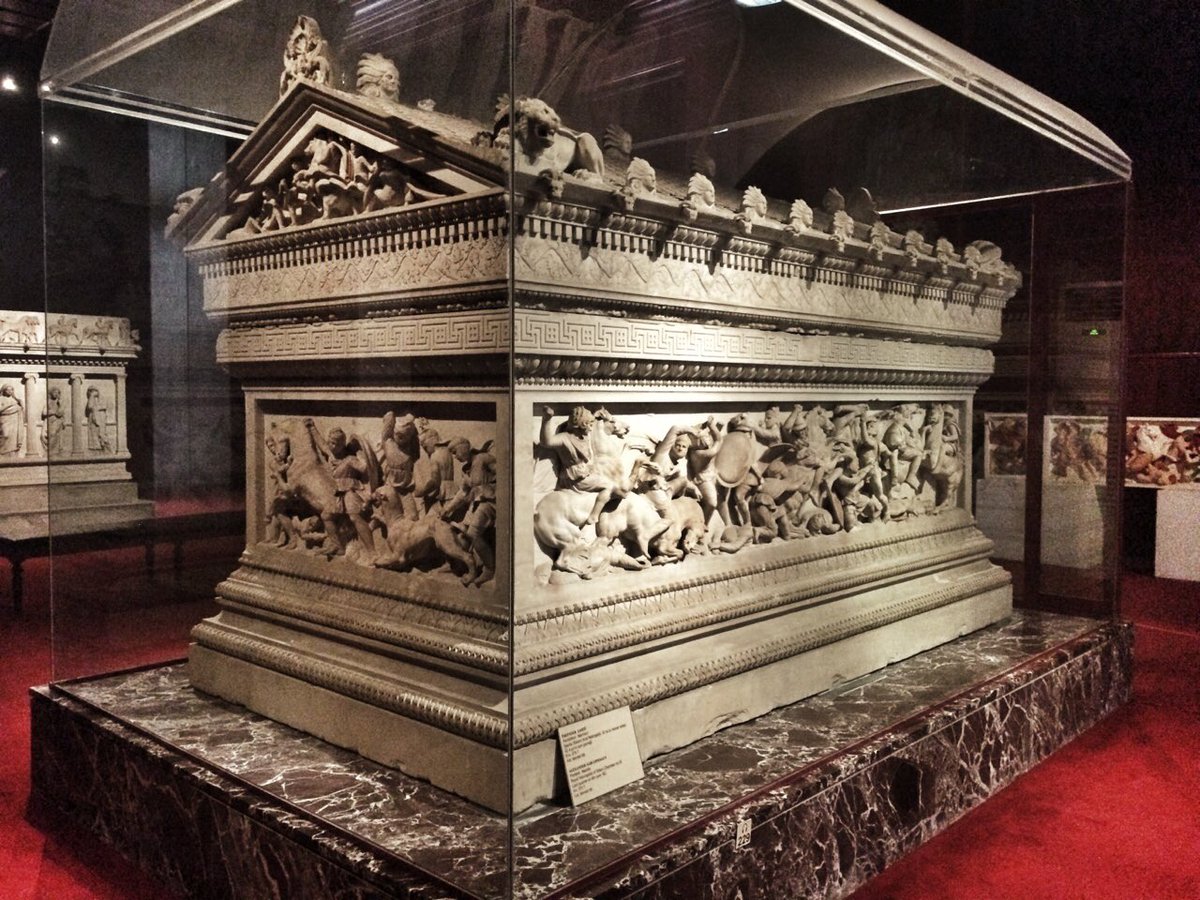
The scientific documentation, safe extraction, and ongoing preservation of this archaeological monument are the result of meticulous fieldwork conducted by pioneering Ottoman and classical archaeologists. The discovery and initial excavation of the Sidon necropolis were famously directed by the prominent Ottoman-Greek scholar, painter, and archaeologist Osman Hamdi Bey, the founder of the Istanbul Archaeology Museums, alongside his excavation team in 1887. Modern research teams continue to employ advanced non-destructive analytical tools, such as pigment analysis and digital pH๏τogrammetry, to study the surviving polychrome traces without compromising the integrity of the marble surfaces. Through these rigorous scientific frameworks, researchers strive to preserve the physical legacy of this classical masterpiece while deepening our understanding of ancient Mediterranean art and society.
✓ hoangduc
The discovery and historical documentation of magnificent classical sarcophagi, such as the renowned Alexander Sarcophagus, represent a pinnacle of archaeological research into ancient Hellenistic and Persian funerary…