The Archaeology of the Stone Serpent Head at Chichén Itzá: The Architectural and Religious Legacy of the Maya Civilization

The colossal stone serpent head is one of the most representative and iconic architectural artifacts discovered at the archaeological site of Chichén Itzá, located in the state of Yucatán, southern Mexico. Geographically situated right at the base of the northern staircase of the great pyramid El Castillo (also known as the Temple of Kukulcán), it lies at the heart of the ancient Maya urban complex. The discovery site once served as one of the most vital religious, political, and astronomical centers of the Maya civilization during the Late Classic and Postclassic periods. The location of the artifact not only acts as an architectural focal point but also intricately connects with the sacred space of the entire monument.
The chronology of this structure and its stone sculptural elements is dated by archaeologists to the Late Classic to Postclassic periods of the Maya, primarily spanning from the 9th to the 12th century CE (circa 600–1200 CE). This era marked a period of strong cultural synthesis between indigenous Maya traditions and incoming migration or cultural influences from the Toltec civilization of the central Mexican highlands. The construction and remodeling of the pyramid took place across multiple generations, during which the serpent head sculptures were meticulously arranged to mark the architectural golden age of the empire.
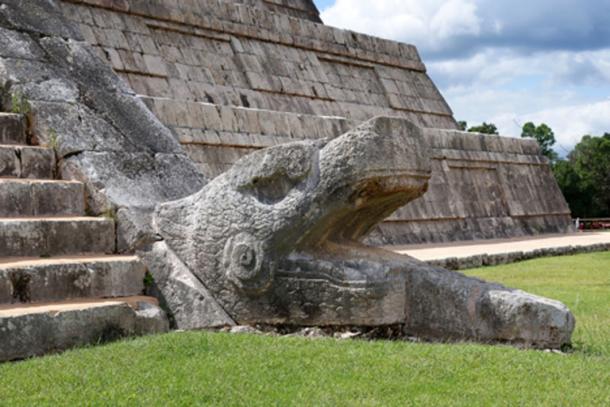
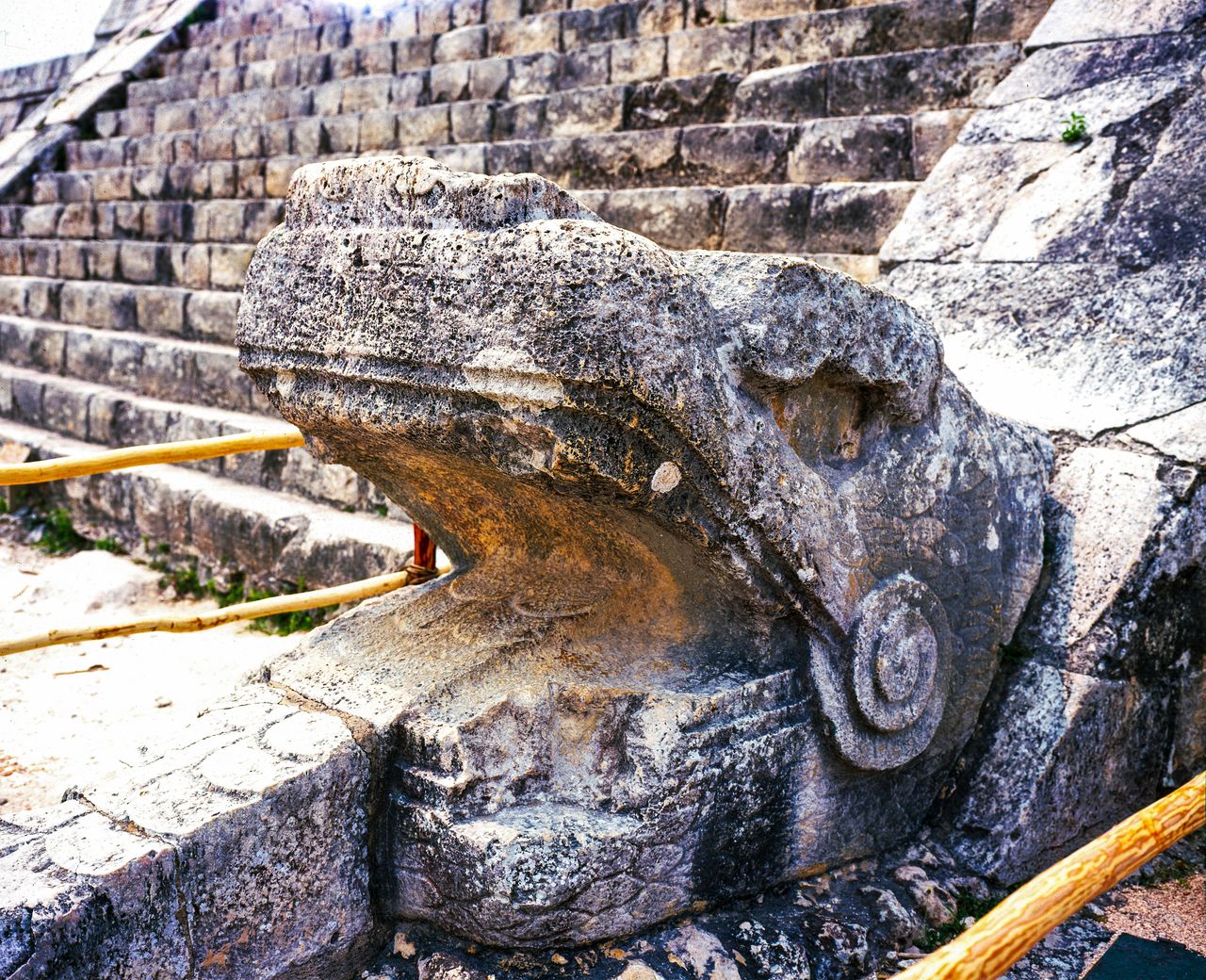
From a material and manufacturing perspective, the artifact was carved from large, durable monolithic blocks of limestone, which is the predominant building material on the Yucatán Peninsula. Ancient Maya artisans utilized hard stone tools, copper axes, and manual abrasive techniques combined with sand and water to shape the detailed features of the serpent head. The sculpture vividly portrays a serpent with an open mouth, featuring sharply sculpted scales, teeth, and eye sockets, which demonstrates the sophisticated stone-carving skills and deep understanding of natural forms possessed by Maya craftsmen.

The significance and function of the artifact are multidimensional, serving both as structural architecture and carrying profound religious symbolism. Functionally, these stone serpent head blocks form a solid structural base for the pyramid’s staircase balustrades, while also serving as part of an astronomical phenomenon during the spring and autumnal equinoxes. From a spiritual and astronomical perspective, as sunlight hits the edges of the steps on these days, the winding shadows blend perfectly with the stone serpent head at the bottom to form the illusion of a feathered serpent (Kukulcán) slithering down to earth, symbolizing the harmony between heaven and earth and bringing abundant harvests.
The discovery, excavation, and study of the Chichén Itzá architectural complex and its related artifacts are the achievements of generations of international archaeologists and esteemed organizations such as the National Insтιтute of Anthropology and History of Mexico (INAH). From pioneering explorers like Alfred Maudslay in the 19th century to modern excavation and preservation programs by INAH, scientists have continuously decoded the hidden cultural layers of this site. Today, as a UNESCO World Heritage site, the structures and artifacts at Chichén Itzá continue to be rigorously protected, preserving invaluable historical values regarding the greatness of the Maya civilization.
✓ Ryan Mitchell
The colossal stone serpent head is one of the most representative and iconic architectural artifacts discovered at the archaeological site of Chichén Itzá, located in the state…