The Architectural Splendor of Antiquity: An Archaeological Analysis of the Great Ziggurat of Ur
Posted by hoangduc - August 14, 2026
The archaeological site of the Great Ziggurat of Ur is located near the modern city of Nasiriyah within the Dhi Qar Province of southern Iraq. Standing proudly on the flat Mesopotamian plain at the ancient site of Tell el-Muqayyar, this monumental stepped tower represents one of the most remarkable architectural achievements of the ancient world. Chronologically, the construction of the ziggurat was initiated during the Early Bronze Age in the 21st century BC by King Ur-Nammu, the founder of the Third Dynasty of Ur, and was later completed by his son King Shulgi around 2000 BC. Centuries later, after having fallen into severe ruin by the 6th century BC, the sacred structure underwent a major historical restoration program orchestrated by King Nabonidus during the Neo-Babylonian period.

The materials and intricate manufacturing techniques utilized in the creation of the Ziggurat of Ur reflect a masterclass in ancient Mesopotamian structural engineering. The mᴀssive core of the structure consists of millions of unbaked mud bricks, which provided structural mᴀss and economic feasibility in a region devoid of abundant stone. To protect this vulnerable mud-brick core from weathering and structural erosion, the exterior was encased in a thick facing of kiln-fired mud bricks bonded together using natural bitumen as a waterproof mortar. Furthermore, ancient builders incorporated woven reed mats between the brick layers at regular intervals to distribute weight evenly and enhance tensile strength. The architectural design featured three solid tiers or terraces accessed by a monumental system of triple staircases converging at a central gateway.
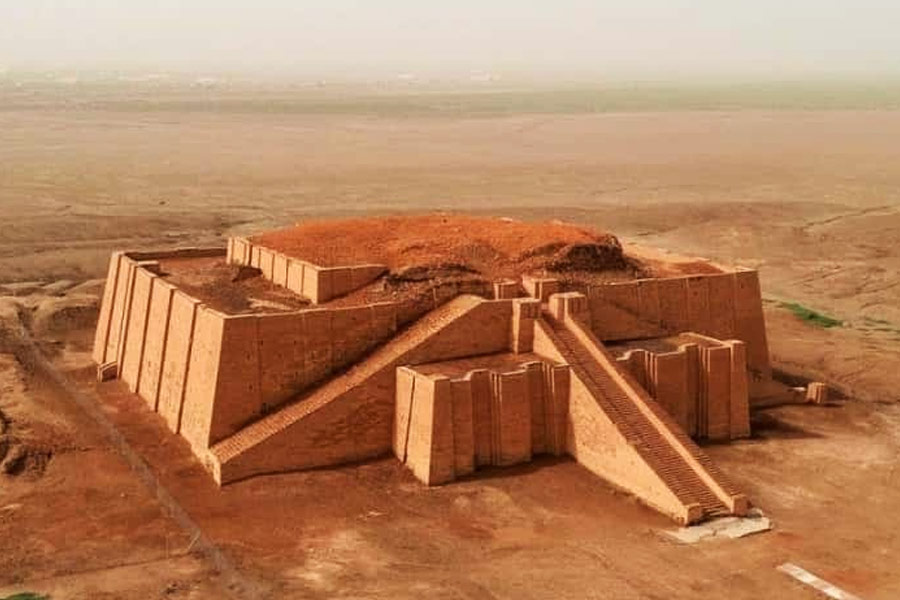
Functionally, the ziggurat served as a towering religious sanctuary and the central administrative heart of the city-state. Dedicated to Nanna (also known as Sîn), the moon god who served as the patron deity of Ur, the structure was built to replicate a sacred artificial mountain that bridged the earthly realm with the heavens. Only high priests and elite rulers were permitted to ascend the steep staircases to access the small temple shrine that once crowned the uppermost platform. Beyond its religious utility, the vast temple complex functioned as an economic hub where tribute, agricultural surplus, and trade goods were stored, managed, and distributed under divine authority.
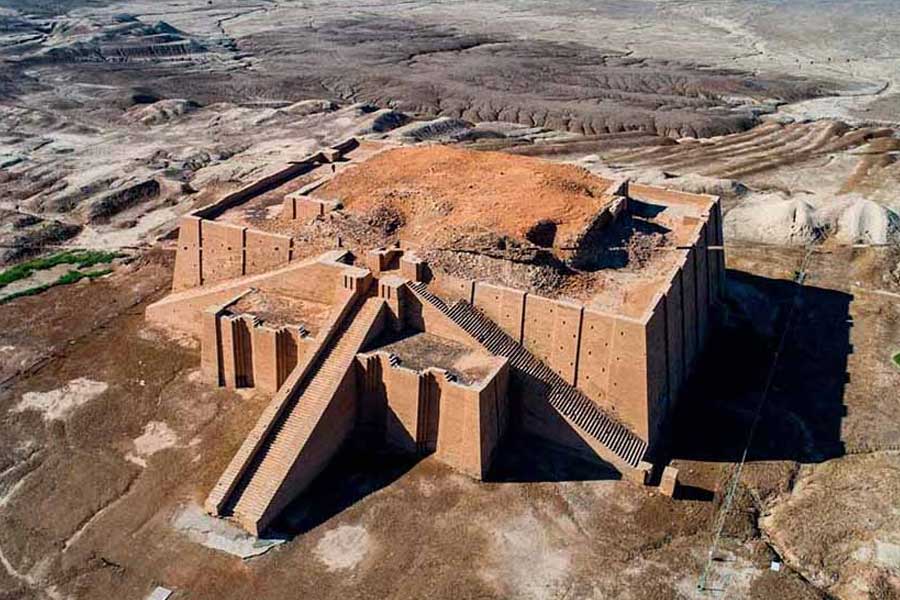
The formal scientific exploration and excavation of this sprawling archaeological landscape unfolded across the 19th and 20th centuries. The ruins were initially identified and lightly probed by Western explorers such as William Loftus in 1850 and John Taylor in the 1850s, who famously recovered foundation cylinders detailing the site’s Neo-Babylonian restoration. Following preliminary ᴀssessments by early investigators after World War I, the definitive, large-scale archaeological excavations were carried out between 1922 and 1934. This extensive joint expedition was conducted by the British Museum and the University Museum of the University of Pennsylvania, operating under the direction of the renowned archaeologist Sir Leonard Woolley.
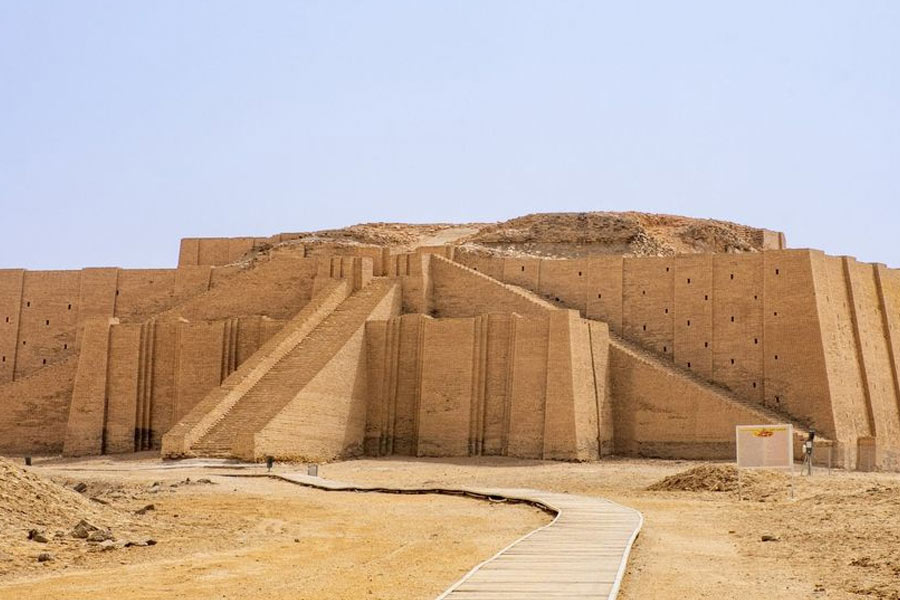
Today, the Great Ziggurat of Ur stands as an internationally recognized archaeological landmark and a vital symbol of human heritage. While centuries of environmental decay and historic conflict have impacted the surrounding ruins, modern conservation efforts—including a partial reconstruction of the lower facade and monumental staircases initiated in the late 20th century—have helped preserve its towering silhouette. The site continues to attract scholars and researchers interested in early urbanization, ancient statecraft, and monumental architecture. Ultimately, the Ziggurat of Ur endures as an irreplaceable window into the complex religious and technical world of ancient Mesopotamia.
✓ hoangduc
The archaeological site of the Great Ziggurat of Ur is located near the modern city of Nasiriyah within the Dhi Qar Province of southern Iraq. Standing proudly…