The Epigraphic Monolith of Sehel: An Archaeological Analysis of the Nile Valley Rock Stela
The discovery of the monumental epigraphic boulder, widely recognized as a classic example of ancient Egyptian desert stelae, represents a fascinating intersection of natural geology and royal propaganda. Dating primarily to the Ptolemaic Period (circa 332–31 BCE) with historical foundations tracing back to earlier dynastic traditions, this remarkable artifact is carved directly into the face of a freestanding granite monolith. From an archaeological perspective, such rock-cut stelae provide invaluable insights into how ancient states claimed sovereign ownership over remote frontiers, trade routes, and sacred landscapes. The choice of a prominent, weather-worn natural boulder rather than a quarried slab demonstrates a sophisticated pragmatic approach to monumental architecture in the arid desert environment of Upper Egypt.

The primary site of discovery is Sehel Island, situated along the Nile River just upstream from the First Cataract near the modern city of Aswan. Historically functioning as a vital granite quarry and a strategic gateway to Nubia, Sehel Island was a sacred landscape heavily saturated with thousands of petroglyphs, votive inscriptions, and royal decrees left by pilgrims, merchants, and pharaonic officials over millennia. The specific geological context—comprising dense, dark igneous rock weathered by centuries of desert sun and wind—provided an exceptionally stable canvas for long-term preservation. Within this dramatic landscape, the monolithic boulder was selected not only for its prominent visibility along ancient desert tracks but also for its symbolic proximity to the divine boundary waters of the Nile cataracts.
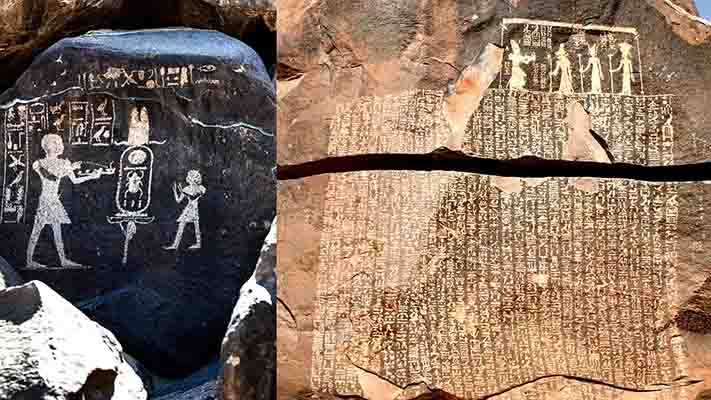
In terms of material composition and manufacturing details, the artifact is a masterclass in ancient stone-cutting technology executed directly on coarse-grained natural granite. The craftsmanship involved meticulously smoothing a rectangular field onto the uneven face of the boulder, followed by deep incision of precise Egyptian hieroglyphic columns and intricate relief carvings at the top. The upper register typically depicts the reigning monarch making ritual offerings to regional deities such as Khnum, Satis, and Anuket, framed within a traditional architectural naos. Despite a pronounced natural horizontal fissure splitting the boulder—a geological fracture that existed before the carvers began their work—the ancient scribes and artisans skillfully integrated the flaw into the layout of the text, ensuring structural continuity and legibility across the broken stone matrix.
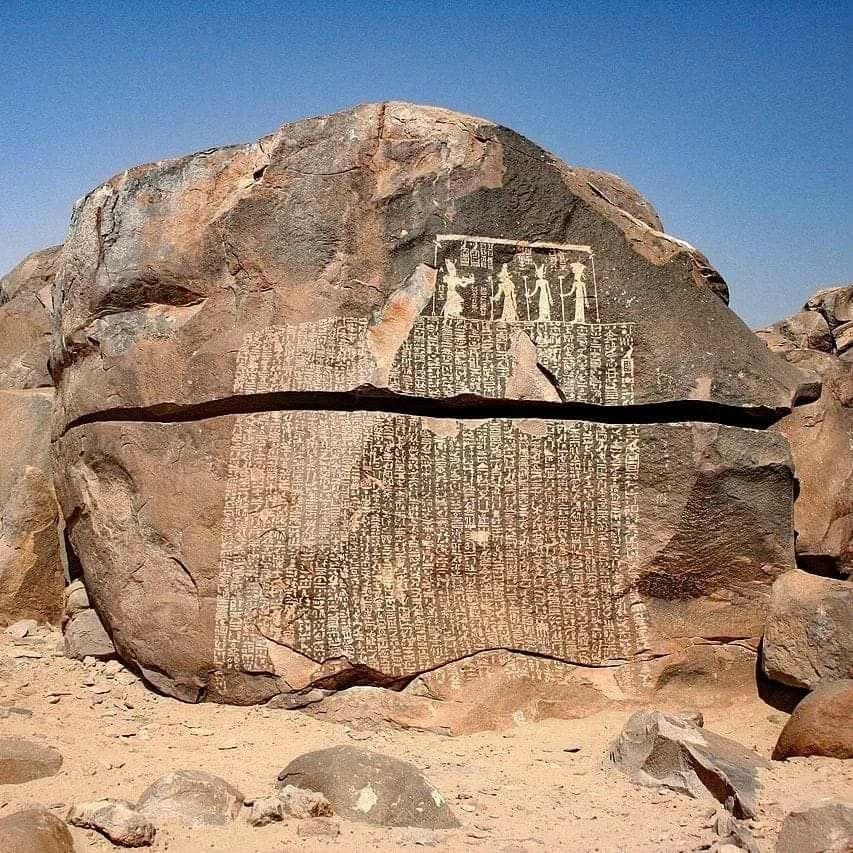
The functional utility and cultural significance of this monumental rock stela extend far beyond simple artistic expression, serving profound socio-religious and political purposes. Historically, inscriptions of this nature—such as the famous Famine Stela found on the same island—were utilized to legitimize royal authority, commemorate divine interventions, or record state-sanctioned decrees regarding land grants, temple taxes, and water management during times of environmental crisis. For travelers, sailors, and caravaneers navigating the treacherous rapids of the First Cataract, encountering such divine pronouncements carved into monumental stone reinforced the absolute power of the pharaoh and the protective grace of local gods. Thus, the boulder functioned simultaneously as an eternal royal proclamation, a sacred boundary marker, and a permanent plea for cosmic equilibrium.
The systematic documentation, study, and conservation of these rock-cut monuments have been spearheaded by generations of international Egyptologists and archaeological missions, building upon early pioneering surveys conducted by the Egyptian Antiquities Service in the late nineteenth and early twentieth centuries. Modern epigraphic teams utilize advanced digital pH๏τogrammetry, laser scanning, and raking-light pH๏τography to record eroded hieroglyphic columns that are otherwise invisible to the naked eye. Through meticulous cataloging by organizations such as the Supreme Council of Antiquities and various academic insтιтutions, these desert inscriptions are preserved against modern environmental degradation and tourist impact. Today, the Sehel rock stelae stand as immortal testaments to the collaborative genius of ancient scribes, stonecutters, and modern archaeological preservationists alike.
✓ Ryan Mitchell
The discovery of the monumental epigraphic boulder, widely recognized as a classic example of ancient Egyptian desert stelae, represents a fascinating intersection of natural geology and royal…