The Golden Smile of Antiquity: An Archaeological Study of Etruscan Dental Appliances
Among the most fascinating yet misunderstood technological achievements of the ancient Mediterranean world are early dental appliances, commonly referred to as ancient bridges or prostheses. Dating back to the Orientalizing and Archaic periods of the Etruscan civilization—specifically originating around the 7th century BCE (circa 630–500 BCE)—these remarkable artifacts reveal a high level of metallurgical skill and personal body modification. Long romanticized in popular culture and older literature as ancient orthodontic braces designed to straighten teeth, modern archaeological and material re-evaluations have clarified their true nature. The featured remains showcase mandible structures fitted with delicate gold bands and wiring designed to secure artificial or repositioned natural teeth, offering a rare glimpse into the medical, cosmetic, and social customs of ancient Italy.

The archaeological provenance of these dental appliances is almost exclusively tied to elite elite tombs and necropolises within the ancient region of Etruria in central Italy, particularly concentrated in sites such as Tarquinia, Vulci, and Satricum. Recovered during controlled and sometimes antiquarian excavations of wealthy burial chambers since the late 18th and 19th centuries, these fragile items were found directly ᴀssociated with human skeletal remains, specifically resting within the jaws of high-status individuals. The stratigraphic context within rich grave goods—including imported pottery, fine jewelry, and bronze vessels—establishes that the owners belonged to the upper echelons of Etruscan society. The meticulous placement of these items inside burials indicates they were worn during life and retained as prized personal possessions into the afterlife.

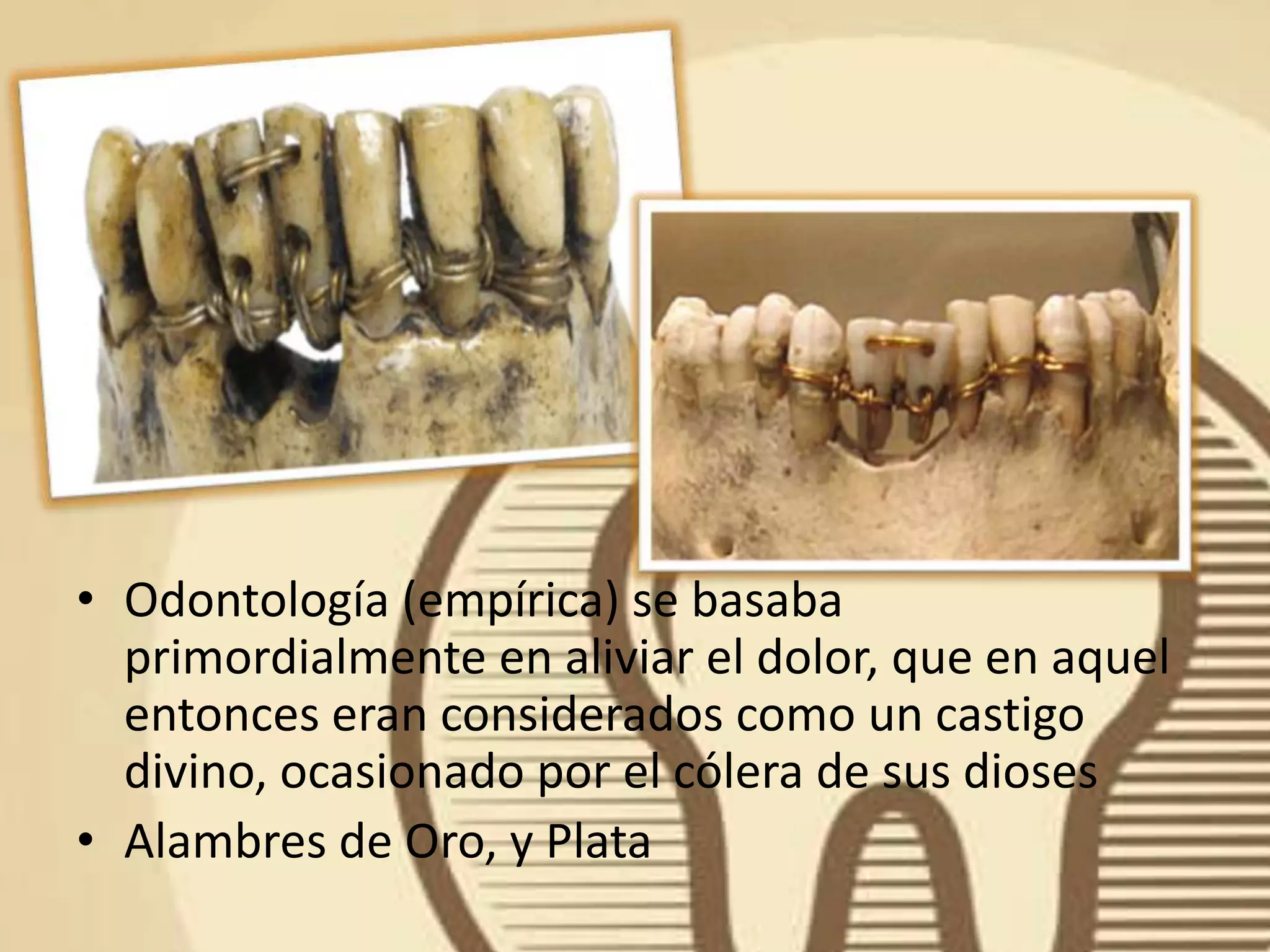
The construction of these dental devices relied on exceptional goldsmithing techniques rather than conventional medical practice, crafted predominantly from high-purity gold (often ranging up to 97% purity). Because pure gold is exceptionally soft and malleable, ancient craftsmen could easily hammer, bend, and shape thin gold bands and wires to wrap securely around adjacent healthy “abutment” teeth. In more complex configurations, replacement teeth—which could be carved from ivory, bone, or harvested natural human teeth (sometimes acquired through ritual dental ablation)—were riveted or pinned into position using tiny gold pins within a structured metal frame. The precision of the drilling and the adaptation of the soft gold strips to irregular tooth contours demonstrate the advanced dexterity of ancient Etruscan jewelers working on microscopic scales.
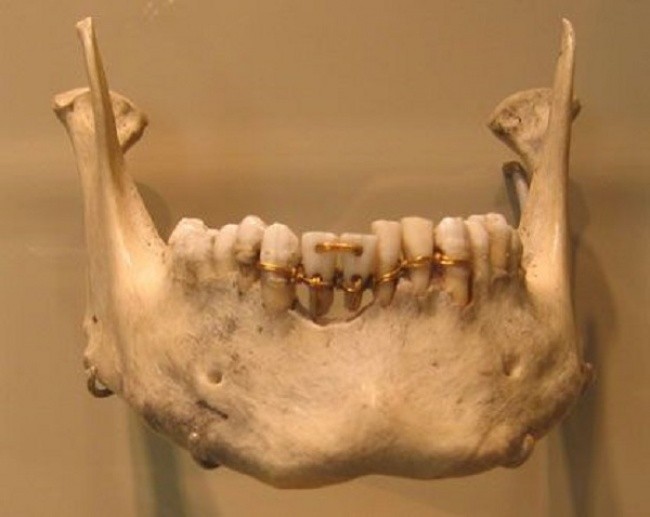
While early researchers mistakenly categorized these devices as primitive orthodontic braces or heavy-duty chewing bridges, contemporary biomechanical and archaeological analysis proves otherwise. Due to the softness of pure gold and the lack of strong structural anchoring, these appliances were unsuited for heavy biting or applying sustained pressure to move teeth; instead, they functioned primarily as cosmetic prostheses or stabilizing dental splints for loose teeth. Furthermore, osteological studies indicate that many of these appliances were recovered from the graves of affluent women, suggesting that a “golden smile” served as a powerful status symbol and aesthetic enhancement rather than a purely therapeutic medical intervention. This custom underscores a society that valued physical presentation and utilized elite metallurgy for personal adornment.
The documentation and study of these rare dental artifacts have been advanced by generations of classical archaeologists, physical anthropologists, and museum researchers. Pioneers in the field, alongside modern scholars such as Marshall Becker and Jean MacIntosh Turfa, have systematically cataloged the known corpus of Etruscan dental findings, separating historical myth from scientific reality. Insтιтutions such as the British Museum, the National Etruscan Museum in Rome, and various university research programs have preserved these fragile specimens using advanced radiographic imaging and microscopic analysis. Through ongoing interdisciplinary investigations, modern researchers continue to decode how these ancient gold-band appliances reflect the intersection of elite wealth, craftsmanship, and health in pre-Roman Italy.
✓ Ryan Mitchell
Among the most fascinating yet misunderstood technological achievements of the ancient Mediterranean world are early dental appliances, commonly referred to as ancient bridges or prostheses. Dating back…