The Inka Architectural Masterpiece at Coricancha: A Study in Precision Stonemasonry
The image presented captures one of the most significant examples of Inka stonework, forming the exterior corner of the legendary Coricancha, or Temple of the Sun, in the heart of Cusco, Peru. This structure represents the apogee of Inka imperial architecture, a period of rapid expansion and monumental construction under rulers like Pachacuti Inka Yupanqui. The Coricancha was the most sacred shrine in the vast Inka Empire, dedicated primarily to Inti, the sun god, but also housing smaller shrines for other deities such as the moon (Quilla), stars (Coyllur), and lightning (Illapa). The choice of this specific location, at the confluence of two rivers and considered the spiritual navel of the Inka universe (Qosqo), underscores the profound religious and cosmological importance of the building. Its walls, like the one depicted, were not merely boundaries but sacred surfaces, once adorned with sheets of solid gold that reflected the sun’s rays, blinding pilgrims and broadcasting the power of the Inka state.
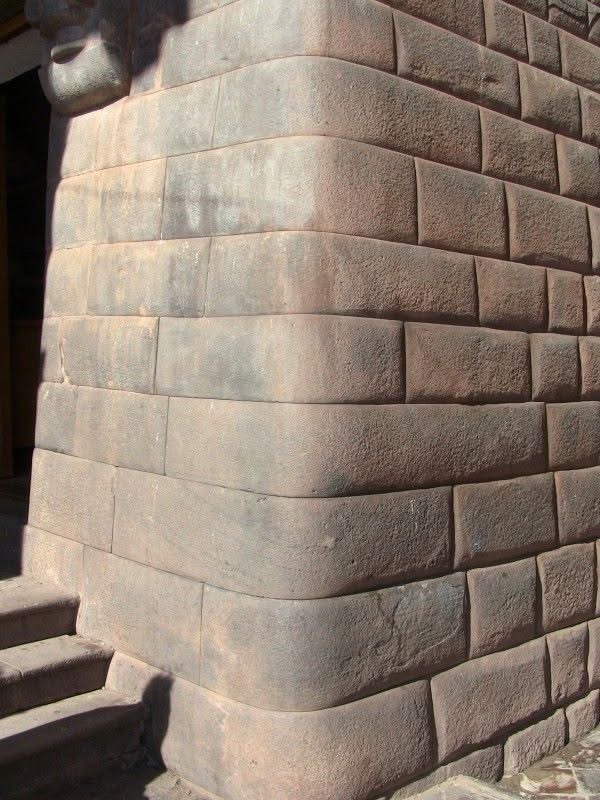
The material used in this masterpiece is a dense, reddish-andesite volcanic stone, sourced from quarries near Cusco, most notably Rumiqolqa. The selection of this specific stone type is deliberate; its hardness and fine grain allowed for the precise shaping required by the Inka masons, while its warm, earthy hue contributed to the sacred aesthetic of the temple. The stones were meticulously chosen and cut to create an intricate pattern where each block fits against its neighbors with a tolerance often described as being finer than a knife edge, eliminating the need for mortar. The technique involved pounding and grinding the surfaces against each other, with abrasive sand and water used to gradually achieve a perfect, airтιԍнт and waterтιԍнт seal. The rounded, slightly bulbous shape of each block, known as “pillow-faced” or kuskan in Quechua, is not an accident of erosion but a deliberate stylistic choice, creating subtle light and shadow play across the facade that animates the stone and emphasizes the volumetric strength of the architecture.
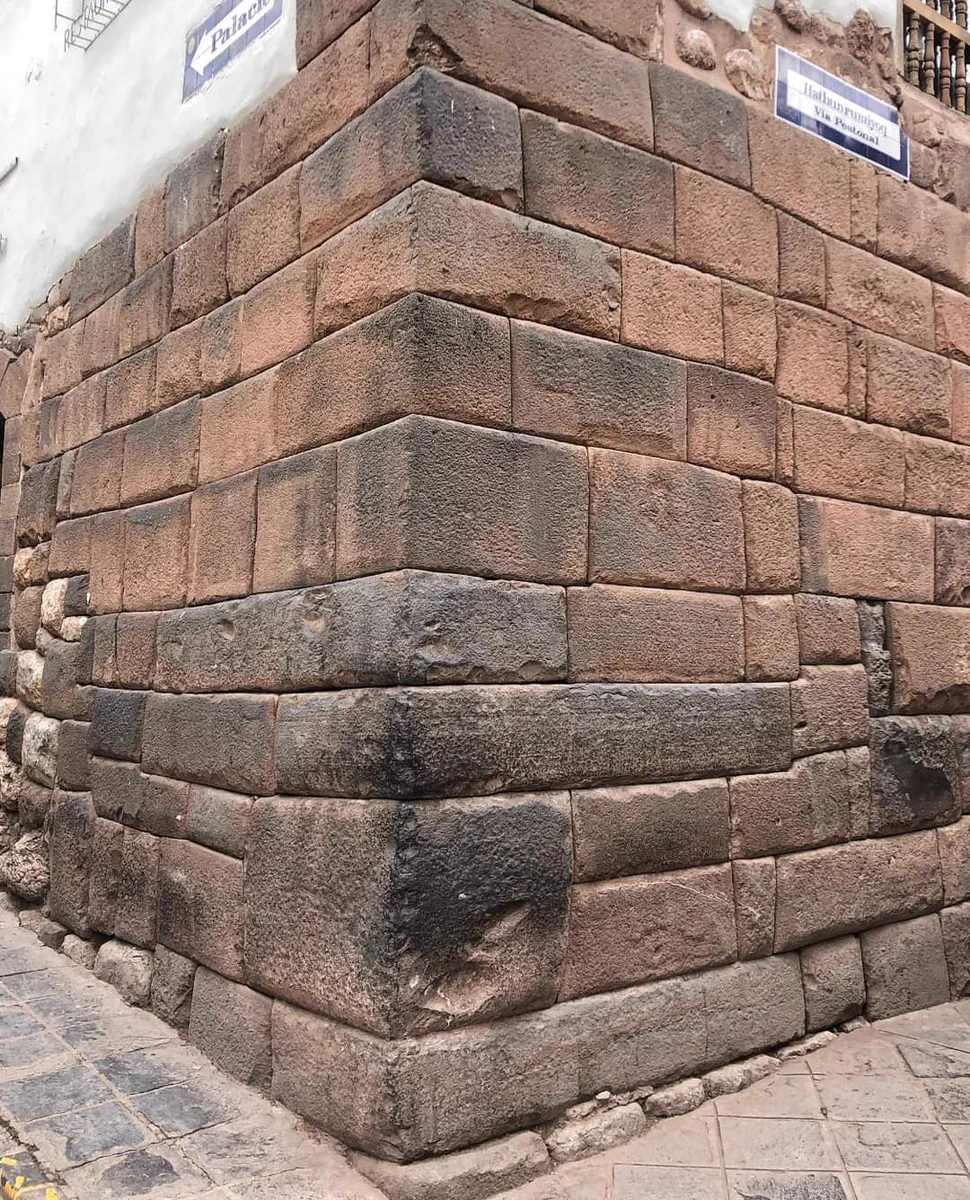
The construction of such a precise, mortarless wall was a monumental task requiring immense labor, organization, and advanced engineering skills, all hallmarks of the Inka mita system. Lacking iron or steel tools, Inka masons relied on a toolkit of stone hammers (pounding stones), bronze chisels, and abrasives like sand. The complex polygonal shapes of the blocks, which differ slightly on each course, suggest an adaptive building process where the final shape of each stone was determined in situ to fit the specific irregularities of the ones around it. The precision is so extraordinary that early Spanish chroniclers and subsequent explorers marveled at its execution, with some attributing it to the work of giants or even extraterrestrial intervention. Modern archaeological analysis, however, confirms that it is a purely human achievement, a testament to the Inka’s mastery of geometry, material science, and social organization.

Beyond its technical brilliance, the stonework of the Coricancha corner carries profound meaning. The very precision and stability of the structure were potent metaphors for the perceived permanence and divine order of the Inka Empire. The stones, locked together without mortar, represented the unity of the empire’s diverse peoples bound together by their allegiance to the Sapa Inka, the divine ruler. Furthermore, the seismic resilience of this type of architecture, with its interlocking, trapezoidal blocks that can flex and absorb energy without collapsing, demonstrated the Inka’s sophisticated understanding of their earthquake-prone environment and their ability to work harmoniously with the forces of nature. The Coricancha was not just a building; it was a physical manifestation of Inka cosmology, a sacred mountain of stone in the heart of their capital.

The historical trajectory of the Coricancha corner reflects the broader narrative of the Spanish Conquest. Following the capture of Atahualpa in Cajamarca in 1532, the Coricancha was systematically stripped of its gold, which was melted down for ransom. The temple complex was subsequently granted to the Dominican Order, who built their Church of Santo Domingo directly upon and using the Inka walls as foundations, a common colonial strategy of superimposing Christian symbols over indigenous sacred sites. The magnificent Inka corner shown in image_1.png, however, survived, incorporated as the apse of the colonial church. This juxtaposition is a powerful archaeological palimpsest, a visible record of the collision and layering of two distinct civilizations. The preservation of this Inka structure, despite centuries of colonial modification, is a testament to its unparalleled structural integrity and a powerful reminder of the enduring legacy of the Inka civilization. Today, the site is a protected national monument and a focal point for the study of Inka architecture and Andean cultural history.
✓ Ryan Mitchell
The image presented captures one of the most significant examples of Inka stonework, forming the exterior corner of the legendary Coricancha, or Temple of the Sun, in…