The Lonely Castle of Hegra: An Archaeological Analysis of Qasr al-Farid
The discovery and study of Qasr al-Farid, famously known as the “Lonely Castle,” represent a monumental milestone in the archaeological exploration of ancient Arabian civilizations. Dating back to the 1st century CE during the height of the Nabataean Kingdom, this striking monument is an exceptional example of monumental rock-cut architecture. From an archaeological perspective, the structure provides critical insights into the mortuary practices, engineering capabilities, and socioeconomic status of a once-nomadic people who grew immensely wealthy through the control of lucrative ancient trade routes, such as the Incense Road. Its impressive physical isolation and remarkably pristine state of preservation offer modern researchers an unparalleled window into the architectural traditions of antiquity.
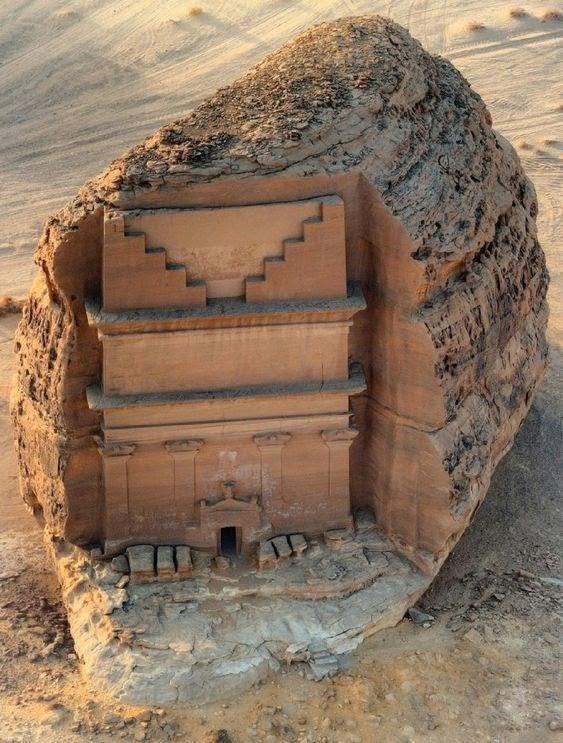
The primary site of discovery is the vast archaeological complex of Hegra, also known as Al-Hijr or Madain Saleh, situated in the arid desert expanse of the AlUla governorate in northwestern Saudi Arabia. Hegra served as the southern capital and second-largest city of the Nabataean realm, functioning as a strategic outpost for merchants traversing the Arabian Peninsula. The geological context of the region features dramatic outcrops of fine-grained, golden-brown sandstone rising directly out of the desert floor, which provided ancient artisans with a stable, workable canvas. Within this sweeping landscape, Qasr al-Farid stands completely apart from the other clustered tomb groups, occupying its own isolated sandstone mᴀssif that commands the surrounding horizon.
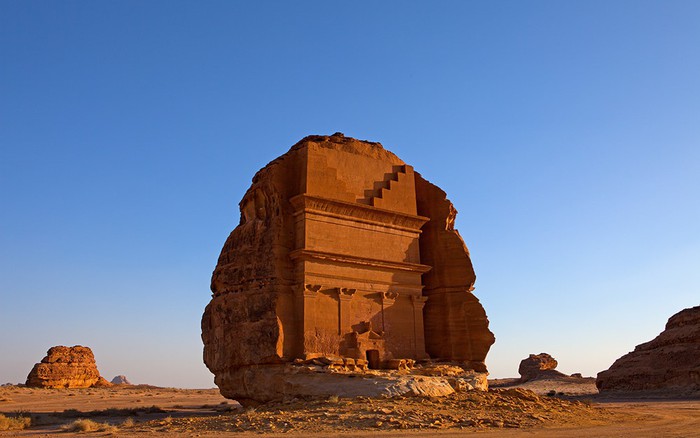
In terms of material composition and manufacturing techniques, the monument is an absolute masterpiece of subtractive sculpture executed directly on a natural monolith. Standing approximately 22 meters tall, the tomb was carved entirely from top to bottom by ancient stonemasons using chisels and mallets, featuring a sophisticated architectural facade complete with a stepped crown, four engaged pilasters, and intricate classical capitals influenced by Hellenistic and Near Eastern traditions. However, the most fascinating archaeological feature of Qasr al-Farid is that it remains famously unfinished; the lower third of the structure reveals rough, uncarved stone and exposed quarry marks. This incomplete state provides invaluable technical evidence regarding Nabataean construction methods, proving that artisans worked downward from the top to prevent falling debris from damaging lower architectural details and to eliminate the need for complex external scaffolding.

The functional utility and cultural significance of Qasr al-Farid were centered entirely on elite mortuary veneration and territorial marking, although the tomb was ultimately never occupied. Commissioned as an eternal resting place for a prominent individual—historically ᴀssociated with Lihyan, son of Kuza—the monument was designed to project power, divine status, and dynastic permanence across the desert frontier. In Nabataean cosmology, elaborate facades served as sacred thresholds and permanent homes for the spirits of the deceased, reinforcing the social hierarchy and ancestral lineage of the ruling elite. The decision to leave the tomb unfinished suggests a sudden historical disruption, such as the Roman annexation of the Nabataean Kingdom in 106 CE, which abruptly halted grand construction projects across the region.
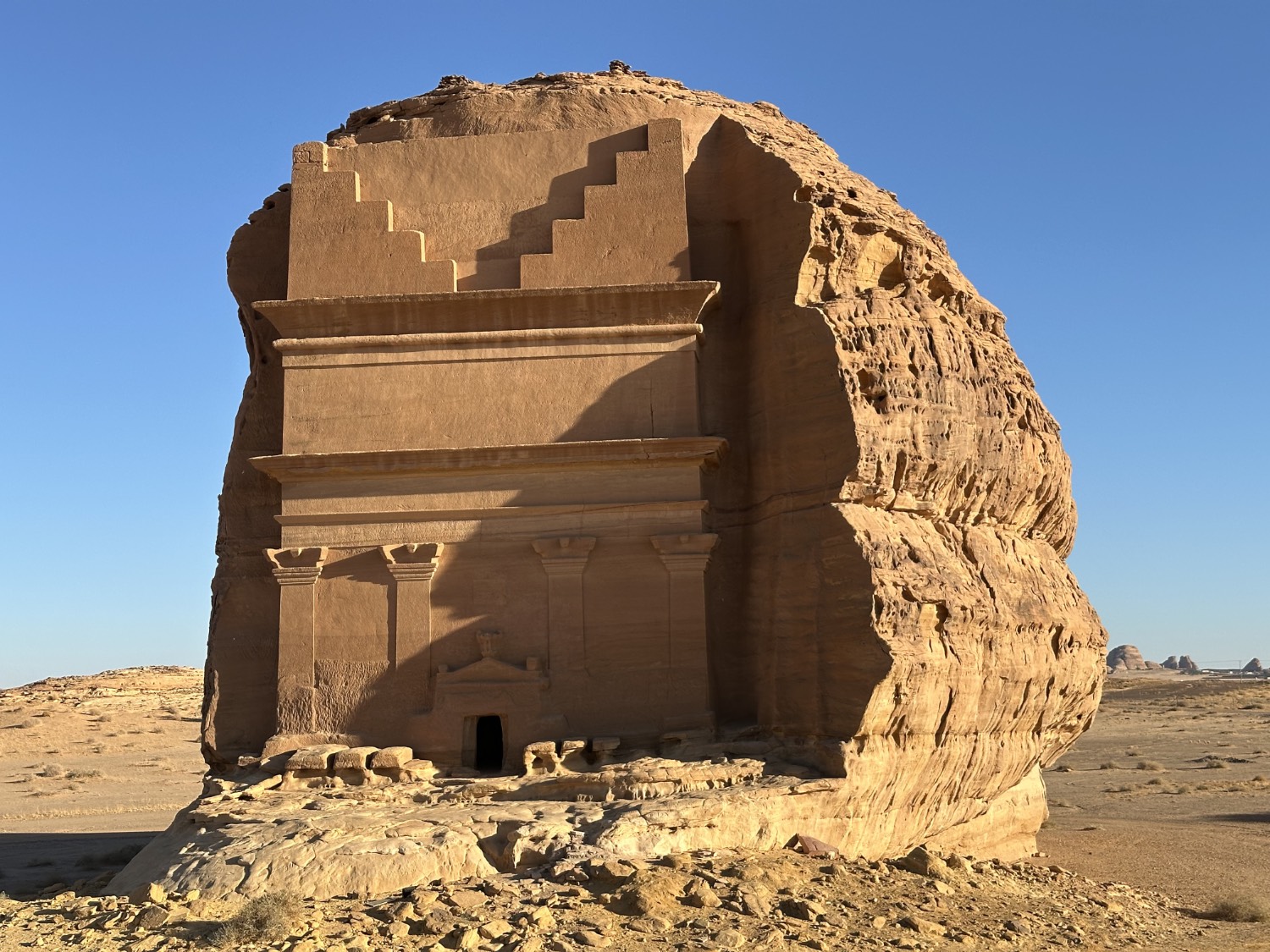
The scientific documentation, preservation, and modern exploration of Hegra and its iconic monuments have been spearheaded by international archaeological missions in collaboration with the Saudi Commission for Tourism and National Heritage and the Royal Commission for AlUla. Early western explorers, including Charles Montagu Doughty and Albert Jaussen, documented the site in the late 19th and early 20th centuries, laying the groundwork for modern stratigraphic excavation and epigraphic surveys. In recognition of its outstanding universal value, Hegra was inscribed in 2008 as Saudi Arabia’s first UNESCO World Heritage Site. Today, advanced digital conservation projects utilizing laser scanning and pH๏τogrammetry ensure that Qasr al-Farid continues to inspire awe while safeguarding its architectural secrets for future generations of scholars.
✓ Ryan Mitchell
The discovery and study of Qasr al-Farid, famously known as the “Lonely Castle,” represent a monumental milestone in the archaeological exploration of ancient Arabian civilizations. Dating back…