The Megalithic Enigma: Analyzing the Temple of the Sun at Ollantaytambo
The archaeological site of Ollantaytambo, located in the Sacred Valley of Peru, stands as a profound testament to the sophistication of ancient Andean engineering. Perched high above the modern town at an alтιтude of approximately 2,792 meters, the site is dominated by a ceremonial center that includes the legendary “Temple of the Sun.” The most striking feature of this structure is the “Wall of the Six Monoliths,” a series of mᴀssive pink granite blocks arranged in a linear formation. These blocks, which weigh between 40 and 70 tons each, remain a subject of intense debate among historians and archaeologists. While mainstream scholarship attributes the construction to the Inca Emperor Pachacuti in the mid-15th century around 1440 AD, the extraordinary scale and precision of these megaliths have led some researchers to suggest that the site incorporates or was built upon the foundations of a much older, pre-Incan civilization.
The material utilized for these colossal blocks is a distinct pink granite, which had to be quarried from the opposite side of the Urubamba River, separated by thousands of feet of elevation change and rugged terrain. The engineering feat required to extract, transport, and elevate these stones without the benefit of the wheel, draft animals, or steel tools remains a subject of fascination. The blocks are shaped with remarkable precision; their surfaces are meticulously polished, and they are fitted together using the characteristic Incan mortarless technique, where the seams between stones are so incredibly тιԍнт that a knife blade cannot penetrate the joints. Some blocks exhibit decorative “knobs” or protrusions, a feature also observed in other ancient megalithic sites across the globe, suggesting either a functional purpose—perhaps related to the movement and placement of the stones—or a symbolic architectural aesthetic.
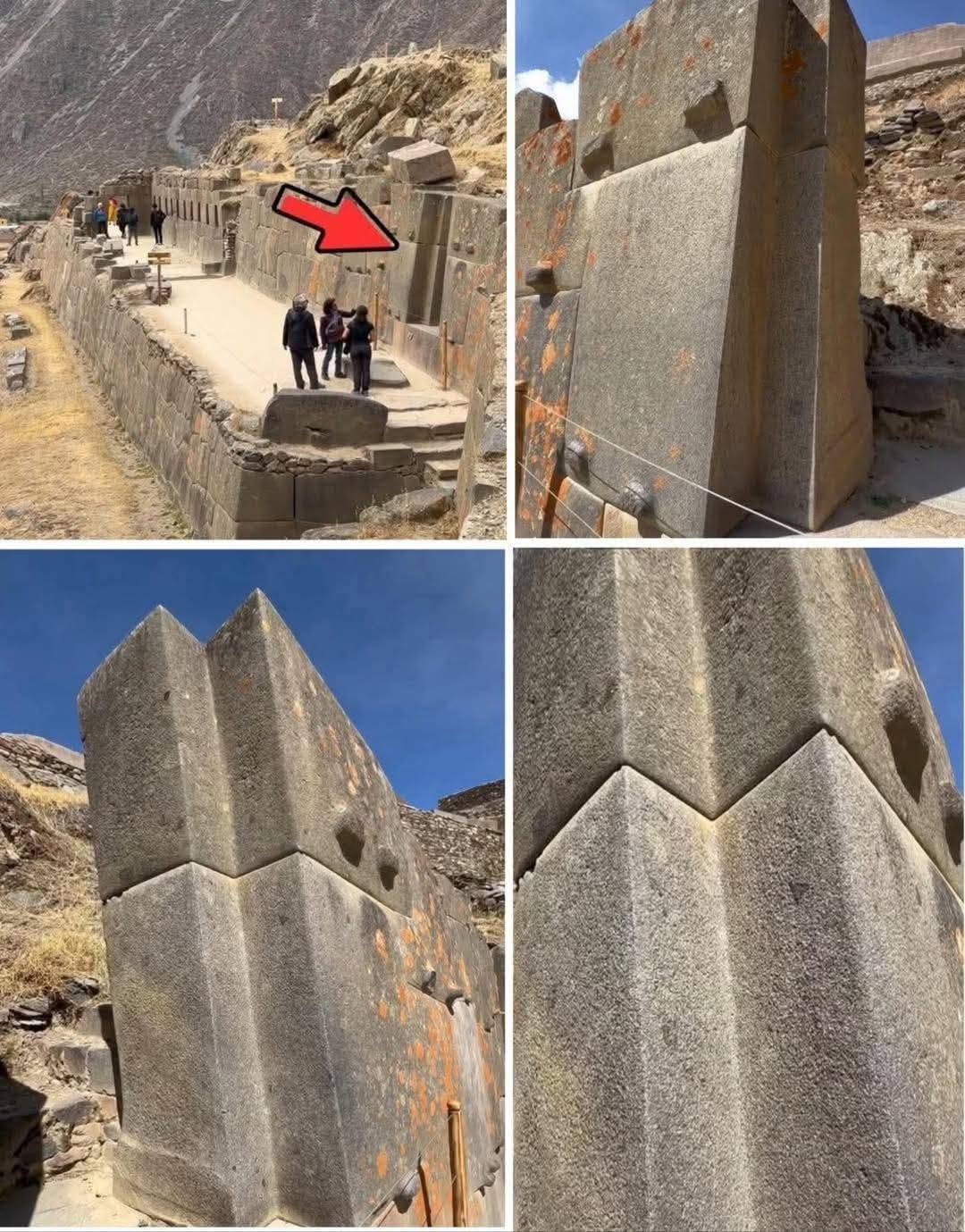
Functionally, the Temple of the Sun served as a primary ceremonial center during the height of the Inca Empire. The structure is part of a larger complex that functioned as both a fortress and a religious sanctuary. The alignment and the specific carving of the “step” motifs on some of the blocks are thought to represent the stairway to the heavens or the cosmological beliefs of the Andean people, specifically related to the deity Viracocha. As the royal estate of Emperor Pachacuti, the site was designed to demonstrate power and divine connection. During the Spanish conquest of Peru in 1536, the strategic importance of the location became evident when Manco Inca, leading the resistance against the conquistadors, utilized the site as a fortified stronghold, successfully holding off Spanish forces by flooding the plains below to negate the advantage of Spanish cavalry.
The identification and study of Ollantaytambo have evolved over centuries. While local populations have lived in the shadow of these ruins for generations, the site gained significant international attention through the work of 20th-century explorers and historians. Notably, Hiram Bingham, famous for his discovery of Machu Picchu, visited and documented Ollantaytambo during his expeditions in the early 1900s. Subsequent systematic archaeological work has been conducted by various organizations, including the Peruvian Ministry of Culture and international research teams, aimed at preserving the site and unraveling the mysteries of its construction. These efforts continue to provide insight into the transition between pre-Incan occupations and the refined, imperial architecture of the Inca state.
Ultimately, the Wall of the Six Monoliths serves as a bridge between historical record and architectural mystery. Whether the site reflects the pinnacle of Incan logistical mastery or the enduring legacy of a long-lost culture, the precision and scale of the stonework force a reconsideration of the capabilities of ancient societies. The abandonment of the project, evidenced by unfinished sections and blocks left scattered along the transport route, suggests a sudden disruption in the site’s development, likely coinciding with the tumultuous events of the Spanish conquest. Today, Ollantaytambo remains one of the most visited and studied archaeological locations in South America, inviting constant inquiry into the ingenuity of human ancestors who moved mountains to build their heavens on earth.
✓ hoangduc
The archaeological site of Ollantaytambo, located in the Sacred Valley of Peru, stands as a profound testament to the sophistication of ancient Andean engineering. Perched high above…