The Petroglyphs of the Great Basin: Ancient Aquatic Narratives
The petroglyphs found within the regions of the Great Basin and surrounding areas in North America represent some of the most intricate examples of prehistoric rock art, offering a window into the spiritual and ecological lives of ancient indigenous populations. Among the most striking manifestations of this tradition are the depictions of aquatic life, most notably the schools of fish carved directly into basalt rock faces. These archaeological treasures, often dating back several millennia to the Archaic period—roughly between 5000 BCE and 500 CE—serve as enduring markers of a time when the now-arid landscapes were characterized by vastly different hydrological conditions, including large, life-sustaining pluvial lakes and thriving river systems.

The creation of these petroglyphs involved a meticulous process of subtractive art, where ancient artisans utilized hard stone chisels or percussion tools to peen or abrade the surface of volcanic basalt. By removing the darker, weathered exterior “desert varnish” that develops over centuries, the artists exposed the lighter, underlying rock, creating a lasting, high-contrast image. The detail achieved in these carvings is remarkable; the artists carefully rendered the silhouettes, scales, and directional movement of entire schools of fish, demonstrating a profound understanding of animal anatomy and a high level of technical proficiency. The deliberate arrangement of these figures, suggesting movement through water, reflects a sophisticated mastery of both geological medium and artistic composition.
The primary significance of these aquatic carvings lies in their likely role within complex ritualistic frameworks related to subsistence and environment. For hunter-gatherer groups, water was the literal and metaphorical lifeblood of their existence. These petroglyphs may have functioned as “increase sites”—sacred locations where communal rituals were performed to ensure the fertility and abundance of the fish populations upon which the people relied. By visually capturing the spirit of the fish in stone, the ancient inhabitants sought to influence the natural world, securing success for future fishing efforts and acknowledging the sacred connection between the human community and the aquatic resources that sustained them.
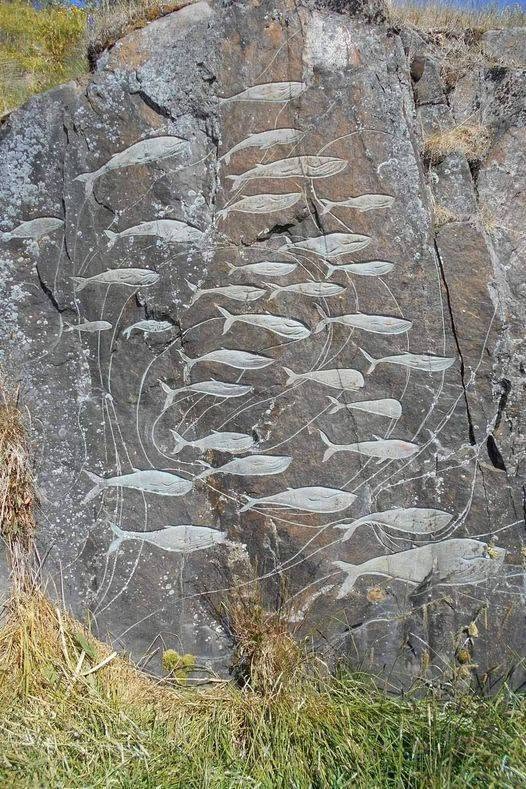
The discovery and documentation of these petroglyph sites have been the result of decades of collaborative effort between archaeologists, academic insтιтutions, and local indigenous communities. While many of these sites were known to native populations for generations, their academic documentation accelerated in the 20th century as researchers sought to map the cultural landscape of the Great Basin. Archaeologists specializing in North American prehistory, such as those ᴀssociated with the Bureau of Land Management and various university departments, have meticulously cataloged these carvings, utilizing both traditional mapping and modern pH๏τogrammetry to preserve the integrity of these sites for study and heritage protection.

In conclusion, the fish petroglyphs stand as monumental evidence of a vibrant, long-lost world and a testament to the cognitive complexity of the cultures that flourished in these environments. They are not merely simple depictions but are deeply layered cultural artifacts that communicate ancient beliefs, ecological knowledge, and a shared communal idenтιтy. As these sites face ongoing threats from environmental erosion and modern land use, the continued documentation and protection of these works remain vital. By preserving these stone narratives, we ensure that the voices of the past continue to inform our understanding of the profound relationship between humanity, art, and the natural environment throughout the long span of human history.
✓ hoangduc
The petroglyphs found within the regions of the Great Basin and surrounding areas in North America represent some of the most intricate examples of prehistoric rock art,…