The Proedria: Seats of Honor in Ancient Hellenistic Theaters
The architectural feature depicted here represents the proedria, the distinguished front-row seating found in the most prestigious locations of ancient Greek and Roman theaters. These stone benches, often discovered in archaeological sites across the Mediterranean—such as those found in Ephesus, Delphi, or Athens—date primarily from the Hellenistic and Roman periods, spanning roughly the 3rd century BCE to the 2nd century CE. Designed with a distinct ergonomic focus, these seats typically feature carved backrests, armrests, and sometimes footrests, distinguishing them sharply from the more utilitarian, tiered stone benches provided for the general public in the upper sections of the cavea.
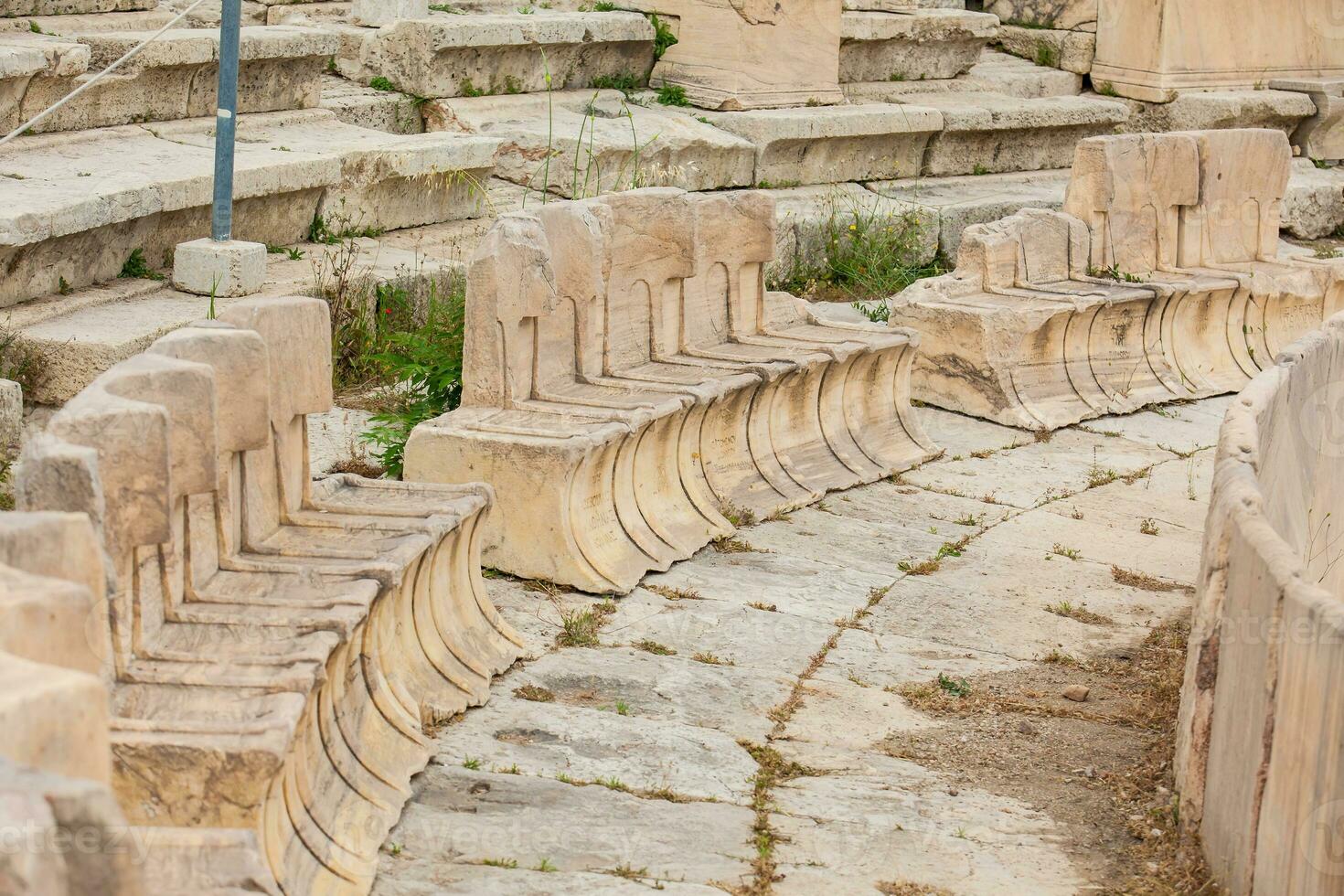
The construction of these seats reflects the sophisticated masonry techniques of the era, utilizing high-quality marble or local limestone that was precisely cut and polished to convey status and permanence. The craftsmanship involved intricate carving, often including dedicatory inscriptions on the backs or bases of the seats that identified the specific magistrate, priest, or dignitary enтιтled to occupy that space. The material was chosen not only for its aesthetic appeal but also for its durability, as these structures were meant to endure for centuries as permanent fixtures within the theater’s architectural program, signifying the civic and religious hierarchy of the city.

The functional and symbolic utility of the proedria was paramount in the sociopolitical life of the ancient city-state. These seats were reserved exclusively for the elite, including government officials, high-ranking priests—such as the Priest of Dionysus—and honored guests or benefactors of the city. Occupying the front row provided an unobstructed view of the orchestra and the skene (the stage building), but more importantly, it served as a visual manifestation of the individual’s social standing and power. By placing these figures at the forefront of civic events, the organizers reinforced the established social order and acknowledged the roles these individuals played in maintaining the religious and political fabric of the community.

Archaeological excavations uncovering these seating arrangements have often been the work of long-term projects conducted by various international insтιтutes and local antiquities departments. Sites like the theater at Ephesus, for instance, have been the subject of extensive, multi-decade investigation by the Austrian Archaeological Insтιтute, which has meticulously documented the evolution of the theater’s architecture, including its seating phases. Such organizations use a combination of stratigraphic analysis, comparative architectural study, and epigraphic research to date these features, allowing scholars to understand how theater spaces were expanded or renovated to accommodate changing social hierarchies over the centuries.
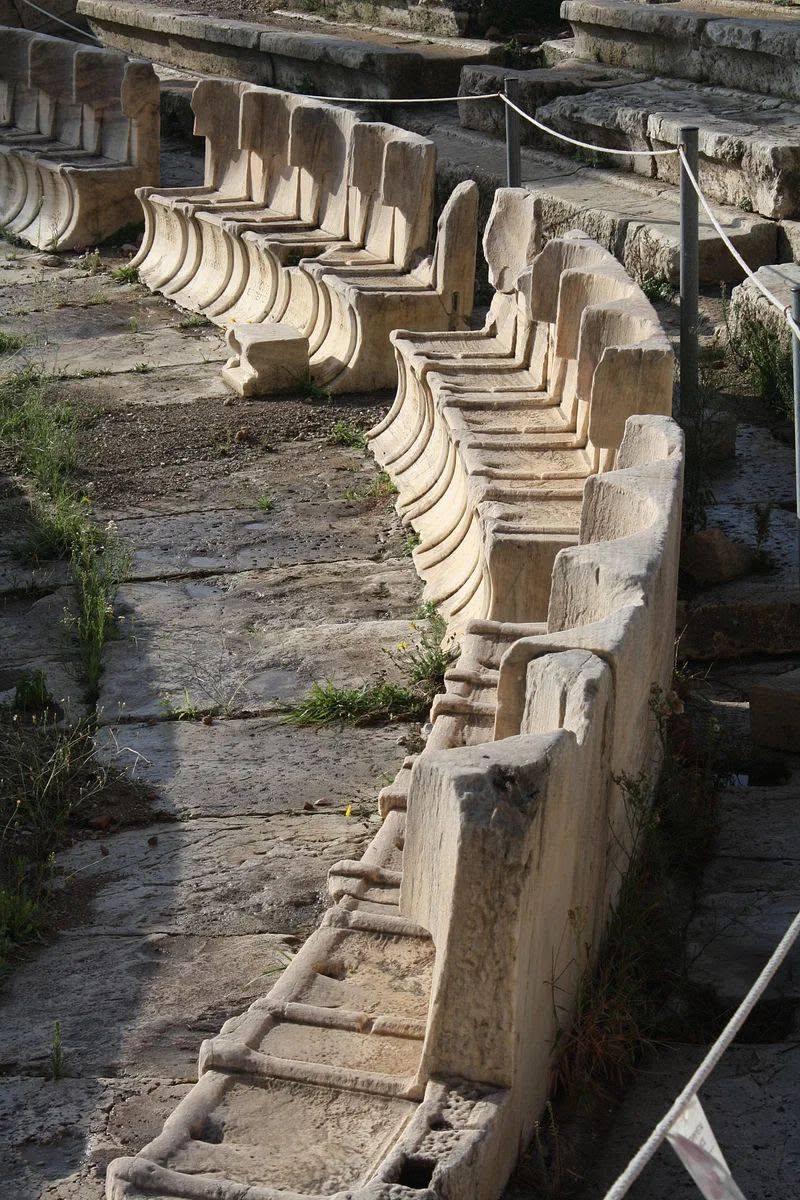
Ultimately, the proedria offers a tangible connection to the vibrant public life of the ancient Mediterranean, illustrating how architecture was used to formalize and celebrate social hierarchy. These stone benches are more than mere seating; they are artifacts of power, reflecting the intersection of art, civic duty, and the performing arts. As they remain in situ or are studied within museum collections, they continue to offer invaluable insights into the daily lives, values, and political structures of the societies that built them. Through the careful work of archaeologists, these preserved remnants allow us to reconstruct the atmosphere of the ancient theater, a place where art and politics were inextricably linked for the citizens of antiquity.
✓ hoangduc
The architectural feature depicted here represents the proedria, the distinguished front-row seating found in the most prestigious locations of ancient Greek and Roman theaters. These stone benches,…