The Si.427 Tablet: Declassified Evidence of Pre-Pythagorean Mathematical Mastery
The emergence of the Si.427 clay tablet from the dust of the Old Babylonian period, approximately 3,700 years ago, serves as a startling recalibration of our understanding of human intellectual development. While the conventional narrative has long sought to place the foundations of geometry within the cradle of Greek philosophy, the precise, incised cuneiform markings upon this artifact reveal that the principles of what we now identify as the Pythagorean Theorem were deeply ingrained in Mesopotamian land management over a millennium before Pythagoras was born. This is not merely an isolated archaeological curiosity; it is a profound testament to a sophisticated society that harnessed abstract geometric relationships to resolve complex disputes in agriculture and governance. The tablet functions as a tangible bridge to a lost era, where the rigidity of land boundaries required a standard of precision that suggests the existence of a highly organized, albeit forgotten, tradition of mathematical rigor that predates the classical antiquity we have so long celebrated.
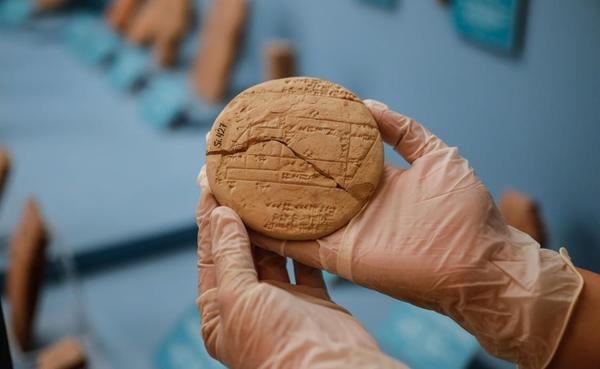
As a declassified historical study of the Si.427 document, we must consider the implications of its practical application by ancient surveyors. These individuals were not merely laborers but master geometers who utilized what is known as Pythagorean triples—sets of integers that satisfy the fundamental equation of a right triangle—to demarcate plots of earth with absolute accuracy. This evidence forces a re-examination of the transmission of knowledge across the ancient world. Could it be that the mathematical traditions attributed to the Greeks were not the sparks of a new fire, but rather the flickering embers of a much older, global flame of ingenuity? The precision found on this tablet, dated to 1700 BCE, suggests a cumulative intellectual heritage that defied the limitations of its time. It invites us to contemplate the existence of an academic lineage that traversed centuries and continents, silently shaping the development of human logic long before written records formally documented the rise of geometric science.

Furthermore, the logical framework presented by the Si.427 tablet transcends the utility of land measurement and touches upon the very essence of human deductive reasoning. By mapping fields using these specific mathematical constants, the Babylonians demonstrated an intuitive understanding of the properties of space that would not be formally canonized until the later developments in geometry. The existence of such advanced calculation tools in the context of the Old Babylonian Empire provides a necessary correction to the Eurocentric focus of mathematical history. It serves as an invitation to look deeper into the annals of antiquity, recognizing that the capacity for high-level abstract thought was not a late acquisition of the human species, but a fundamental characteristic that enabled the building of great civilizations. The tablet remains a vital, enduring piece of evidence that challenges our arrogance of progress, suggesting that our ancestors possessed a mastery of the physical world that we are only now beginning to fully comprehend.
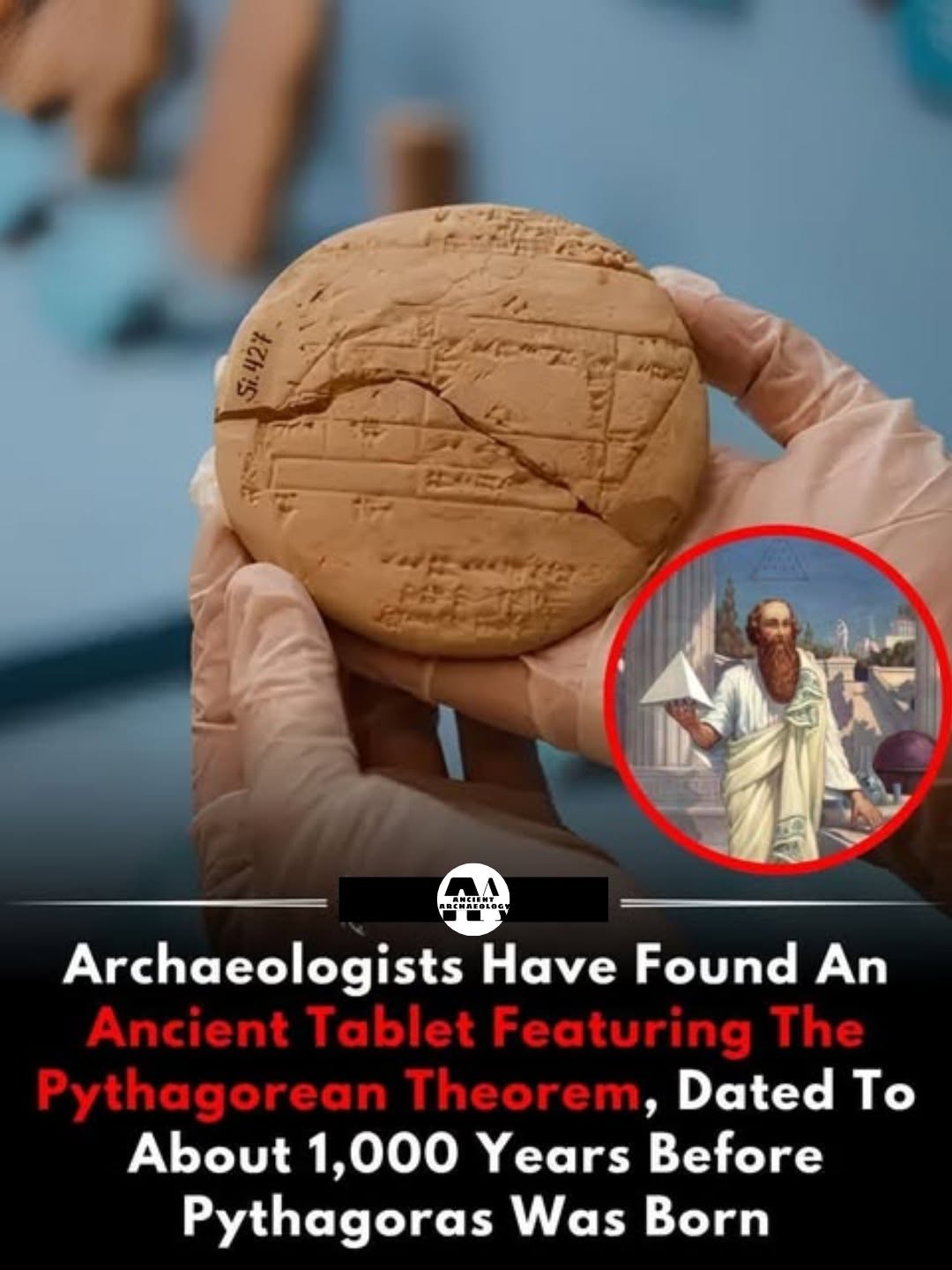
Ultimately, this study serves as a scholarly warning against the simplification of our historical narrative. The Si.427 tablet stands as an immutable pillar of proof, grounding the legacy of geometry in the soil of Mesopotamia rather than the lecture halls of Greece. As we unravel the mysteries held within these etched clay surfaces, we are compelled to acknowledge that the history of human achievement is far more expansive and interconnected than once hypothesized. This artifact is more than a tool for land surveying; it is a bridge spanning the abyss of time, connecting us to a tradition of rigorous intellectual pursuit that prioritized accuracy and order in the face of chaos. By acknowledging this ancient mastery, we do not diminish the accomplishments of Pythagoras; rather, we elevate the entire human story, recognizing that our journey toward understanding the universe is a collaborative effort that has been unfolding through the shadows of millennia, waiting for the light of modern inquiry to finally bring it into focus.
✓ tuongvien
The emergence of the Si.427 clay tablet from the dust of the Old Babylonian period, approximately 3,700 years ago, serves as a startling recalibration of our understanding…