The Subterranean Labyrinth of Derinkuyu: An Archaeological Analysis of a Cappadocian Wonder
Embedded deep within the volcanic geology of the Nevşehir Province in the Cappadocia region of central Turkey, the Derinkuyu underground city stands as one of the most astonishing achievements of ancient subterranean architecture. Spanning a monumental depth of approximately 85 meters across 18 multi-level tiers, this expansive complex represents a sophisticated masterwork of ancient engineering and community planning. Chronologically, archaeological consensus indicates that the genesis of the site dates back to the Phrygian period during the 8th to 7th centuries BCE, with subsequent monumental expansions occurring across successive historical epochs, particularly reaching its architectural zenith during the Byzantine era between the 7th and 11th centuries CE. Over centuries of regional turmoil, this complex subterranean settlement evolved from simple primitive cave dwellings into an immense subterranean stronghold capable of sheltering up to 20,000 inhabitants alongside their livestock, provisions, and essential community infrastructure.
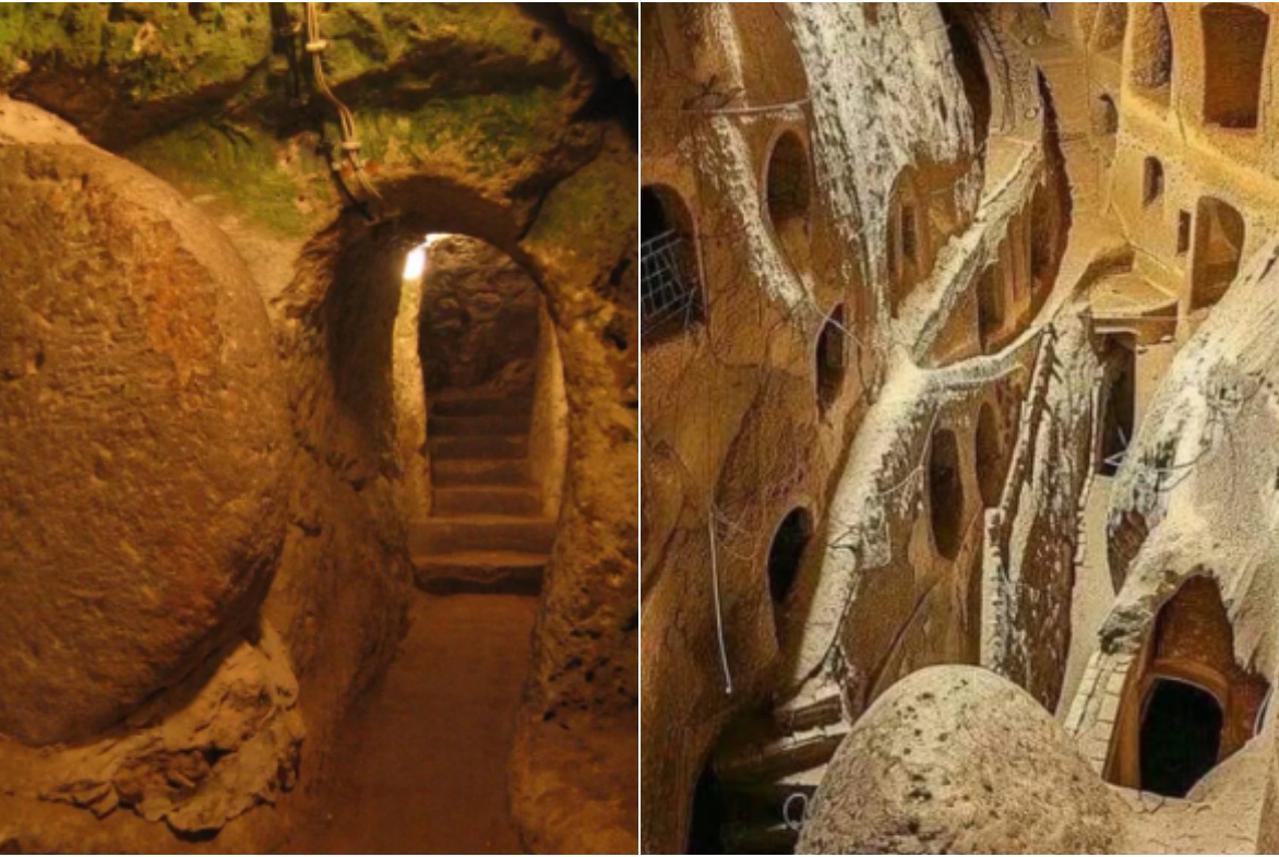
The entire multi-level labyrinth was meticulously carved directly into the soft, homogeneous geological strata known as volcanic tuff or ignimbrite. Formed millions of years ago from compacted pyroclastic ash layers ejected by ancient volcanic eruptions, this specialized geological material possesses unique physical properties that render it ideal for large-scale underground excavation. In its unexcavated state underground, the volcanic tuff exhibits a relatively low unconfined compressive strength and high porosity, allowing ancient builders to easily cut, chisel, and shape the rock using simple manual metal implements without requiring advanced heavy machinery. Crucially, once exposed to air and relieved of internal pressure, the material hardens over time while retaining exceptional structural self-support capabilities, eliminating the necessity for masonry reinforcement or timber shoring throughout the vast cavern networks and vertical shafts.
The construction and crafting techniques executed by the ancient inhabitants reflect an extraordinary mastery of vertical spatial organization and environmental engineering. The complex architecture features over fifty vertical ventilation shafts plunging deep into the lower levels, ensuring a continuous supply of fresh air and atmospheric circulation throughout all eighteen strata while simultaneously serving as deep water wells connected to the subterranean water table. Individual levels were interconnected by narrow, sloping tunnels designed to restrict movement and force invaders to navigate in single file, while mᴀssive rolling stone doors—weighing hundreds of kilograms and carved directly from the local rock floor—could be swiftly maneuvered from the interior to hermetically seal off individual corridors and compartments during hostile invasions. Furthermore, specialized chambers were methodically chiseled out to serve distinct communal functions, including spacious multi-tier livestock stables, communal kitchens equipped with deep hearths, wine cellars, oil presses, storage silos, educational classrooms, and cruciform religious chapels adorned with early Christian iconography.
Originally constructed primarily as an elaborate subterranean refuge and defense system, Derinkuyu served a vital survival purpose for local populations fleeing waves of marauding armies, ranging from early regional conquerors to invading Arab forces during the prolonged Byzantine-Arab wars. The sophisticated integration of isolated living quarters, secure food storage bins, and independent water sources enabled entire communities to endure prolonged sieges lasting for months without ever needing to breach the surface. Beyond its immediate military utility as a defensive doomsday bunker, the underground metropolis functioned as a self-sustaining urban ecosystem where daily life seamlessly continued underground, preserving both human populations and cultural heritage during periods of extreme geopolitical instability and widespread violence across Anatolia.
The modern rediscovery and subsequent archaeological excavation of this subterranean marvel occurred quite accidentally in 1963, when a local resident in the town of Derinkuyu knocked down a wall during a routine home renovation in his basement, revealing a hidden subterranean pᴀssage that opened into the vast, silent network. Following this serendipitous find, intensive archaeological investigations were initiated by Turkish cultural and heritage authorities, officially leading to the opening of portions of the site to the public in 1969. Despite decades of ongoing exploration and historical research, modern archaeologists estimate that less than half of the mᴀssive Derinkuyu complex has been fully excavated and mapped, with numerous lower levels and connecting tunnels remaining sealed due to structural preservation challenges, leaving countless ancient mysteries buried deep within the volcanic rock of Cappadocia.
✓ hoangduc
Embedded deep within the volcanic geology of the Nevşehir Province in the Cappadocia region of central Turkey, the Derinkuyu underground city stands as one of the most…