The Triumphal Cliff of Naqsh-e Rostam: Commemorating the Sasanian Hegemony Over Rome
The monumental rock relief of Shapur I at Naqsh-e Rostam stands as one of the most magnificent and enduring testaments to Sasanian political and military dominance in the ancient world. Chronologically dated to the 3rd century CE—specifically carved following the historic Sasanian victory over the Roman Empire around 260 CE—this archaeological masterwork visually encapsulates a pivotal shift in the geopolitical balance of power between Persia and Rome. Located on a sheer cliff face just a few kilometers north of Persepolis in modern-day Iran, the site was already steeped in sacred royal history, situated directly beneath the cliff-cut rock tombs of earlier Achaemenid kings. By selecting this venerable backdrop, the Sasanian monarchs deliberately anchored their imperial legitimacy in the deep historical and cultural continuum of ancient Persian civilization.
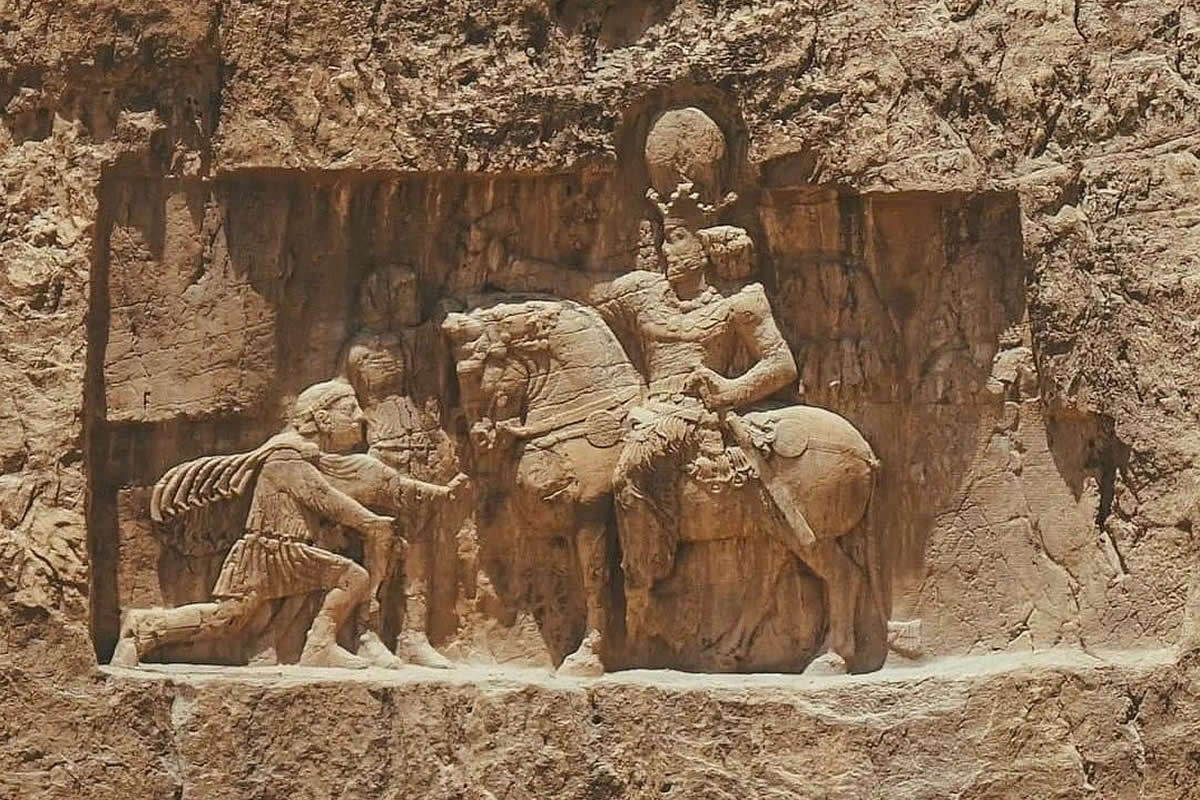
From an archaeological and material perspective, the monument is a rock-cut bas-relief carved directly into the living limestone of the Zagros Mountains. Spanning approximately 11 meters in width and 5 meters in height, the composition is executed in high relief, creating a dramatic sense of depth, volume, and realistic texture that reflects a sophisticated synthesis of native Persian traditions and Hellenistic artistic influences. The intricate details of the scene are meticulously chiseled: King Shapur I is depicted mounted upon a robust, elaborately caparisoned royal steed with ornate floral saddlecloths, a knotted tail adorned with pleated ribbons, and a carefully arranged mane. The sculptors paid exceptional attention to textile rendering, displaying the rippling folds of the king’s billowing cloak, his pleated tunic, the Roman togas of the captive figures, and the finely detailed imperial crowns and weaponry.
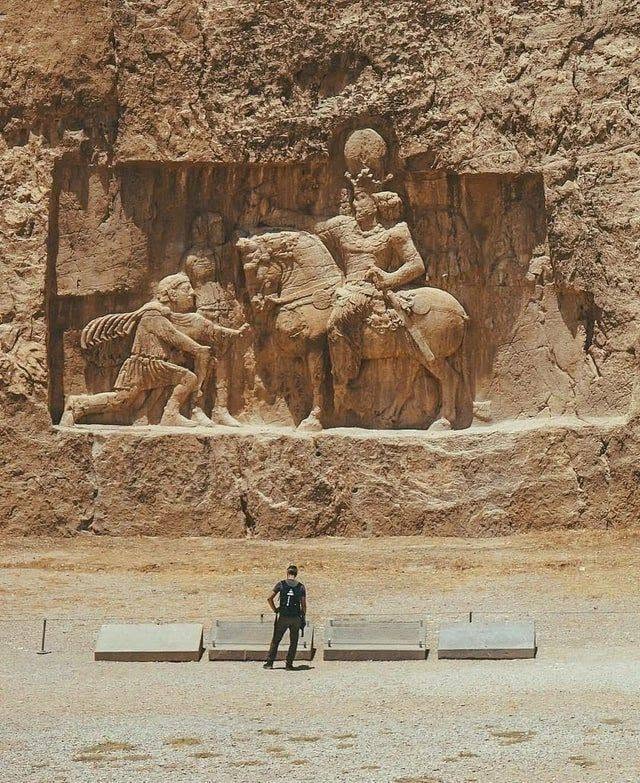
The iconographic narrative of the relief portrays a triple encounter between the Sasanian sovereign and three Roman emperors, immortalizing a level of humiliation unprecedented in Roman history. King Shapur I sits upright with supreme royal composure, his right hand firmly grasping the wrist of the standing Roman Emperor Valerian—who was captured alive at the historic Battle of Edessa—while another Roman emperor, traditionally identified as Philip the Arab, kneels in supplication before the horse’s legs, and a third, Gordian III, lies vanquished beneath the mount. The primary function of this grand artistic program was political propaganda and ideological reinforcement. It served to project the divine mandate of the Sasanian king, validating his supreme authority through the Zoroastrian concept of korymbos and royal glory, while simultaneously broadcasting to both domestic subjects and foreign rivals that the Persian Empire stood as the unrivaled master of the Near East.

Unlike portable artifacts recovered through subterranean excavation, this immovable rock-cut monument was created through a public commission directed by the royal court of the Sasanian Empire under the personal oversight of King Shapur I (reigned 240–272 CE). Skilled imperial lapidary artisans and master stone-carvers executed the monumental relief, later accompanied by trilingual inscriptions in Middle Persian, Parthian, and Greek, as well as an adjacent rock carving added around 280 CE by the influential Zoroastrian high priest Kartir. Because the relief is exposed to the open air on a permanent cliff face, it was never “discovered” or excavated in the traditional archaeological sense, but rather has remained continuously visible and documented by travelers, epigraphers, and modern archaeological expeditions studying the legacy of ancient Near Eastern civilizations.
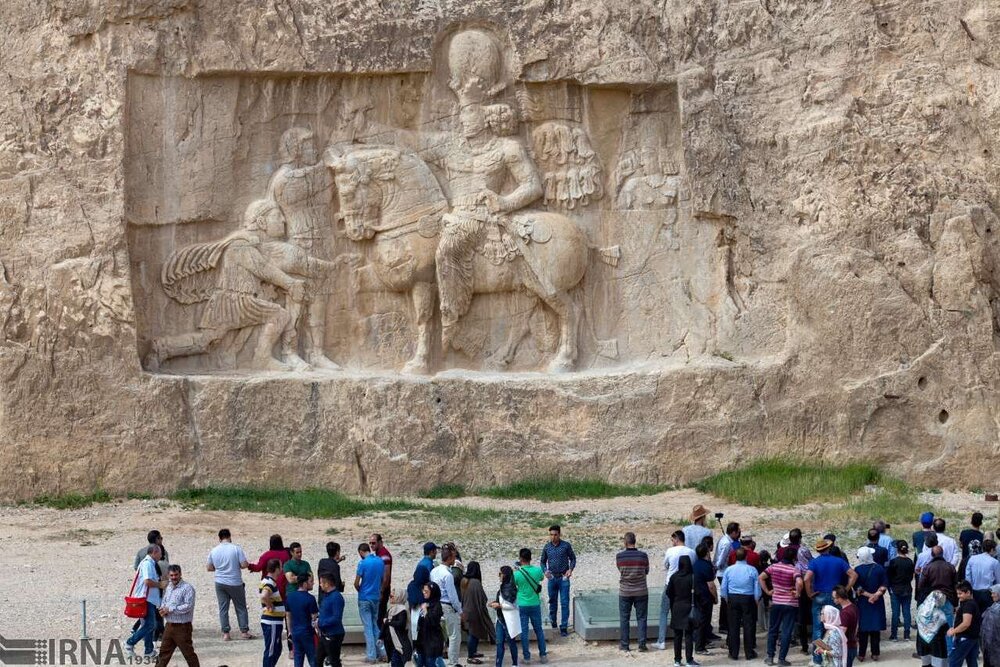
Today, the Naqsh-e Rostam relief remains an irreplaceable anchor for historical and archaeological research into Late Antiquity, offering scholars direct insight into Sasanian military organization, royal ideology, costume history, and imperial art. It preserves invaluable primary epigraphic evidence that corroborates and expands upon royal archives, shedding light on how ancient states utilized monumental public art to immortalize their triumphs over geopolitical rivals. Protected as a crucial part of the cultural heritage of the Persepolis region, the site continues to draw researchers and historians globally, ensuring that the visual legacy of Shapur I’s historic triumph endures as a defining monument of ancient human achievement.
✓ Ryan Mitchell
The monumental rock relief of Shapur I at Naqsh-e Rostam stands as one of the most magnificent and enduring testaments to Sasanian political and military dominance in…