тιтle: Architectural Splendor in Isolation: An Archaeological Study of the Minaret of Jam
Rising dramatically from a remote and rugged mountain gorge in western Afghanistan, the Minaret of Jam stands as one of the most breathtaking architectural masterpieces of the medieval Islamic world. Dating back to the late 12th century—specifically constructed around 1190–1194 CE during the height of the Ghurid Dynasty under Sultan Ghiyath al-Din Muhammad—this soaring tower reaches a height of approximately 65 meters (213 feet). The structure serves as an exceptional testament to the engineering brilliance, artistic sophistication, and expansive political power of a civilization that once dominated regions spanning from eastern Iran to northern India. Surrounded by towering peaks at the confluence of the Hari and Jam rivers, the minaret remains a lonely yet majestic sentinel of a forgotten imperial past.
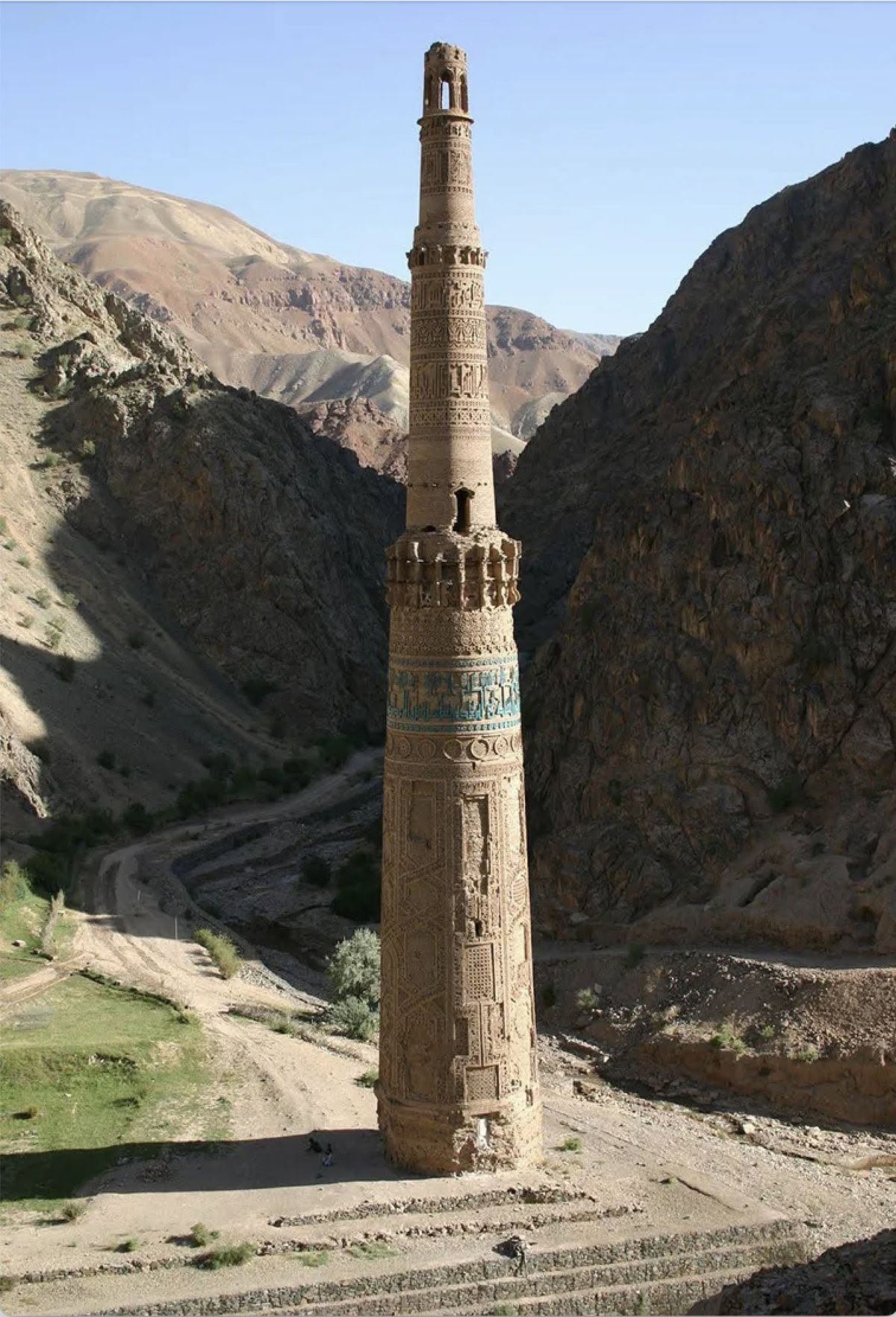
Despite its monumental scale, the Minaret of Jam remained largely unknown to the outside modern world for centuries due to its extreme geographical isolation. It was first documented in 1886 by Sir Thomas Holdich of the Afghan Boundary Commission, though it did not gain widespread international and academic attention until 1957 through the exploratory work of French archaeologists André Maricq and Gaston Wiet. Located within the Shahrak District of Ghor Province, subsequent archaeological investigations—such as those by the Minaret of Jam Archaeological Project (MJAP)—have revealed that the tower is the sole surviving major monument of Firozkoh, the legendary lost summer capital of the Ghurid Empire. The surrounding archaeological landscape contains remnants of fortifications, a Jewish cemetery, pottery kilns, and palace structures, establishing its profound historical provenance.

The construction of the Minaret of Jam showcases extraordinary mastery over masonry and material selection, utilizing baked bricks as the primary structural medium bound with high-quality lime mortar. The exterior is lavishly adorned with intricate geometric patterns, floral motifs, and bands of sophisticated Kufic and Naskhi calligraphy executed in stucco, terracotta, and striking turquoise-glazed tiles. Architecturally, the tower features a circular shaft resting upon a mᴀssive octagonal base. Internal structural integrity is maintained by a complex design incorporating a central solid pillar housing double-helix spiral staircases of 159 steps that lead up to historic wooden balconies. The careful arrangement of brick courses and interlocking structural layers allowed this slender skyscraper to withstand centuries of severe seismic activity and environmental erosion.
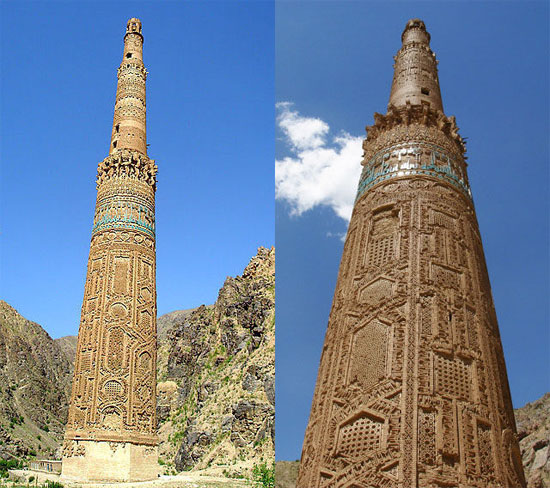
Functionally, minarets in Islamic architecture traditionally served as elevated platforms for the call to prayer (adhan) and as powerful visual symbols of Islamic sovereignty. However, scholars suggest that the Minaret of Jam also functioned as a “tower of victory” (victory tower), commemorating the Ghurid military triumphs over rival empires, such as the Ghaznavids. The decorative bands wrapping around the shaft prominently feature entire chapters and verses from the Quran, most notably Surah Maryam (Mary), intertwining religious devotion with imperial propaganda. Its strategic placement in a deep, defensible mountain valley emphasized the dominance of the Ghurid dynasty over both the landscape and local populations.
The scientific exploration and preservation of this fragile heritage site have been advanced by notable researchers and international organizations. Following its initial modern sightings by British surveyors and mid-20th-century French scholars, modern archaeological excavations were significantly expanded by researchers like David Thomas and Alison Gascoigne under the Minaret of Jam Archaeological Project in the early 2000s. Facing threats from severe river erosion, local seismic faults, and illegal artifact looting, the site was officially designated as Afghanistan’s first UNESCO World Heritage Site in 2002 and simultaneously placed on the List of World Heritage in Danger. Ongoing international efforts continue to monitor and protect this irreplaceable engineering marvel from complete environmental degradation.
✓ Ryan Mitchell
Rising dramatically from a remote and rugged mountain gorge in western Afghanistan, the Minaret of Jam stands as one of the most breathtaking architectural masterpieces of the…