Unearthing the Dawn of Tailored Apparel: An Archaeological Analysis of the Yanghai Trousers
Dating back approximately $3,300$ to $3,000$ years ($13$th to $10$th century B.C.), the Yanghai trousers represent one of the most revolutionary sartorial breakthroughs in human history. Prior to this innovation, ancient populations across Eurasia predominantly wore loose garments such as tunics, robes, gowns, or a combination of loincloths and separate leggings. Discovered in an exceptional state of preservation, these wool trousers predate other known horse-riding pants by several centuries, providing a rare window into the transition from settled agricultural communities to mobile, horse-mounted pastoral lifestyles in Central Asia. As a foundational milestone in textile archaeology, this garment shifts our understanding of how ancient humans adapted their clothing to meet the functional demands of a changing world.
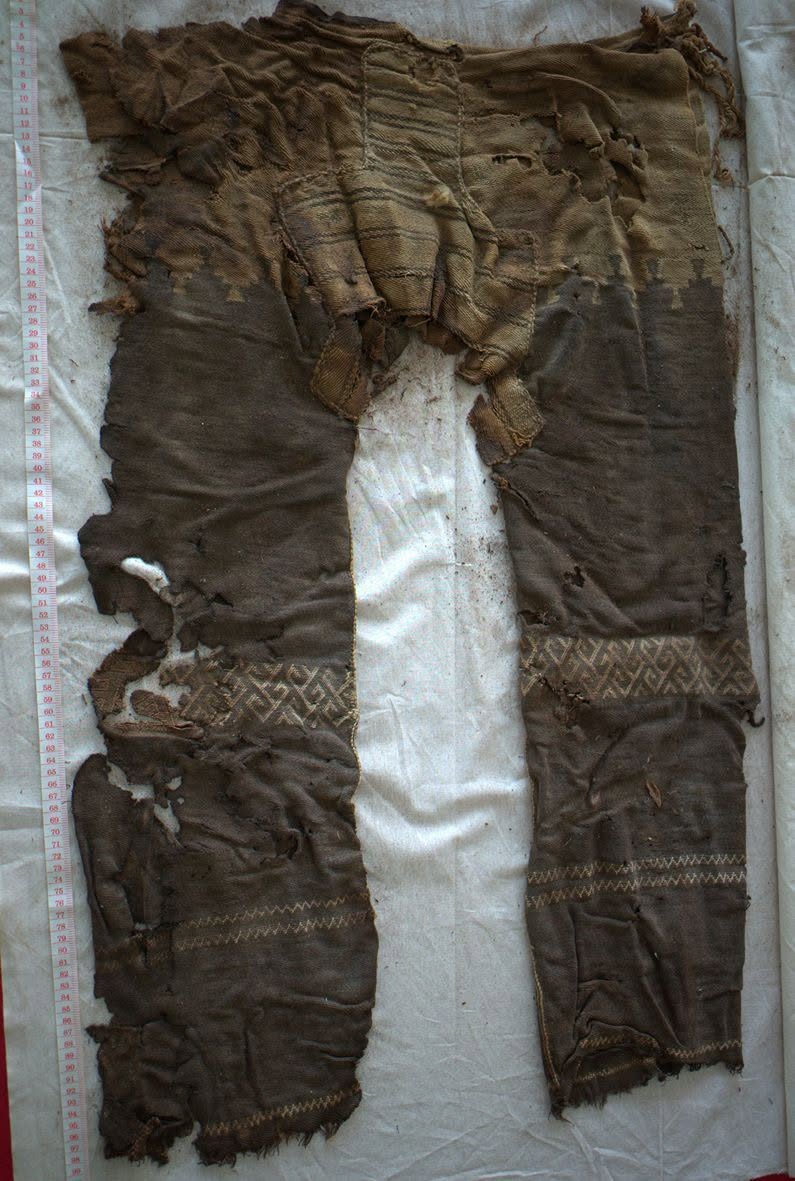
The extraordinary artifact was unearthed at the vast Yanghai graveyard, situated in the arid gravel desert of the Turpan Basin in Xinjiang, northwestern China. The hyper-arid local climate, characterized by extreme summer heat and freezing winters, combined with the alkaline desert soil to inhibit the decomposition of organic materials, allowing fragile textiles and human remains to survive millennia intact. Archaeologically, the cemetery has yielded over $500$ ancient tombs belonging to the Subeixi culture. The specific trousers analyzed were retrieved from tombs M21 and M157, entombed alongside male occupants who were interred with high-status equipment indicative of warriors and horsemen, such as wooden horse bits, leather bridles, battle-axes, and bow sheaths.
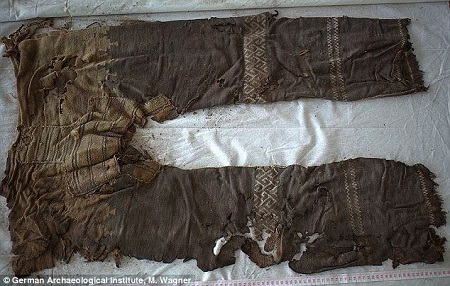
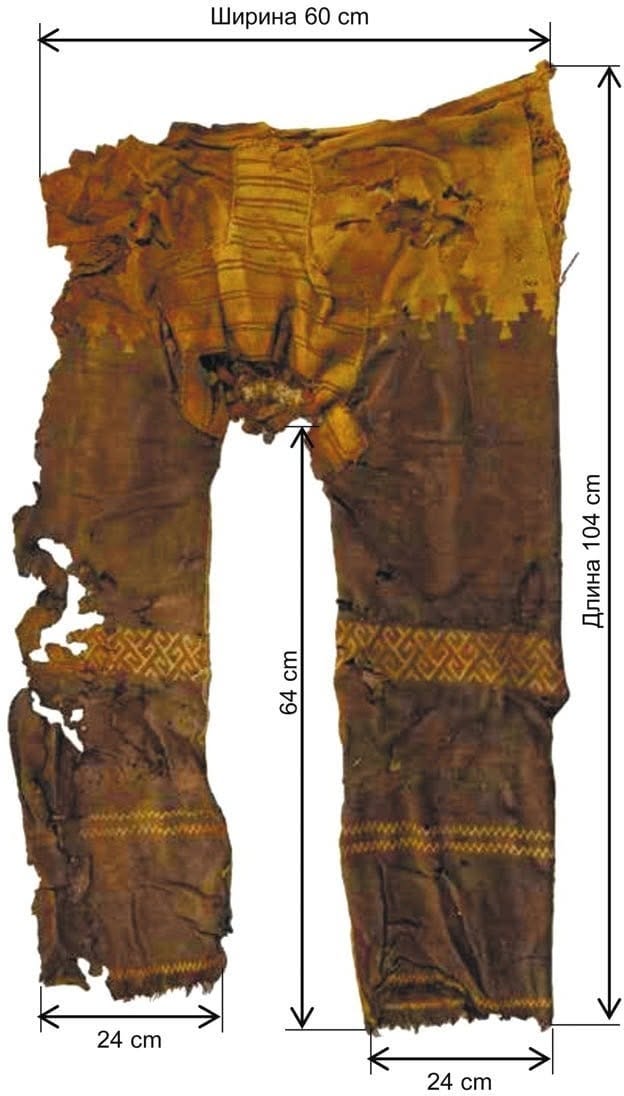
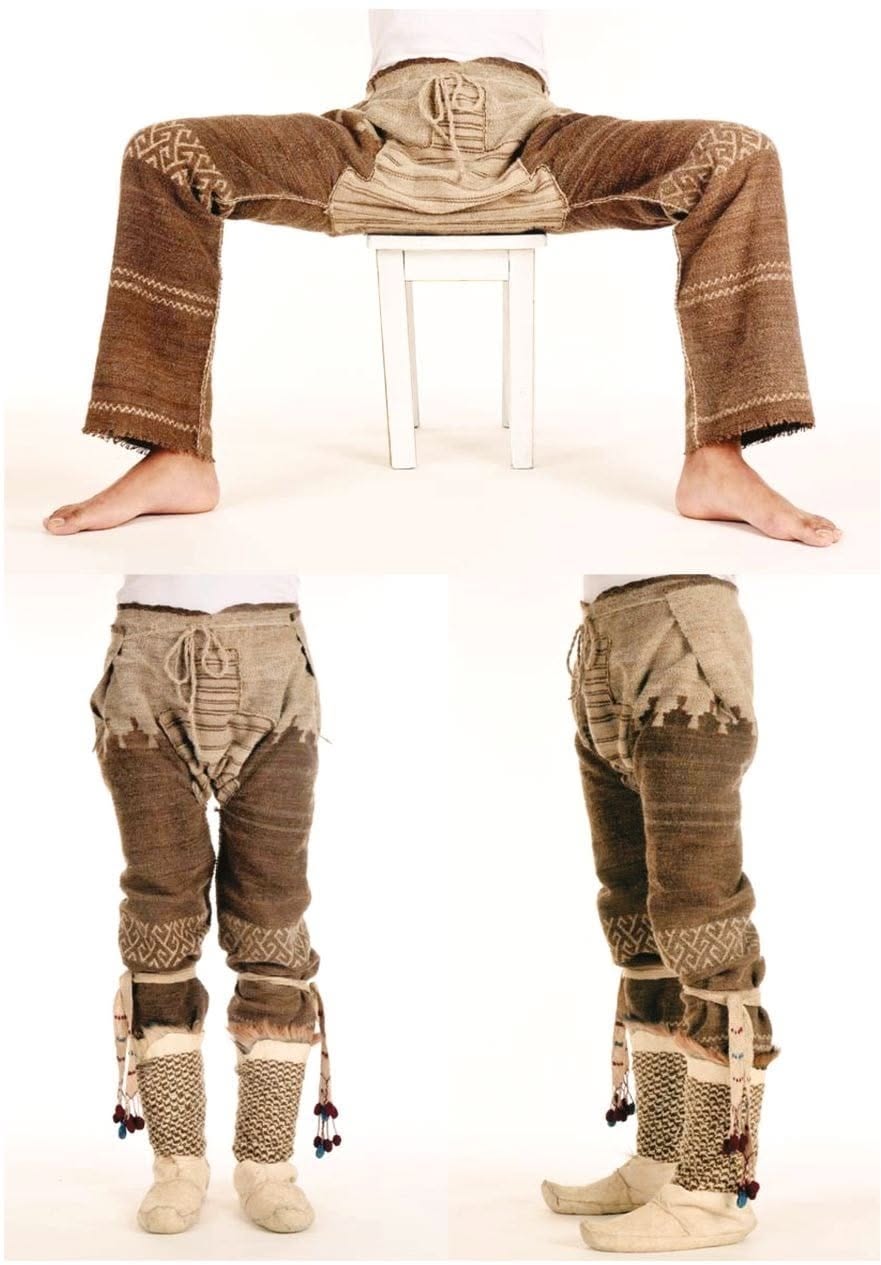
From a material and manufacturing perspective, the trousers are a masterpiece of ancient craftsmanship, constructed entirely from hand-spun wool using sophisticated weaving techniques. Rather than being cut from a single piece of fabric, the trousers are ingeniously ᴀssembled from three separately woven components: two straight-cut leg pieces and a wide, stepped, cross-shaped crotch insert designed to join the legs and cover the pelvic region. The tailoring incorporates advanced diagonal twill weaves which provided the fabric with necessary elasticity, alongside complex twining methods where multi-colored weft threads were twisted to create striking geometric patterns, including interlocking T-shapes and rhombic meandering bands across the knees. Furthermore, the waistband features side slits designed for drawstrings, demonstrating an intuitive grasp of ergonomic fastening long before the advent of modern tailoring tools.
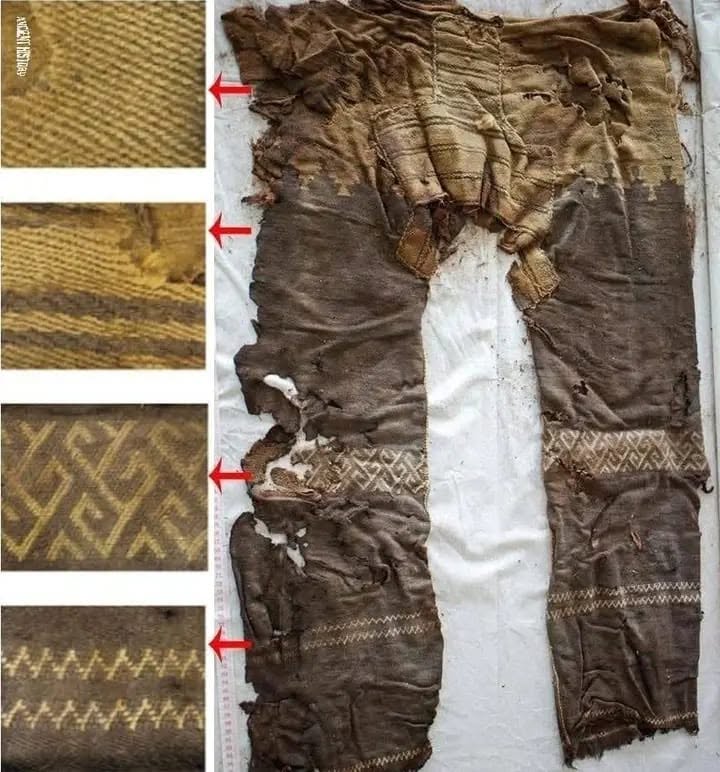
Functionally and symbolically, the invention of these trousers was directly tied to the demands of horseback riding and mounted warfare. Before the widespread mastery of equestrian tactics, riders using traditional flowing robes or open leggings faced significant vulnerability and restricted mobility while riding astride. The integration of a tailored crotch piece revolutionized personal gear by affording riders the freedom to spread their legs wide across a horse’s back while simultaneously protecting sensitive inguinal and pelvic areas from friction and injury. Beyond mere practicality, the intricate geometric ornamentation woven into the legs and calves suggests that these garments also served as markers of social idenтιтy, personal status, or tribal affiliation among elite pastoralist horsemen.
The scientific recovery and documentation of these trousers are the result of decades of meticulous excavations conducted by Chinese archaeologists since the early 1970s, complemented by subsequent interdisciplinary analyses led by international specialists such as researchers from the German Archaeological Insтιтute, including Ulrike Beck and Mayke Wagner. By utilizing advanced scientific methodologies—most notably accelerator mᴀss spectrometry radiocarbon dating on fabric samples—these researchers successfully established the true antiquity of the garments. Their collaborative investigations continue to illuminate how ancient nomadic groups transmitted knowledge, trade techniques, and cultural innovations across the vast expanses of the Eurasian continent.
✓ Ryan Mitchell
Dating back approximately $3,300$ to $3,000$ years ($13$th to $10$th century B.C.), the Yanghai trousers represent one of the most revolutionary sartorial breakthroughs in human history. Prior…