Unveiling the Anubis Shrine: A Century of Archaeological Preservation from Tutankhamun’s Tomb
The discovery of the tomb of the Eighteenth Dynasty Pharaoh Tutankhamun in November 1922 remains the most famous milestone in the history of modern archaeology. Among the countless treasures recovered from the underground chambers in the Valley of the Kings, the Jackal Shrine—frequently ᴀssociated with the god Anubis—stands out as one of the most powerful and intact ritual artifacts of ancient Egypt. The comparison between its initial discovery state in 1922 and its modern museum display in 2023 underscores not only the profound visual impact of this sacred object but also the mᴀssive evolution in conservation, documentation, and exhibition strategies over the past century. This artifact offers contemporary researchers and the public an unprecedented window into the funerary practices and theological architecture of the New Kingdom.
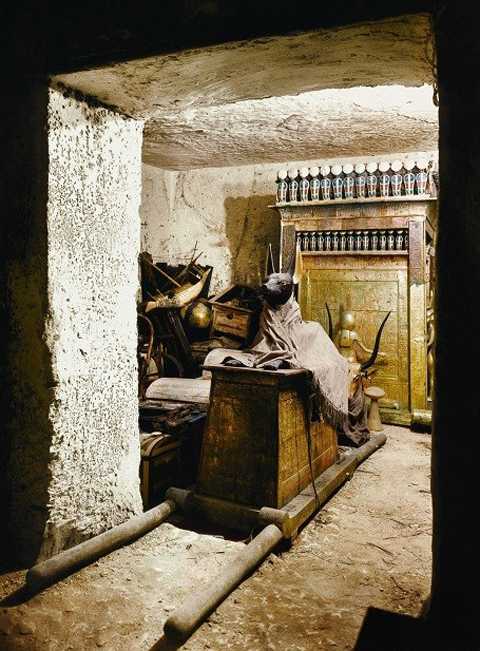
Dating back to the late Eighteenth Dynasty, approximately c. 1332–1323 BCE, the Anubis Shrine was positioned inside the Treasury room of Tutankhamun’s burial complex (KV62) on the west bank of Thebes, modern-day Luxor, Egypt. The physical structure of the shrine consists of a portable sanctuary or pylon-shaped chest mounted on a sledge equipped with carrying poles, which allowed it to be transported during funerary processions. Resting atop this gilded wooden shrine is a striking, life-like recumbent jackal representing Anubis, the ancient Egyptian jackal-god of embalming, cemeteries, and the afterlife. The entire ᴀssemblage is meticulously constructed to command spatial reverence, acting as a divine guardian standing watch over the pharaoh’s most sacred internal organs and ritual belongings.
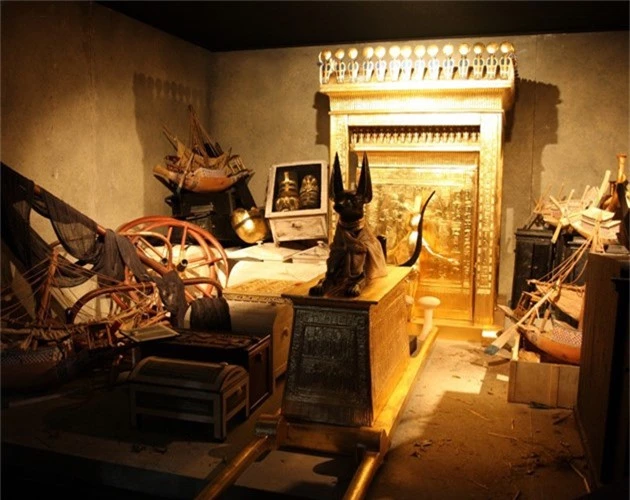
The material composition and manufacturing details of the Anubis Shrine showcase the exceptional skill of ancient Egyptian master artisans. The core of the shrine and the base sledge is constructed from lightweight native woods, heavily coated with a fine layer of gesso before being completely covered in brilliant gold leaf. The jackal figure itself is carved from wood, coated with a matte black resin that symbolizes the fertile soil of the Nile and the regeneration ᴀssociated with Osiris, while its internal details feature striking contrasts: gilded ears, claws, collar, and delicate hieroglyphic inscriptions. The eyes of the jackal are inlaid with calcite and obsidian, capturing a luminous, piercing gaze that emphasizes the protective and watchful nature of the deity over the royal threshold.
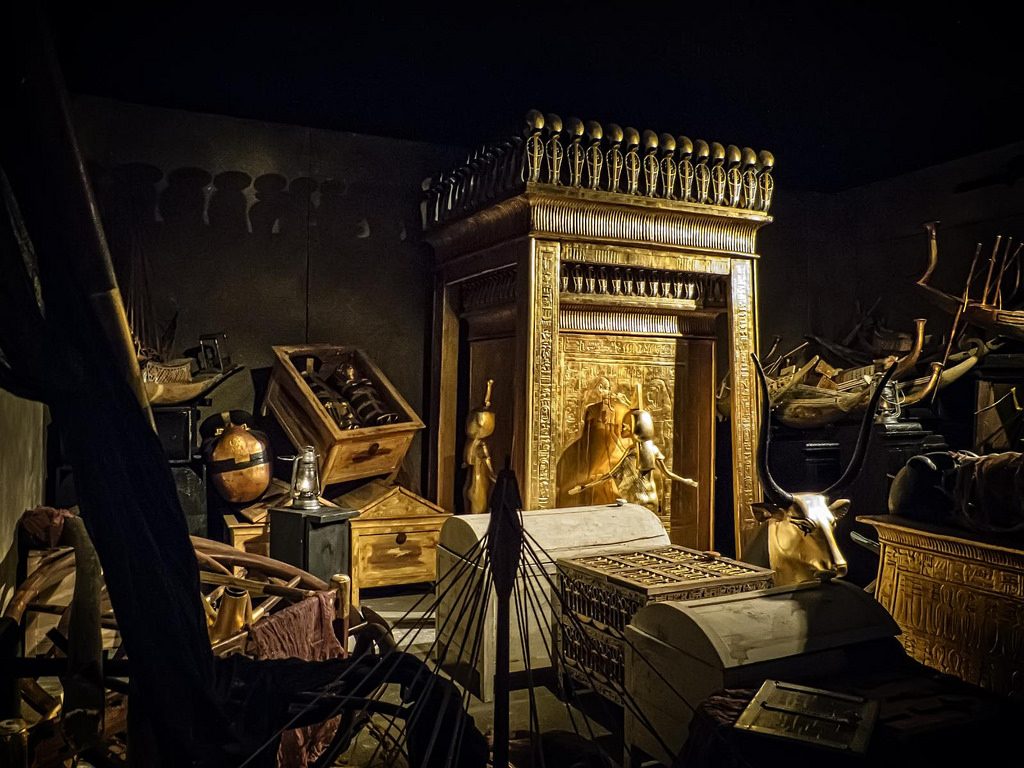
Functionally and symbolically, the shrine served as a divine protector and a container for sacred items related to the mummification process, symbolically guarding the entrance to the netherworld. In ancient Egyptian religion, Anubis was the deity who guided the souls of the deceased through the underworld and oversaw the weighing of the heart, making this statue a crucial apotropaic element within the royal tomb. By placing the jackal atop a shrine equipped with carrying poles, the ancient creators ensured that the god could accompany the young king physically from his palace to his final resting place, bridging the gap between the mortal realm of the living and the eternal domain of the gods.
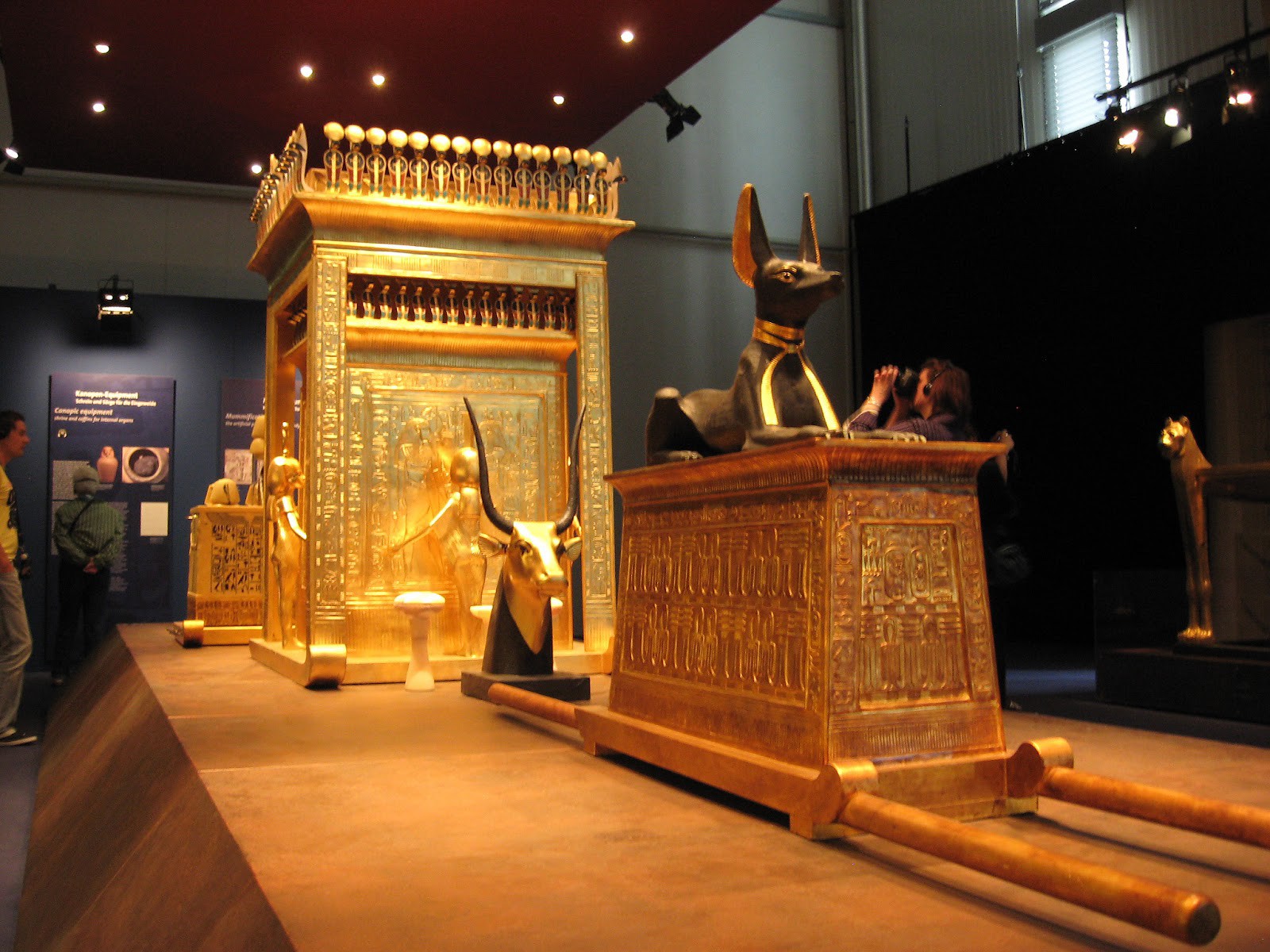
The monumental discovery of this artifact was famously achieved by the British archaeologist Howard Carter and financed by his wealthy patron, Lord Carnarvon. Carter’s meticulous recording, cataloging, and pH๏τography over several excavation seasons preserved every fragile detail of the shrine, transitioning archaeological field methods from treasure hunting into a scientific discipline. A century later, as seen in the 2023 museum comparison, the shrine continues to be an ambᴀssador of ancient Egyptian heritage, having undergone advanced stabilization and conservation treatments to ensure that future generations can study its magnificent craftsmanship and historical legacy.
✓ hoangduc
The discovery of the tomb of the Eighteenth Dynasty Pharaoh Tutankhamun in November 1922 remains the most famous milestone in the history of modern archaeology. Among the…