Unveiling the Masterpiece: An Archaeological Analysis of the Twelve-Angled Stone
The Twelve-Angled Stone stands as one of the most celebrated and thoroughly studied architectural artifacts of the pre-Columbian Americas. Located along Hatun Rumiyoc Street in the historic center of Cusco, Peru, this monumental block is an integral structural component of an ancient Inca palace wall. Built during the height of the Inca Empire within the 12th to 13th century AD—traditionally attributed to the reign of the sixth Inca ruler, Inca Roca—the site has garnered immense attention from global archaeologists, historians, and structural engineers. Designated as a Cultural Heritage of the Nation by the Peruvian government, this immovable archaeological feature encapsulates the apex of Andean stonework and urban design.
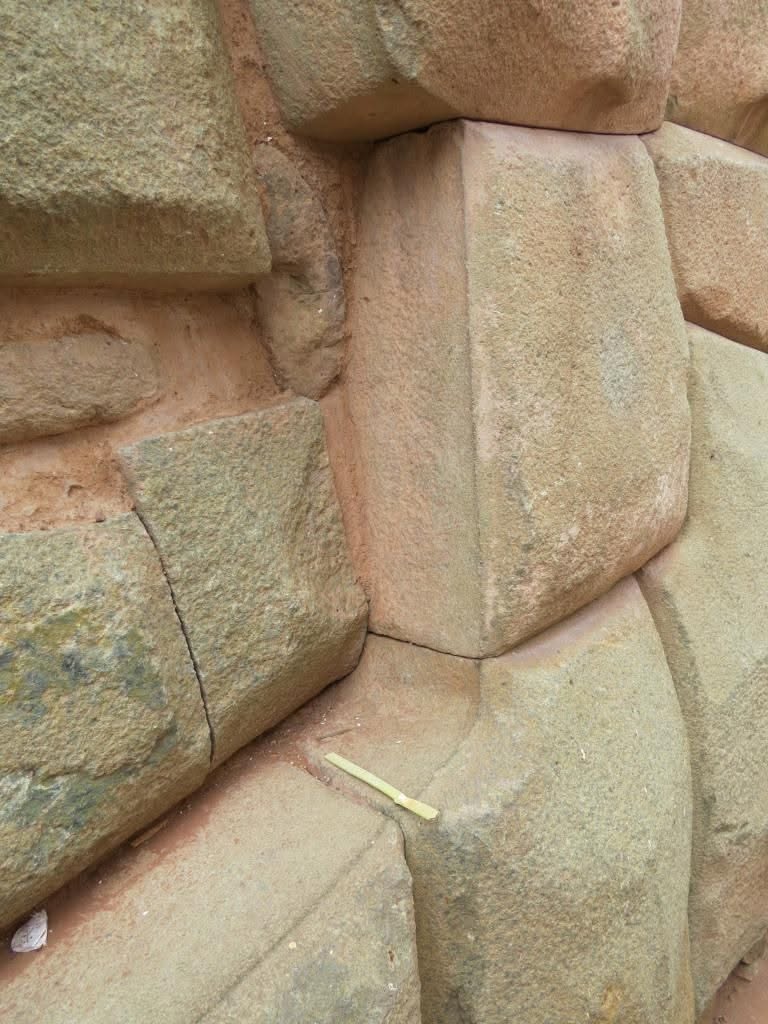
From a material and petrographic perspective, the artifact is carved from a mᴀssive block of green diorite, an exceptionally hard igneous rock sourced locally from the surrounding Andean region. Weighing an estimated six to eight tons and plunging deep into the foundation of the wall, the stone is a masterclass in dry-stone polygonal masonry. Archaeological excavation and analysis indicate that ancient Inca masons shaped the block using harder stone hammers and abrasive grinding tools, meticulously carving exactly twelve interlocking facets. Each angle and plane was chiseled with such microscopic precision that the individual blocks fit seamlessly together without the use of mortar, lime, or cement, locking into the adjacent stones like an intricate three-dimensional puzzle.

Beyond its physical composition, the masonry technique serves a profound structural and functional purpose in a highly seismic zone. Archaeologists note that the polygonal design and interlocking angles distribute kinetic energy evenly across the wall during major earthquakes, allowing the stones to shift slightly and resettle without collapsing. This ingenious engineering feat explains why the palace foundations have successfully survived devastating historical earthquakes that repeatedly leveled Spanish colonial structures built directly above them. Symbolically, researchers suggest that the twelve distinct angles may reflect advanced Andean cosmological alignments, sociopolitical hierarchies, or divisions representing imperial governance and royal lineage.
The discovery and documentation of this architectural wonder are tied to the broader historical excavation of Cusco’s urban core following the Spanish conquest in the 16th century. While local indigenous populations always maintained an awareness of these sacred imperial foundations, Western documentation and archaeological recognition accelerated as Spanish authorities repurposed the ancient royal compound into the Archbishop’s Palace of Cusco. Modern archaeological preservation efforts, led by Peruvian cultural heritage insтιтutions and international researchers throughout the 20th and 21st centuries, have officially cataloged, protected, and studied the wall to safeguard it against urban wear and environmental degradation.
Today, the Twelve-Angled Stone functions as both a priceless archaeological archive and a powerful living emblem of indigenous Andean resilience and ingenuity. It provides researchers with tangible empirical data regarding pre-Columbian logistics, tool use, labor organization, and sophisticated geomechanical knowledge. Protected strictly under national heritage laws, this monumental block continues to captivate academic investigators and global visitors alike, bridging the ancient past of the Tahuantinsuyo empire with the modern idenтιтy of the Andean people.
✓ hoangduc
The Twelve-Angled Stone stands as one of the most celebrated and thoroughly studied architectural artifacts of the pre-Columbian Americas. Located along Hatun Rumiyoc Street in the historic…