Unveiling the Nile Mosaic of Palestrina: A Late Hellenistic Masterpiece of Roman Antiquity

Dating back to the late Hellenistic period around the 1st century BC, the Nile Mosaic of Palestrina stands as one of the most magnificent and complex floor mosaics surviving from classical antiquity. This monumental artwork offers a sweeping panorama of the Nile River as it flows from the highlands of Ethiopia and the Blue Nile down to the Mediterranean Sea. Originally serving as a luxurious pavement decoration, the composition measures approximately 5.85 meters in width and 4.31 meters in height, featuring an arch-headed framing shape tailored for an apsidal hall. Its creation reflects a profound cultural fascination within the Roman world during the late Republic regarding the exotic geography, fauna, and religious practices of Ptolemaic Egypt.

The archaeological context of this masterpiece traces back to the ancient town of Praeneste, modern-day Palestrina, located east of Rome in central Italy. Archaeological analysis indicates that the mosaic was originally installed as the flooring of an apse within a classical sanctuary-grotto situated near the lower forum, closely ᴀssociated with the mᴀssive terraced Sanctuary of Fortuna Primigenia. The materials utilized in crafting this intricate panel consist of hundreds of thousands of tiny, meticulously cut colored stone chips, known as tesserae, manipulated by highly skilled hands. Scholars widely believe that the craftsmanship and stylistic execution were the work of itinerant Alexandrian Greek artisans or mosaicists brought to Italy to cater to elite Roman patrons.

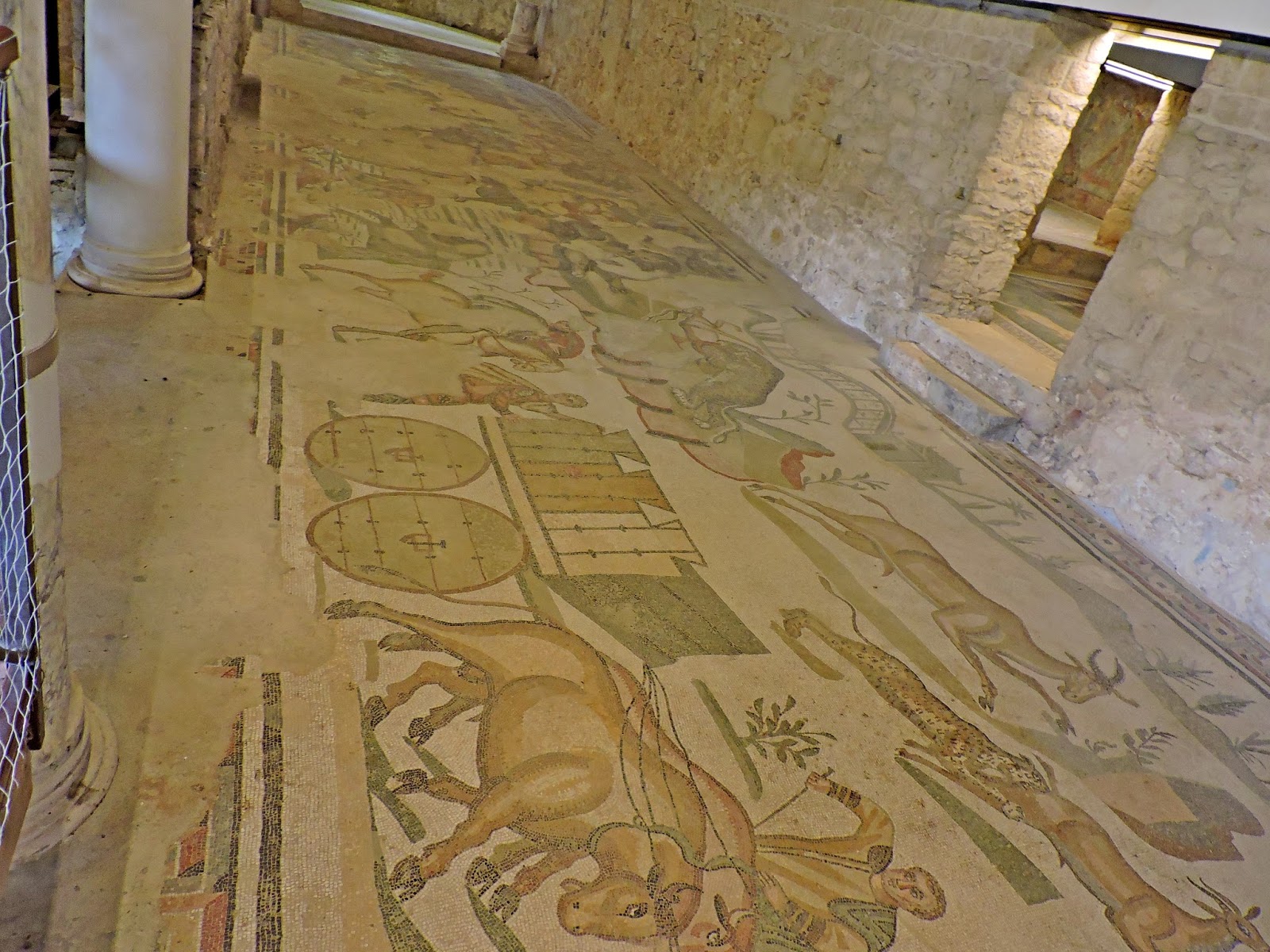
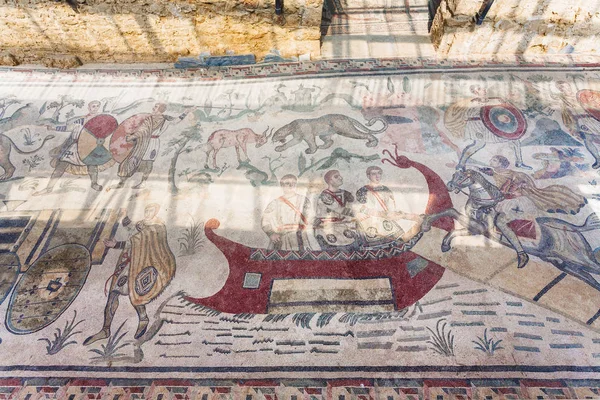
From a technical and artistic standpoint, the mosaic displays an astonishing level of detail through its depiction of diverse topography, architecture, and living subjects. The lower and middle sections portray bustling scenes of Ptolemaic Greek settlers, soldiers in military gear, Egyptian priests performing religious rituals outside monumental temples, and idyllic river life complete with vessels and celebratory pavilions. Moving upward, the imagery shifts toward sub-Saharan Africa, illustrating indigenous hunters engaged with both realistic and fantastical fauna native to the Nile basin, such as crocodiles, hippopotami, ibises, and mythical beasts. Greek inscriptions accompany many of the figures and landmarks, serving to identify specific geographic points and cultural activities across the length of the river basin.
Beyond its aesthetic brilliance, the mosaic held significant religious and socio-political meaning for ancient Romans interacting with Mediterranean cultures. Archaeologists and historians interpret the expansive panorama not merely as a decorative map, but as an early material manifestation of the growing popularity and syncretism of Egyptian mystery cults—specifically the worship of the goddess Isis—within the Italian peninsula. The imagery captures a utopian or escapist vision of foreign lands, blending accurate geographical markers from the Nile valley with imaginative folklore to feed the Roman imagination during an era of expanding Mediterranean hegemony.
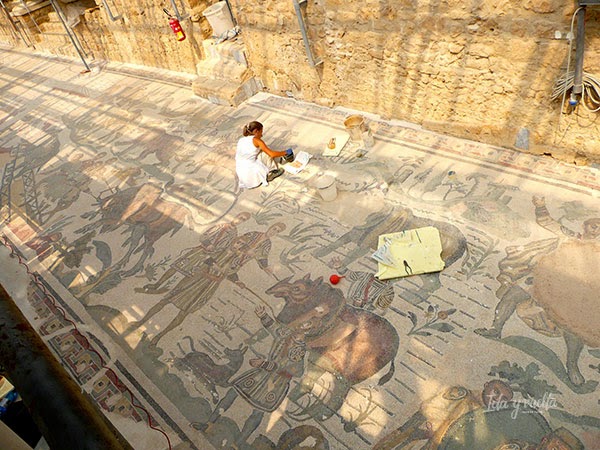
The physical survival and excavation history of the mosaic have been exceptionally tumultuous since its initial exposure. The artifact was first documented in situ during the late 15th century by humanist Antonio Volsco among the ruins of Sulla’s sanctuary, and it was later closely examined and recorded via detailed watercolors commissioned by Federico Cesi in the early 17th century. During the 17th and subsequent centuries, the powerful Barberini family undertook structural removals, dividing the mosaic into square fragments, transporting it to Rome, and later returning it to Palestrina following multiple restorations and repair campaigns necessitated by transit damage and wartime safety measures. Today, the preserved and carefully reconstructed segments are permanently exhibited at the Museo Nazionale Prenestino housed within the Palazzo Barberini in Palestrina, continuing to inspire archaeological research into ancient cross-cultural exchanges.
✓ hoangduc
Dating back to the late Hellenistic period around the 1st century BC, the Nile Mosaic of Palestrina stands as one of the most magnificent and complex floor…