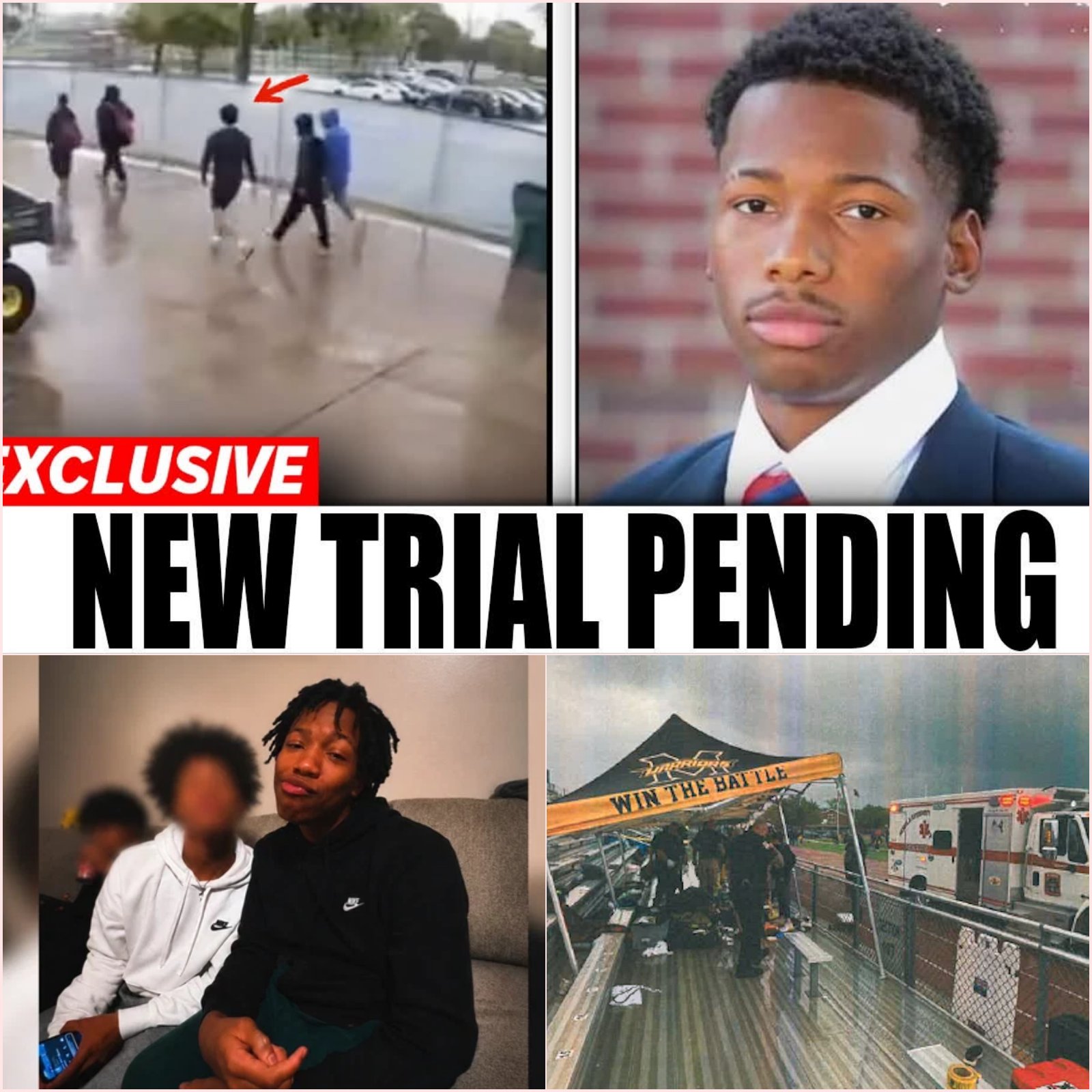
Anthony’s appellate lawyers filed a motion asking the court to throw out his conviction and order a new trial.
That is not the same thing as a judge granting one.
The defense has raised several arguments challenging how the original trial was conducted.
One concerns Anthony’s decision not to testify.
His attorneys claim prosecutors and the defense had reached an informal, off-the-record understanding limiting certain character evidence about both Anthony and Metcalf.
According to the defense, Anthony ultimately chose not to take the witness stand after being warned that doing so could open the door to additional evidence about his alleged prior conduct.
The defense now argues that prosecutors later changed their position regarding the informal agreement, affecting Anthony’s ability to personally explain his version of the confrontation to jurors.
Prosecutors have rejected the suggestion that they acted improperly.
Collin County First ᴀssistant District Attorney Bill Wirskye said the defense motion contained inaccurate characterizations of the proceedings and maintained that prosecutors acted ethically and complied with both court rulings and agreements.
The defense has also challenged restrictions placed on public and media access during the trial.
Judge Roach limited cameras and livestreaming inside the courtroom, while only a limited number of seats remained available to members of the public after space was allocated to families and media.
There was no overflow room for the large number of people who wanted to observe the proceedings.
Anthony’s lawyers argue those restrictions effectively violated his consтιтutional right to a public trial.
The battle over Judge John Roach
Perhaps the most explosive post-trial development involves Judge Roach himself.
Anthony’s lawyers want him removed before the new-trial motion is decided.
Their argument centers partly on comments Roach made publicly after the verdict.
In a television interview following the trial, Roach defended his courtroom decisions and was asked whether he believed the jury had reached the correct result.
He answered yes.
Anthony’s lawyers argue those comments create the appearance that Roach has already formed a personal judgment about issues that may now be raised in the motion for a new trial.
They contend that a different judge should therefore oversee the post-conviction proceedings.
Roach has also defended the restrictions he imposed during the trial, saying his intention was to protect the judicial process, witnesses and jury amid extraordinary public attention.
The recusal dispute will be addressed first.
A hearing is scheduled for August 19, with Judge Sid Harle expected to consider whether Roach should continue overseeing the case.
The hearing on Anthony’s request for a new trial is scheduled for August 20.
Those dates make the viral claim particularly misleading.
New footage, old arguments
The newly released footage has unquestionably given the public more material to examine.
But it has not automatically rewritten the verdict.
At Anthony’s trial, jurors heard competing descriptions of what happened beneath the team tent.
The prosecution argued that Anthony was repeatedly asked to leave an area occupied by another school’s athletes and that the stabbing was not legally justified.
The defense argued Anthony feared for his safety after the confrontation became physical and maintained that he acted in self-defense.
The jury ultimately sided with prosecutors.
That verdict can now be challenged through the legal system, but it does not disappear simply because new clips circulate on social media.
And that is where the online discussion has moved far ahead of reality.
A motion has become a “victory.”
A scheduled hearing has become a “new trial.”
Ambiguous video has been described as definitive proof.
None of those conclusions accurately reflects where the case stands today.
The real turning point is still ahead
For Anthony’s supporters, the August hearings could represent the most important legal opportunity since his conviction.
For Metcalf’s family, they represent another chapter in a case that has already produced months of public scrutiny and controversy.
But both sides will have to wait for the court.
Anthony’s attorneys must first convince the judiciary that serious legal errors occurred during the original proceedings — errors significant enough to justify setting aside a jury’s murder conviction.
That is a far higher bar than generating doubt on social media.
The viral headline may say Karmelo Anthony has already won a new trial.
The actual court record says something very different.
His lawyers have asked for one.
The prosecution continues to defend the conviction.
The judge-recusal question remains unresolved.
And the hearings that could determine what happens next have not even taken place.
For now, the biggest development in the Karmelo Anthony case is not that a new trial has been granted.
It is that the fight over whether he should receive one is about to begin.