81 SECONDS ON CAMERA SHOCKED AMERICA — THEN THE OFFICERS WERE ACQUITTED 🚨
Posted by Team - September 16, 2026
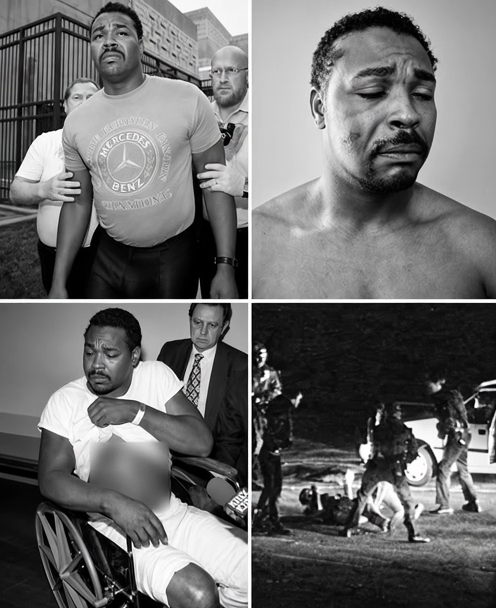
The whole country watched a Black man being beaten on camera. Then a jury watched the same footage and acquitted the officers.
For 81 seconds, a home video camera captured something that would permanently change America’s conversation about police brutality.
Rodney Glen King was 25 years old.
On March 3, 1991, he was driving through Los Angeles when California Highway Patrol officers attempted to stop him. King had been drinking and speeding, and he later said he fled because he feared another DUI arrest would violate his parole.
The pursuit continued for miles.
Eventually, King stopped near Foothill Boulevard and Osborne Street.
Police surrounded the vehicle.
A helicopter circled overhead.
His two pᴀssengers followed officers’ commands and got out.
King eventually stepped out too.
What happened next would become one of the most recognizable images in modern American history.
Officers attempted to restrain King.
A Taser was used.
Then the situation escalated.
Across the street, plumber George Holliday had been awakened by the noise.
He grabbed his new Sony Handycam and stepped onto his balcony.
He didn’t know it at the time, but he was about to record something the police could never make disappear.
His camera captured roughly 81 seconds of the encounter.
On the footage, officers Laurence Powell and Timothy Wind repeatedly struck King with batons. Theodore Briseno also used force while Sergeant Stacey Koon supervised.
King was struck dozens of times.
He suffered serious injuries, including fractures.
And then the footage reached television.
Suddenly, millions of Americans could see what had happened.
There was no longer only a police report.
No longer only competing stories from officers and a suspect.
There was video.
People could rewind it.
Watch it again.
Slow it down.
Study every movement.
For many Black Americans, the significance went beyond Rodney King.
Black communities had been speaking about aggressive policing and excessive force for years.
Now the country was being forced to look.
Los Angeles responded with an investigation led by attorney Warren Christopher.
The commission found evidence of broader problems within the LAPD, including repeated excessive force, failures of accountability and a culture in which officers were sometimes reluctant to report misconduct by fellow officers.
The camera had recorded one encounter.
The investigation suggested the problem was much bigger.
Then came the trial.
Four LAPD officers — Koon, Powell, Wind and Briseno — were prosecuted in state court.
The trial was moved to Simi Valley in Ventura County.
The jury had no Black members.
And the same videotape that had shocked millions of people was now being dissected inside a courtroom.
The footage was slowed down.
Individual strikes were examined.
Defense attorneys argued that jurors needed to consider what the officers believed was happening at each moment and whether their actions were legally justified.
The public saw a brutal beating.
The courtroom was being asked to determine whether the force was legally unreasonable.
Those questions collided on April 29, 1992.
The verdicts came.
Not guilty.
Not guilty.
Not guilty.
Koon, Wind and Briseno were acquitted of all charges.
Powell was acquitted on nearly every charge, while jurors ᴅᴇᴀᴅlocked on one excessive-force count, resulting in a mistrial on that count.
The video had been seen by millions.
But seeing something and obtaining a conviction were not the same thing.
Los Angeles erupted.
The city experienced days of protests, fires, looting, ᴀssaults and killings.
But the unrest did not come from a single verdict alone.
Los Angeles had been carrying years of racial tension, economic inequality, anger over policing and distrust of government insтιтutions.
The Rodney King verdict became the spark in a city that was already carrying enormous amounts of combustible anger.
And in the middle of that chaos was Rodney King himself.
He never asked to become a symbol.
He never asked to become the face of America’s argument about police brutality.
He was simply a man who had survived a violent encounter that happened to be recorded.
Then, two days after the verdicts, he stood in front of television cameras.
Los Angeles was burning.
People were dying.
And the man whose beating had started the national conversation pleaded with people to stop hurting one another.
“Can we all get along?”
Those words became famous.
But they were never meant to be a cheerful slogan.
King was pleading for the violence to end.
He spoke about children and elderly people suffering.
He argued that destroying neighborhoods would not bring justice.
And then came the words that perhaps captured his exhaustion best:
“We’ve got to quit.”
Yet King’s story did not end with the state trial.
The federal government brought a separate civil-rights case against the officers.
In 1993, a federal jury convicted Laurence Powell and Stacey Koon of violating King’s civil rights.
Timothy Wind and Theodore Briseno were acquitted.
Koon and Powell were later sentenced to 30 months in federal prison.
King also pursued a civil lawsuit against Los Angeles.
In 1994, a jury awarded him $3.8 million in compensatory damages.
But no verdict could erase what happened.
No settlement could give him back the anonymity he had before that night.
For the rest of his life, Rodney King remained connected to those 81 seconds.
His later struggles with alcohol and encounters with law enforcement became part of his complicated life story.
But those struggles never erased what the video showed.
And reducing him to a symbol would miss the human being behind the footage.
He was a son.
A father.
A worker.
A man with flaws.
A man who survived.
And a man whose worst moment became something the entire world felt enтιтled to watch.
King died in 2012 at 47.
The video remained.
And perhaps that is the deepest lesson of his story.
The camera changed everything because it made an encounter impossible to dismiss as merely one person’s word against another.
America could see.
But seeing was not the same as justice.
The footage exposed something powerful:
A society can witness suffering and still struggle to hold anyone accountable for it.
Those 81 seconds did not solve police brutality.
They exposed it to millions of people who could no longer claim they hadn’t seen it.
And once you have seen something, the question changes.
It is no longer:
“Did this happen?”
It becomes:
“What are you going to do now that you know?”
PH๏τos of the four officers involved in Rodney King’s beating are attached in the comments below.
✓ Team
The whole country watched a Black man being beaten on camera. Then a jury watched the same footage and acquitted the officers. For 81 seconds, a home…